A Stage Carved in Time
On a cool Roman evening, under the towering arches of the Colosseum, Steven Tyler stepped into a space once reserved for gladiators and emperors. But this time, the battle was emotional, and the weapon was music. The legendary frontman of Aerosmith was there to perform “Dream On,” the band’s iconic ballad that has haunted and inspired generations. What unfolded wasn’t just a concert—it was a moment where architecture, artistry, and raw human expression collided.
The Colosseum, nearly 2,000 years old, has hosted countless spectacles, but few as soul-stirring as this. As part of Andrea Bocelli’s Celebrity Fight Night charity gala, Tyler’s appearance was already a highlight. Yet no one could have predicted the emotional gravity that would unfold when rock met strings in one of the world’s most historic venues.
A Collaboration That Transcended Genre
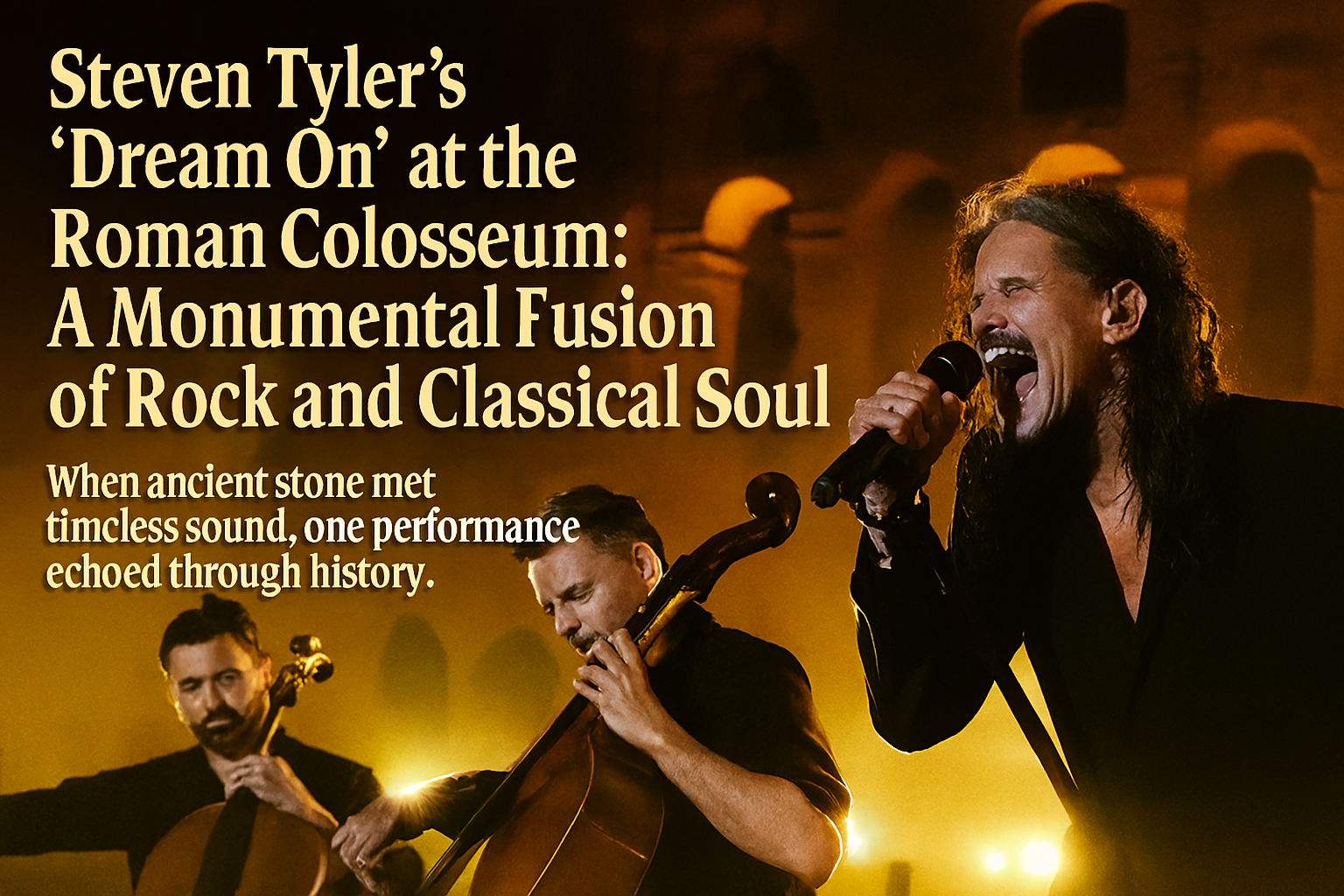
As Tyler moved toward the side of the stage, he was joined by cellists Hauser and Luka Šulić—better known as 2CELLOS. Their presence signaled a shift in tone. Known for blending classical technique with rock energy, Hauser and Luka brought a cinematic depth to the performance. Their bows carved through the air, echoing the guitar riffs that once defined the original track.
The orchestral arrangement didn’t dilute the song’s power—it amplified it. The cellos added weight and drama, turning “Dream On” into something grander, more operatic. The mutual respect between Tyler and the cellists was palpable. They weren’t just performing together—they were listening, reacting, and elevating each other in real time.
Raw Vocals, Real Emotion
In an era dominated by autotune and studio polish, Tyler’s voice stood out as a reminder of what unfiltered talent sounds like. There were no backing tracks, no digital enhancements—just a man, a mic, and a song. His vocals soared through the night air, cracking slightly with age but never losing their power. It was vulnerability turned into strength.
Tyler’s delivery was both theatrical and intimate. He didn’t just sing “Dream On”—he lived it. Every note carried decades of experience, pain, triumph, and reflection. The audience, seated among ancient stone and modern lighting rigs, was visibly moved. Some wiped away tears. Others simply stared, transfixed by the fusion of past and present.
A Visual and Sonic Masterpiece
The staging was minimalist, allowing the music to take center stage. Warm lighting bathed the performers in gold and amber tones, casting long shadows across the Colosseum’s weathered walls. The cellists flanked Tyler, their instruments gleaming under the spotlights. The contrast between the classical elegance of the cellos and Tyler’s rock-star swagger created a visual tension that mirrored the music itself.
The acoustics of the Colosseum added a haunting echo to the performance. Each note lingered in the air, bouncing off stone and sky. It was as if the venue itself was participating, amplifying the emotion and history embedded in the song.
Viral Impact and Cultural Resonance
The performance was recorded and shared online, quickly going viral. Within days, the video surpassed 10 million views on YouTube, drawing praise from fans and critics alike. Viewers around the world commented on the authenticity, the beauty, and the sheer emotional weight of the moment. Many called it one of the greatest live renditions of “Dream On” ever captured.
But beyond the numbers, the performance sparked conversations about the power of live music. In a time when digital content often feels disposable, Tyler’s Colosseum moment reminded audiences of the irreplaceable magic of real-time artistry. It was a call to return to the roots of performance—where imperfection is embraced, and emotion is everything.
A Moment That Will Echo Forever
Steven Tyler’s “Dream On” at the Roman Colosseum wasn’t just a concert—it was a cultural event. It bridged genres, generations, and geographies. It honored the past while speaking to the present. And it proved that even in his 70s, Tyler remains one of rock’s most compelling voices.
The collaboration with Hauser and Luka added layers of depth, transforming a familiar song into something monumental. Together, they created a moment that felt both ancient and eternal—a reminder that music, like the Colosseum itself, endures.