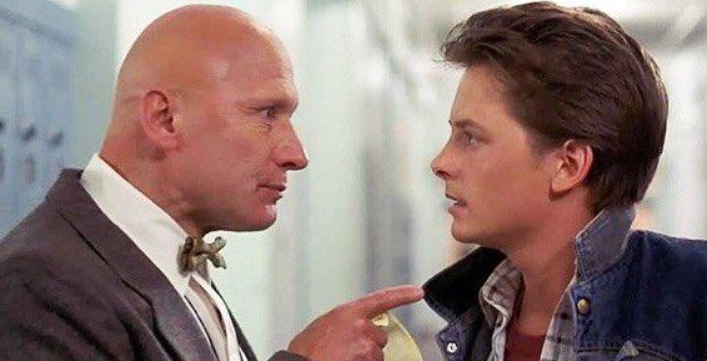
The entertainment world is mourning the loss of veteran actor James Tolkan, who has died at 94. Known for his commanding presence and unforgettable character roles, Tolkan leaves behind a legacy that spans more than five decades across film, television, and theater. His passing was confirmed by writer‑producer Bob Gale and through the official Back to the Future website.
Although no specific cause of death was disclosed, reports indicate that Tolkan passed peacefully at his home in New York State, surrounded by family.
Tolkan became widely recognized for his portrayals of strict authority figures. His performance as the no‑nonsense Mr. Strickland in the first two Back to the Future films became iconic, defining the archetype of the stern school administrator who disapproved of “slackers.”

In Back to the Future Part III, he returned as Chief Marshal James Strickland, an ancestor of the original character, further cementing his connection to the franchise and to generations of fans.
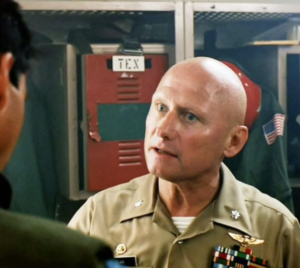
Beyond Back to the Future, Tolkan earned acclaim for his role in Top Gun (1986), where he played Commander Tom “Stinger” Jardian, a disciplined air group commander opposite Tom Cruise, Val Kilmer, and Meg Ryan.
Born on June 20, 1931, in Calumet, Michigan, Tolkan did not initially envision a career in acting. His early life included service in the U.S. Navy during the Korean War, which ended prematurely due to a heart condition. After his discharge, he redirected his ambitions toward the performing arts, eventually earning a Bachelor of Arts in drama from the University of Iowa.
Arriving in New York City with just $75, Tolkan supported himself with physically demanding dock work while pursuing rigorous acting training. He studied under legendary teachers Stella Adler and Lee Strasberg, immersing himself in techniques that shaped his authoritative screen presence. These formative years laid the groundwork for a career defined by discipline, intensity, and craft.
Tolkan spent roughly 25 years in theater before transitioning fully to film and television. His stage work included off‑Broadway productions and Broadway roles, most notably as part of the original ensemble of Glengarry Glen Ross, which showcased his versatility and depth.

His screen career accelerated in the early 1980s, with WarGames serving as a springboard to more prominent film and television roles. Over the years, he became a go‑to actor for sharply defined supporting characters, often embodying figures of authority with precision and nuance.
Among his notable film appearances was Woody Allen’s Love and Death, where he balanced gravitas with subtle comedic timing. His later work included roles in Phil Spector (2013), where he played a judge, and the 2015 western Bone Tomahawk, in which he portrayed a pianist — both performances reflecting his enduring dedication to his craft.
Tolkan’s personal life was marked by stability and devotion. He shared a 54‑year marriage with his wife, Parmelee, whom he met in 1971 during a production of Pinkville. He is also survived by three nieces. Known for his affection for animals, his family encourages donations to local shelters or rescue organizations in his memory.
His passing comes shortly after the death of fellow Back to the Future actor Matt Clark, who died earlier in April at 89. Clark, whose career included more than 100 credits — including roles in Top Gun and Back to the Future — was remembered for his independence, craftsmanship, and deep commitment to family. His daughter, Amiee, reflected on his life by saying, “He lived. He lives, forever.”
Tolkan’s influence on entertainment extended far beyond individual roles. His portrayals of stern, disciplined characters helped define the cinematic language of authority in the 1980s and 1990s. Even when playing intimidating figures, he infused his performances with subtle humanity, making his characters memorable and relatable.

He was admired by colleagues for his professionalism, generosity, and willingness to mentor younger actors. His decades of stage experience gave him a foundation in technique and presence that translated seamlessly to the screen, contributing to the longevity and impact of his career.
Tolkan’s journey — from modest beginnings in Michigan, through years of theater, to iconic roles in Hollywood — exemplifies resilience, discipline, and dedication. His performances in Back to the Future and Top Gun remain culturally significant, continuing to influence portrayals of authority figures in film and television.
His legacy endures through the characters he brought to life, the colleagues he inspired, and the generations of audiences who continue to discover and appreciate his work.
Beyond his professional achievements, Tolkan was remembered for his humility and kindness. Family, friends, and colleagues described him as approachable, generous with advice, and quietly devoted to those around him — a man whose personal warmth stood in striking contrast to his famously authoritative screen persona.
Tolkan’s journey — from small‑town Michigan to international recognition — reflects the powerful intersection of talent, perseverance, and opportunity. His life demonstrates how consistent effort, dedication to craft, and adaptability can build a career that spans decades and resonates across the globe.
His impact on popular culture, especially through Back to the Future and Top Gun, ensures that his work will continue to be celebrated. Future generations will encounter his performances, keeping his presence alive in the collective memory of film enthusiasts worldwide.
Tolkan’s dedication to storytelling extended across every medium he touched — theater, television, and film. No matter the size of the role, he approached each character with precision, respect, and a commitment to authenticity, leaving lasting impressions on audiences and collaborators alike.
As the entertainment industry reflects on his contributions, one truth becomes clear: Tolkan’s talent, discipline, and professionalism shaped a career defined by consistency, integrity, and performances that will endure for decades to come.