Most people celebrating their 40th anniversary might choose a cruise or a beach getaway — but for South African couple Marius and Michelle Nortje, nothing compares to a trip into the wild.
Their love story, already four decades strong, was about to take an unforgettable turn deep inside Kruger National Park.
What began as a routine drive soon became a moment the couple — and eventually the internet — would never forget.
“We go at least once a year, but sometimes as much as four times,” Marius said in an interview with The Citizen.
But during their anniversary trip this past December, something extraordinary emerged from the bush: three giraffes. And one of them was unlike anything Marius, an experienced wildlife photographer, had ever seen.
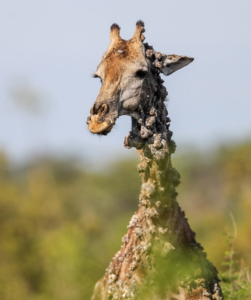
“We couldn’t find [the lions] on the tar road and turned onto a gravel road when we first saw one and then two giraffes emerging from the bush. When the third member of the herd became visible, we noticed strange growths all over her body,” he recalled.
Acting quickly, Marius photographed the giraffe and later shared the images on Facebook, where they rapidly sparked both curiosity and concern.
“People wondered if she was in pain,” he said. “However, she was grazing peacefully, and it didn’t seem to bother her, although it looked painful.”
He also tagged the South African National Parks (SANParks) in his post to raise awareness, but at the time of the interview, he had not yet received a response.
A rare condition
The giraffe’s photos gained even more attention after being shared by WorldWide Vets, an international animal welfare organization. According to Dr. Gemna Campling, the organization’s founder and director, the giraffe is suffering from a condition caused by papillomavirus.
“There are many types of papillomavirus, each affecting a specific species. However, the cow variation (Bovine Papillomavirus or BPV) is believed to affect this giraffe,” Dr. Campling explained.
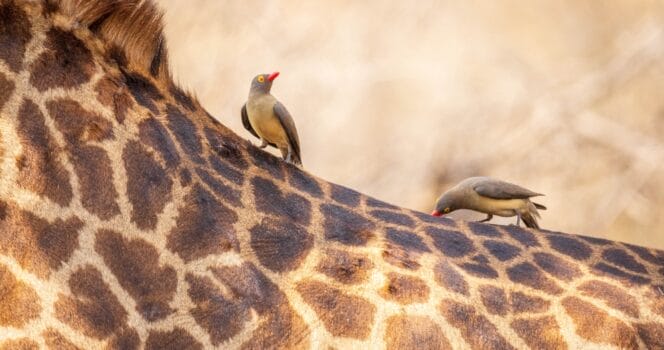
She said the virus is spread through direct contact — in this case, likely by oxpecker birds.
“In this instance, it is assumed that oxpecker birds, landing on the giraffe and pecking at its naturally occurring parasites, spread the disease from one animal to another. In this case, the rest of the herd is normal apart from this one animal, as was also the case when this disease was spotted previously.”
While the disease may appear alarming, it is not fatal.
“Many cases of BPV are self-limiting and can heal, with the animal making a full recovery,” Dr. Campling said. “There is no treatment for this disease in giraffes, and wildlife vets closely monitor the situation. Thankfully, this version cannot be passed on to humans, although Human Papilloma Virus does occur in people.”
However, Gemma Campling added: “Whilst it is not a life-threatening disease, it no doubt causes discomfort when the lumps become as advanced as this.”
It’s difficult to know exactly how much pain the giraffe was experiencing, but it’s heartbreaking to think she has to live with this condition. Despite the visible growths, she was calmly grazing — seemingly unaffected by her illness.
Still, the photos touched many hearts online, sparking a wave of empathy, wonder, and curiosity among thousands of viewers.
For Marius and Michelle, it served as a powerful reminder of why they continue returning to the wild.
Sometimes, the most unforgettable moments happen when you least expect them. And sometimes, it takes the lens of a devoted nature lover to remind the world just how resilient — and vulnerable — wildlife can be.