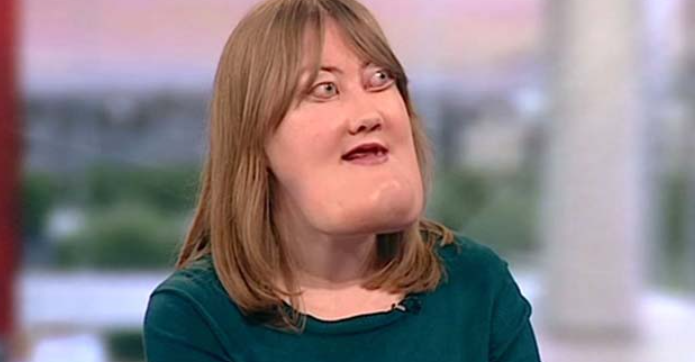
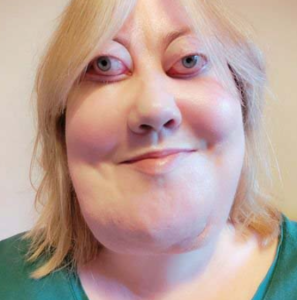
Victoria Wright was born with a very rare genetic condition called cherubism. The lower part of her face had an abnormal bony overgrowth, and when she was four, the first signs began to appear. At first, doctors didn’t know the cause.
As doctors described it, Wright’s face is as heavy as a bowling ball. As she grew older, she experienced bullying at school and even on the bus. Despite that, Victoria was determined to live her life to the fullest, never letting the bullies win. Today, she has become a strong role model and spokesperson. Here’s a look at her life – and what she looks like today. We all look different, and that is exactly what makes us unique and interesting. Some grow up tall, others short; some gain weight easily, while others don’t, despite poor eating habits. We all have different hair colors – or no hair at all. Everyone has traits that make us unique.
Every year, babies are born with specific syndromes, diagnoses, or unusual facial appearances. This can make life more challenging, but in reality, those with these differences are often among the strongest and bravest.
Victoria Wright – born with cherubism
One person this certainly applies to is Victoria Wright. She was born with cherubism, a rare genetic condition characterized by varying degrees of abnormal bony overgrowth in the lower part of the face. As a result, she was bullied at school and called hurtful nicknames – and even as an adult, she still receives humiliating comments.
But Victoria refused to let the bullies win. Instead, she became a role model for people around the world and chose to show how to live with a facial difference through humor. Her inspiring story is worth sharing, and we would love for you to share it with your friends and family.
Victoria Wright was like any other baby when she was born. Her parents were overjoyed, and everything seemed perfect. But one day, when she was four years old, everything changed.
“My mum was brushing my teeth, and she noticed they weren’t in the right place,” Victoria Wright told the NHS.
The first signs of cherubism had appeared, a rare genetic condition involving abnormal bony growth of the lower face. It was named after the angelic figures in Renaissance art, often depicted with chubby cheeks. Victoria and her family consulted medical professionals, who confirmed the diagnosis. They told the Wright family that her condition would likely regress after puberty. However, as we now know, that didn’t happen.
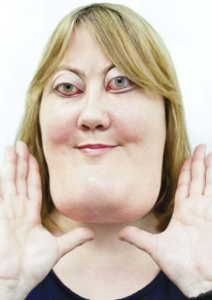
Instead, Victoria Wright’s jaw continued to grow, eventually affecting her eyes. The pressure on her eyes became increasingly severe, reaching a point where action was necessary.
Suffered from bullying everywhere she went
She underwent surgery to relieve the pressure, which saved her eyesight. However, due to impaired vision, she still experiences headaches today.
“Cherubism isn’t a painless condition. I do get twinges of pain. My head is very heavy. Doctors say it’s as heavy as a bowling ball,” Wright explained.
“I’ve been offered surgery on my jaw to make it smaller, but I don’t think it would improve my appearance. I’m used to the way I look.”
Victoria Wright’s life became more difficult once she started school. In a piece she wrote for The Guardian, she described experiencing bullying, threats, intimidation, and verbal abuse in public and on transport.
Children at school called her names like Fat Chin, Buzz Lightyear (the astronaut from Toy Story), and Desperate Dan (a character from the Scottish comic The Dandy).
“A girl used to draw pictures of me in class and pass them around,” Victoria said.
Everywhere she went – at school, on the bus, or walking down the street – people stared at her. She never fully got used to it, but over time, she understood it was human nature.
“I try not to take it too personally. We all stare, even me,” Wright said. “As a teenager, I used to get angry, but that doesn’t help you or the person staring. It just reinforces the stereotype that people with disfigurements must be angry, tragic, or scary. If someone stares in an aggressive way, it can feel unsettling, but I don’t let it get to me.”
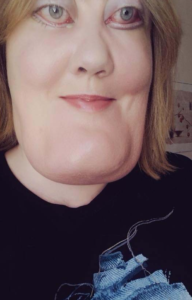
She continued, “If someone is staring out of curiosity, I just smile and nod to show them I’m human and there’s nothing to fear. Most of the time, people smile back. That feels good because I know I’ve made a small connection.”
Victoria Wright – ‘Changing Faces’
When Victoria became a teenager, her life began to change. She discovered the charity Changing Faces, now the UK’s leading organization supporting people with visible differences. Founded in 1992, it provides mental health support, wellbeing services, and works to improve understanding and acceptance.
Through Changing Faces, Victoria found strong support. Along with her family, friends, and teachers, the organization helped her realize that despite her appearance, her value was equal to anyone else’s.
“As a teenager meeting them, I felt, ‘Wow, you can have a career and be happy and confident with a disfigurement,’” she told the NHS.
“Sometimes you can feel isolated, especially with a rare condition. It’s hard when you don’t see anyone else like you. Peer support is so important. For every person who stares, there are a hundred others who will like and respect you for who you are.”
Through Changing Faces, Wright gained a new perspective on life. She began focusing on the positives and even embraced humor about her appearance. She told 60 Minutes Australia that she “adores” Buzz Lightyear and jokingly sees him as her brother.
Many people have questioned why Victoria doesn’t choose plastic surgery. She has even been wrongly portrayed in the media as being against cosmetic procedures.
In reality, Victoria Wright is not opposed to cosmetic surgery. For her, the most important thing is being happy with how you look – and she is.
“I’m not going to change myself to make other people happy”
“I’m certainly not against people with disfigurements having surgery, but I’m fine with the way I look. Why should I do it for others?” she said.
“I’m happy with my face most days. After all, I’m a woman, and no woman is completely satisfied with her appearance. But I’m not going to change myself to make other people happy.”
She added, “I don’t want to hide at home, afraid to go out or face people. If they have an issue with how I look, that’s their problem, not mine.”
In 2016, Victoria reached a wider audience as one of the stars of the BAFTA-nominated comedy-drama mockumentary Cast Offs. The show followed six disabled individuals sent to a remote British island for a fictional reality series, including a blind man, a paraplegic man, and Victoria, who has cherubism.
As reported by The Guardian, each role was played by an actor with the same disability, highlighting representation and sparking discussion about portrayal in media.
For Victoria, the experience was incredible. In a Q&A with directors Miranda Bowen and Amanda Boyle, a memorable moment was shared that reflected her sense of humor.
“I remember during your casting, Victoria, you had to invent a secret. You said you’d had plastic surgery to become funny-looking. The reaction from the other actor was unforgettable. It was brave, bold, and funny – exactly what we were looking for,” Boyle said.
Miranda added, “I often forgot that neither of you had acted before. You both performed with professionalism and skill, and it was a joy working with such a talented group.”
Victoria Wright’s life continued to grow in a positive direction. Today, she is a loving mother and an active disability rights campaigner.
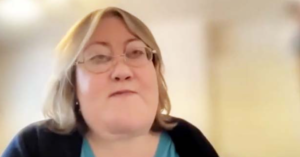
She has also become a spokesperson for Jeans for Genes in the UK, an annual fundraising event supporting people with genetic conditions.
“Throughout my life, people have assumed that because of how I look, I must live a sad or isolated life. But I have a good life. I’m a campaigner and PR professional, and I’m blessed with a daughter who makes me laugh every day,” she said.
Victoria Wright inspires countless people, with or without disabilities. She reminds us to stay humble and proud of who we are – because everyone deserves respect, no matter how they look.
Please share this story with your friends and family to honor Victoria – and if you believe everyone deserves to be treated fairly, regardless of appearance.