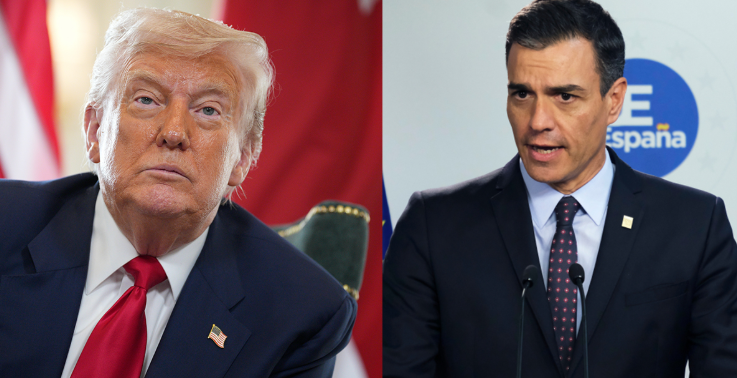
The dispute between Spain and the United States is far from over.
Now the European nation is pushing back after new remarks from the White House.
“Spain has been terrible” Spain is forcefully rejecting the White House’s claim that Madrid had softened its opposition to the war on Iran and agreed to cooperate with American military operations.
The latest flare-up in the growing diplomatic clash between Spain and the United States unfolded late Wednesday, following days of rising tensions between Spanish Prime Minister Pedro Sánchez and U.S. President Donald Trump.
The dispute began Sunday, when Sánchez barred the U.S. from launching airstrikes from Spanish military bases, condemning the attacks on Iran as a violation of international law and calling them “an unjustified and dangerous military intervention.”
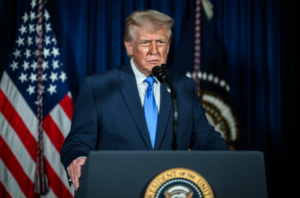
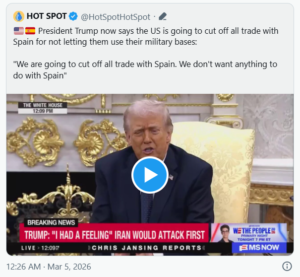
Spain’s refusal to fully support its NATO ally infuriated Trump. Speaking in the Oval Office, the President criticized Spain and other European countries for resisting his demands, saying:
“Spain has been terrible. In fact, I told Scott [likely Treasury Secretary Scott Bessent] to cut off all dealings with Spain… they were unfriendly, so I told him Spain has absolutely nothing that we need, other than great people — they have great people. But they don’t have great leadership.” At one point, he suggested the U.S. could use Spain’s bases regardless of Madrid’s approval.
That rhetoric prompted Sánchez to address the nation on Wednesday morning.
“We are not going to be accomplices to something that is bad for the world and contrary to our values and interests, simply because of fear of reprisals from some,” he said.
He added that Spain would continue pushing for peace, summarizing his government’s stance in four words:
“No a la guerra” — “No to war.”
Sánchez also referenced Spain’s support for the U.S.-led invasion of Iraq in 2003, arguing it led to disastrous consequences.
“Another American administration dragged us into a war in the Middle East,” he said, noting it had sparked “a drastic increase in jihadist terrorism” and “a severe migration crisis in the eastern Mediterranean.”
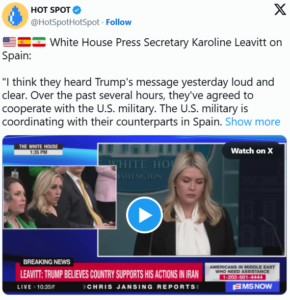
With Spain’s position seemingly firm, confusion erupted later Wednesday when White House press secretary Karoline Leavitt suggested Madrid had quietly shifted its stance.
“I think they heard the president’s message yesterday loud and clear,” Leavitt said. “It is my understanding over the past several hours they’ve agreed to cooperate with the U.S. military.” Spain immediately denied that claim.
Foreign Minister José Manuel Albares dismissed the assertion outright during an interview broadcast Wednesday evening.
“That’s not true,” he said. “We categorically deny it. Spain’s position has not changed.”
Speaking on Cadena Ser, Albares reiterated:
“The Spanish government’s position on the war in the Middle East, the bombings in Iran, and the use of our bases has not changed one iota. Our ‘no to war’ stance remains clear and unequivocal.”
He added pointedly:
“She may be the White House press secretary, but I’m the foreign minister of Spain, and I’m telling her that our position hasn’t changed at all.”
A Spanish government spokesperson echoed that message shortly afterward:
“It is not true. We categorically deny any change. Spain’s position has not changed.”
Spain “will not be vassals” to another country, Deputy Prime Minister María Jesús Montero said on March 4.