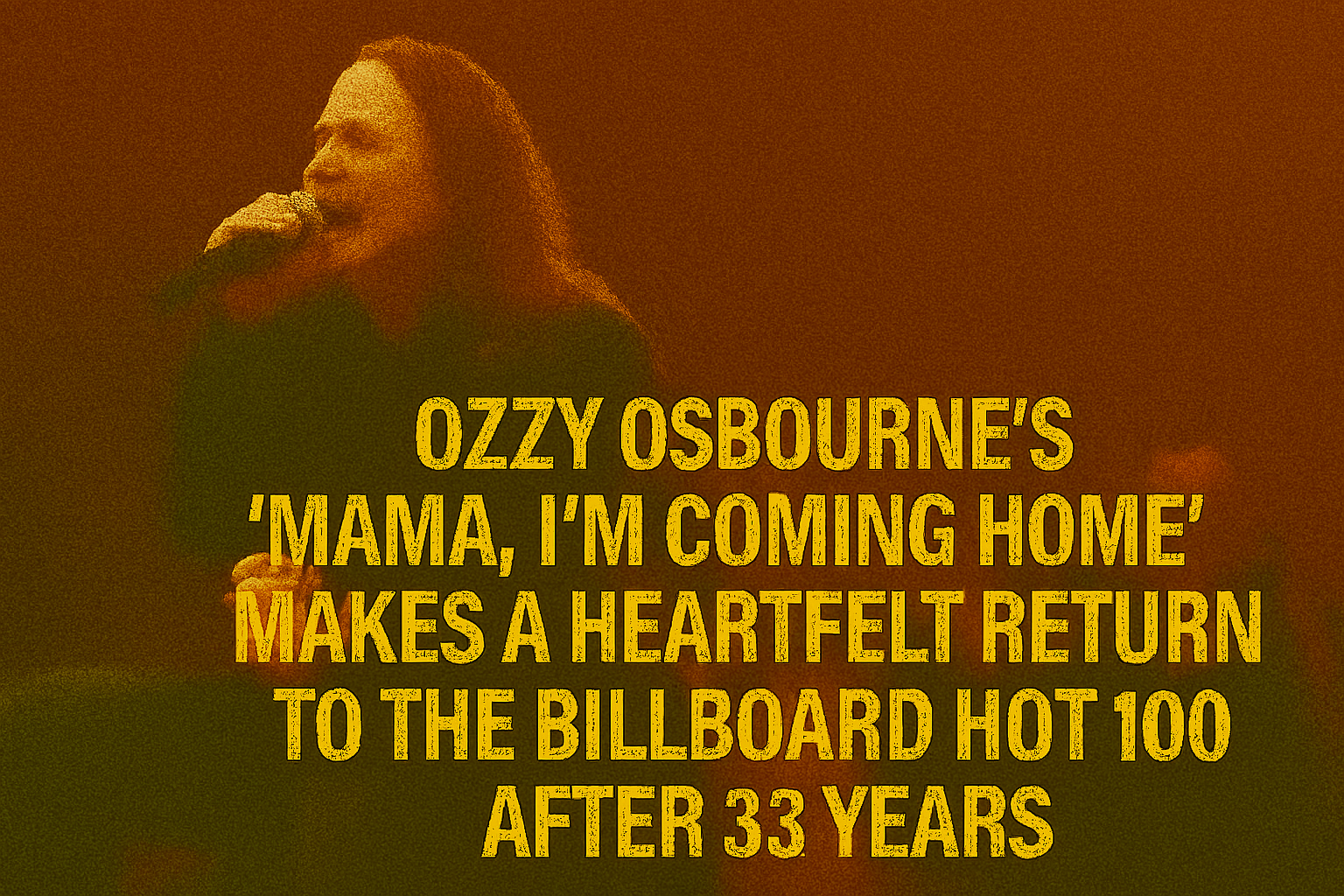
Ozzy Osbourne’s 1991 ballad “Mama, I’m Coming Home” has reemerged on the Billboard Hot 100, more than three decades after its original release. The song’s return reflects a renewed wave of attention to Ozzy’s catalog and a broader cultural moment in which listeners are revisiting the music that shaped their lives. What was once a defining power ballad of its era now reads as a poignant reminder of mortality, memory, and the enduring power of a single, honest song.
Origins and Musical DNA
“Mama, I’m Coming Home” was written and recorded at a crossroads in Ozzy’s career. Built around a simple, aching melody and a spare arrangement, the song foregrounds vulnerability over spectacle. The lyrics speak to longing, reconciliation, and the desire to return to something essential—home, love, or a sense of self. Musically, it blends the emotional directness of a ballad with the melodic sensibilities of mainstream rock, creating a track that could reach both devoted metal fans and casual radio listeners.
The production is intentionally uncluttered: piano and restrained guitar lines support Ozzy’s voice, allowing the emotional content to take center stage. That clarity is part of why the song has aged so well; it doesn’t rely on production trends that date it, but on a human truth that remains relatable.
Why the Song Resonates Now
Context changes meaning. In the wake of an artist’s passing, songs that once felt nostalgic can take on new emotional weight. “Mama, I’m Coming Home” reads differently when listeners hear it as a farewell, a benediction, or a final confession. Lines that once felt like romantic yearning can now be interpreted as a reckoning with mortality and legacy.
There’s also a communal element: when millions of people return to the same song at once, it becomes a shared ritual. Streaming platforms and social media accelerate that process, turning private listening into a public act of remembrance. The song’s themes—homecoming, reconciliation, and the search for peace—are universal, and in moments of collective mourning they become especially potent.
Chart Movement and Streaming Dynamics
A surge in streams and renewed radio play are the engines behind the song’s chart comeback. When an artist’s catalog experiences a spike in attention, legacy tracks can reenter mainstream charts that once seemed out of reach. Streaming algorithms, editorial playlists, and user-generated tributes all contribute to a feedback loop: increased visibility leads to more plays, which in turn drives further visibility.
This kind of resurgence is not just about nostalgia; it’s also about discovery. Younger listeners who may not have been familiar with Ozzy’s softer, more introspective songs can encounter them for the first time, while longtime fans revisit tracks that marked important moments in their lives. The result is a cross-generational reappraisal that can propel a decades-old single back into the public conversation.
Cultural Resonance and Personal Meaning
Beyond charts and numbers, the song’s return highlights Ozzy’s cultural footprint. For many listeners, “Mama, I’m Coming Home” is tied to personal memories—road trips, late-night drives, hospital rooms, or moments of quiet reflection. Music often functions as a time capsule, and this song’s reappearance has prompted people to share stories about how it helped them through grief, change, or healing.
The track also complicates the public image of an artist often associated with chaos and excess. It reveals a quieter, more reflective side—an artist capable of tenderness and introspection. That contrast deepens the emotional impact of the song now, because it reminds listeners that public personas rarely capture the full complexity of a life.
What This Means for Legacy and Memory
A single song’s return to the charts can reshape how an artist is remembered. It invites new conversations about catalog curation, posthumous releases, and the ways fans choose to honor a career. It also underscores the unpredictable life cycle of recorded music: a song can be dormant for decades and then reemerge with renewed relevance.
For the artist’s family, bandmates, and collaborators, such moments are bittersweet. They bring renewed attention and appreciation, but they also reopen wounds and prompt reflection on what was lost. For fans, the resurgence offers a way to participate in collective remembrance—by streaming, sharing, and revisiting the music that mattered.
Conclusion
The return of “Mama, I’m Coming Home” to the Billboard Hot 100 after 33 years is more than a chart anomaly; it’s a cultural moment. It demonstrates how songs can gain new meanings over time and how music remains one of the most powerful ways people process loss and celebrate life. In its spare melody and candid lyricism, the song offers a simple, enduring truth: some music doesn’t just soundtrack our lives—it helps us make sense of them.