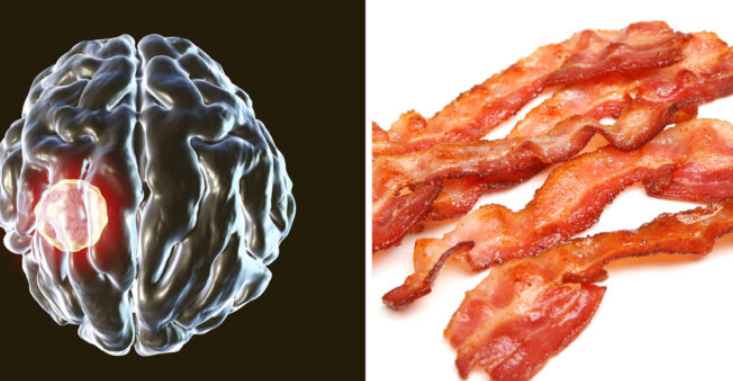
A man was admitted to the hospital for a peculiar case that left medics puzzled until everything finally made sense once they learned about his eating habits and preferences.
Keep reading to learn more.
Bacon made from pork is a hugely popular food item around the world. One patient — who has remained anonymous — loved it just as much, but his particular way of eating it eventually landed him in the hospital.
He had been suffering from excruciating migraine headaches and severe back pain for weeks. Multiple tests were run on the 52‑year‑old to determine the cause. They revealed “cyst‑like lesions” in his brain. Further testing showed that the cysts were actually filled with tapeworm larvae.
The type of tapeworm commonly found in pigs is called cysticercosis. Pigs are often infected with the Taenia solium tapeworm, and its larvae were discovered in the man’s brain.
The patient spent “several weeks” in intensive care after the worms had burrowed into his brain. He was treated with anti‑parasite medication and anti‑inflammatory drugs to reduce the swelling and cysts caused by the worms — and to eliminate the parasites themselves.
Doctors eventually traced the source of the larvae after the man admitted his breakfast habit.
He preferred to eat “lightly cooked” bacon — almost raw — because he didn’t like crispy bacon. Medical staff concluded that his “lifelong preference for soft bacon” was the likely cause of his condition.
Health guidelines state that to avoid food poisoning or other transmitted illnesses, bacon should be cooked to an internal temperature of 145°F/62°C.
Judging the internal temperature of bacon can be difficult because it’s so thin, but that same thinness also makes it easy to cook thoroughly. The patient’s case notes stated that “undercooked pork consumption is a theoretical risk factor.”
They also added, “It is historically very unusual to encounter infected pork in the United States, and our case may have public health implications.”
What do you think of this story? Share your thoughts in the comments section on Facebook.