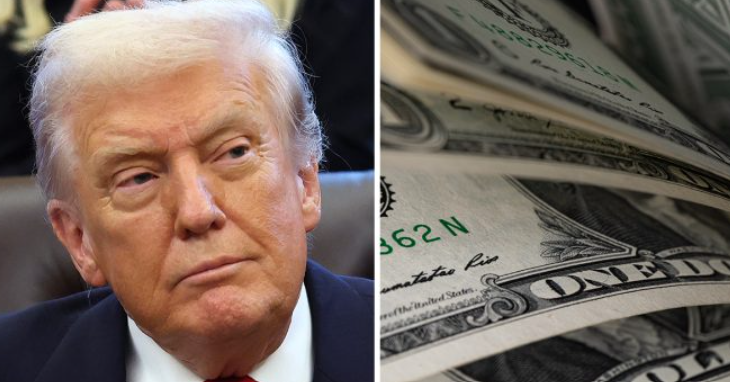
As questions continue about the $2,000 payment he previously promised, President Donald Trump is making another bold pledge — this time, a $4,000 boost for “hardworking Americans.”
The figure has drawn widespread attention. But before you expect a $4,000 check in the mail, it’s important to understand that this is not a guaranteed payout — and many Americans will not receive the full amount.
Here’s what it really means — and how to find out if you qualify.
‘Roaring economy is roaring’
Since returning to office in January 2025, Trump has continued to make bold claims about the economy.
During his Feb. 24 State of the Union address — the longest in U.S. history — he said: “Today our border is secure, our spirit is restored, inflation is plummeting, incomes are rising fast, the roaring economy is roaring like never before and our enemies are scared,” the president said, according to the transcript of the speech.
However, public opinion remains divided.
Trump approval rating dives
A February 2026 AP-NORC poll found that 36% of Americans approve of his performance, while 62% disapprove of how he is “handling his job as president.”
On the economy, 39% approve and 59% disapprove. About two-thirds of Americans describe the economy as “poor,” which “underscores the challenge of tackling Americans’ affordability woes that Trump is currently facing.”
In response to these concerns, the administration has focused heavily on new tax changes it says will help working families.
Tax savings
The main change comes from a law Trump signed on July 4, 2025, called the “One Big Beautiful Bill.” When it passed, the White House projected $100 billion in total tax refunds for American families in 2026.
Officials have said the average refund could increase by at least $1,000 this year. The administration has also stated that “hardworking Americans” are “expected to see nearly $4,000 in total tax savings in 2026.”
Refund not for every ‘hardworking American’
But here’s the key detail: the $4,000 is not a guaranteed check for everyone. It is an estimate of total tax savings under the new rules. The actual amount depends on your personal situation.
The law includes several changes. In the official summary, it states: “Key provisions of the bill include No Tax on Tips, No Tax on Overtime, No Tax on Social Security, a deduction for auto loan interest on Made-in-America vehicles, and much more — putting more money back in the pockets of families, workers, and seniors.”
Who benefits
According to the White House, some of the workers who may be eligible include:
Workers who earn significant tips or overtime could see a larger refund because that income may no longer be taxed at the federal level. This could especially affect restaurant workers, hospitality staff, healthcare workers, rideshare and food delivery drivers, and those who rely on extra hours.
Retirees may also benefit if they previously paid federal income tax on their Social Security income and now qualify for exemptions.
People who financed certain American-made vehicles may also be able to deduct their auto loan interest, which could lower their taxable income.
Still, not everyone will receive the full projected amount. Many tax benefits are reduced or phased out for higher-income earners.
How to check eligibility
To find out whether you qualify under the new provisions, start by reviewing your most recent federal tax return. Several parts of the “One Big Beautiful Bill” are now taking effect, and those changes could impact your federal taxes, credits, and deductions this year.
According to the IRS, eligibility will largely depend on your personal financial details. Your income level, filing status, and sources of income — such as tips, overtime, Social Security, or loan interest — will determine how the new law applies to you.
If you:
Earn tips or overtime, review your pay stubs to see how much of your income may now be tax-free.
Receive Social Security, check whether you previously paid taxes on those benefits.
Have a car loan, confirm whether your vehicle qualifies and how much interest you paid.
Figure depends on income
Because the $4,000 figure reflects total tax savings — not a direct payment — the final amount will become clearer when Americans file their 2026 taxes.
Tax software or a certified tax professional can help estimate how much your refund may increase under the new rules.
In short, some Americans may see savings close to $4,000. Others may see something closer to the projected $1,000 average increase.
The only way to know for sure is to review your income and determine how the new tax changes apply to your situation.
Would this $4,000 boost make a difference for you? Tell us in the comments and share this story with someone who should check their eligibility.