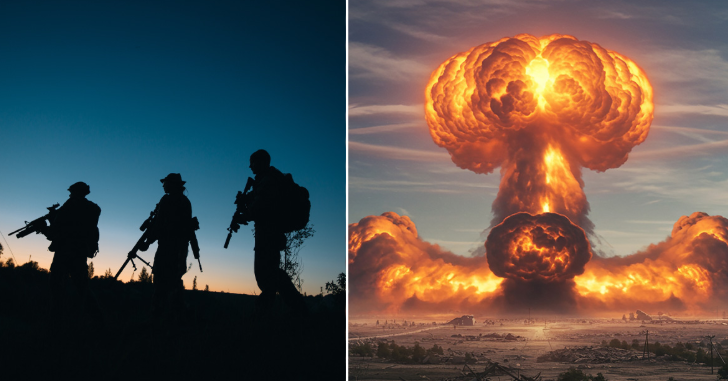
When a nuclear weapon detonates, everything changes in an instant. For many, there’s no time to react. For those who survive the initial blast, the next seconds and minutes are critical—survival depends on immediate action.
The scale of destruction is almost unimaginable: within hundreds of feet, everything is vaporized; miles beyond, buildings collapse under immense force. Even survivors of the initial explosion face lethal radiation exposure, which can cause catastrophic injury and death.
However, research suggests that survival is possible if you act quickly and follow key steps, according to UNILad. First, resist the urge to get into a car—it offers no protection from the blast or radiation. Instead, seek proper shelter immediately and follow survival guidance.
Step One: Do not look at the blast
A nuclear explosion produces a flash brighter than the sun. Looking directly at it can cause immediate, sometimes permanent, blindness—even up to 10 miles away.
The American Red Cross advises: “Do not look at the flash or fireball – it can blind you. Take cover behind anything that might offer protection,” according to UNILad.
Standing near a window is equally dangerous. The following shock can turn glass into deadly projectiles in seconds.
Step Two: Get inside the nearest reliable shelter immediately
The shockwave moves faster than sound and can arrive in under 30 seconds, depending on your distance. Known as overpressure, it can reach around 20 pounds per square inch near the blast, enough to reduce buildings to rubble.
Even as it weakens, the wave can still collapse homes or kill anyone outside. The Atomic Archive explains:
“The air immediately behind the shock front is accelerated to high velocities, creating powerful winds. These winds generate dynamic pressure against objects facing the blast. The combination of the pressure jump (overpressure) and dynamic pressure causes the damage.”
Go to a basement if possible. If not, head to the deepest part of a sturdy building, ideally in a corner facing away from the blast. Move quickly and do not hesitate.
Step Three: Protect yourself from radiation and contamination
After surviving the blast, you have only a few minutes to reach a better shelter, where you should stay for at least 24 hours, ideally up to 72. Radiation decreases over time, but the first hours are the deadliest. Protection comes from distance and shielding—thick concrete or soil provides the best defense.
Move into a basement or enclosed structure and seal windows, doors, and vents. Ensure you have water if possible. Remove outer clothing and wash exposed skin and hair with water to reduce radioactive contamination. Stay inside, conserve resources, and follow official guidance until it’s safe to leave.