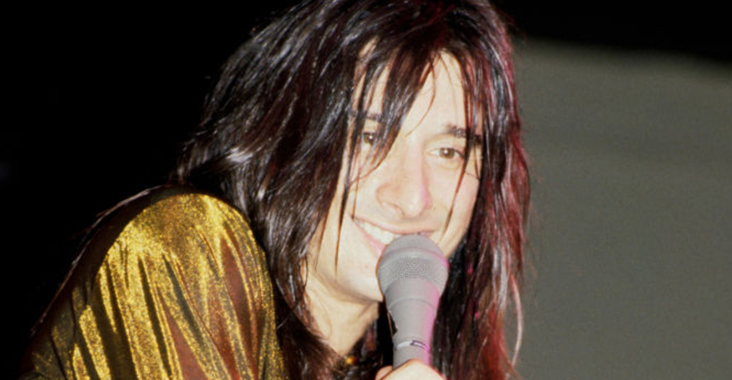
As Journey soared to superstardom and his voice became the sound of a generation, Steve Perry, now 76, disappeared from the spotlight — a sudden, silent exit that left fans and the music industry stunned for nearly two decades.
Steered the band into a new era
At just 10 years old, Steve Perry’s lifelong passion for music was sparked when he heard Sam Cooke’s “Cupid” on his mother’s car radio. That soulful voice ignited something deep within him — and it never faded.
Years later, after college and early stints in local bands, the 28‑year‑old Perry joined Journey in 1977, bringing a soaring, operatic tenor and raw emotional depth that transformed the band’s sound.
“They were really an amazing performing band. But they didn’t have any quote ‘hit records,’ and weren’t on the radio much,” Perry told GQ in 2008, reflecting on his early days with the now‑legendary group.
At the time, Journey leaned more toward jazz‑rock fusion than mainstream hits. But everything changed when Perry teamed up with guitarist Neal Schon. Together, they pushed the band into a new era — blending hard rock with heartfelt ballads — and launched Journey into stadium‑rock superstardom.
‘Oh Sherrie’
Just as the band reached its peak, Perry was in a relationship with Sherrie Swafford, who inspired his 1984 solo hit “Oh Sherrie,” released while he was still in Journey.

“Sherrie and I were crazy in love, I can tell you that. And it was a very tough time because the band was peaking,” he told the Tampa Bay Times in 2011. “If any woman thinks it would be exciting to be the girlfriend of someone in a band like that… the truth is, it’s hard to navigate a relationship in the middle of such a ride.”
International fame
Meanwhile, Journey had become one of the biggest rock bands in the world. Their 1981 album Escape went multi‑platinum, and Perry was hailed as one of rock’s greatest vocalists. His range, tone, and emotional delivery were unmatched. Journey had it all — chart‑topping albums, sold‑out tours, and millions of devoted fans.
But the demands of fame began to take a toll.
In a 2018 interview with The New York Times, the “Open Arms” singer revealed that burnout played a major role.
“As a vocalist, your instrument is you. It’s not just your throat, it’s you. If you’re burnt out, depressed, weary, lost, paranoid — you’re a mess.”
Journey went on hiatus in 1987, and although they briefly reunited in the mid‑90s, things didn’t go smoothly.
Comeback — almost
In 1996, the band released Trial by Fire, featuring the hit “When You Love a Woman.” It looked like a comeback was underway — until Perry suffered a hip injury while hiking in Hawaii.
He needed surgery, but hesitated. The delay caused tension. Journey, needing to tour, gave him an ultimatum: get the surgery or they’d move on without him.
Perry walked away — and became a recluse for the next 20 years.
“We’d worked so hard, and we were fortunate to have such great success. But with that success came a serious schedule […] I just hit the wall, and I started to lose my passion for singing,” he told 106.7 Lite FM.
Kellie Nash
But burnout wasn’t the only reason.
Perry had fallen in love with Kellie Nash, a psychologist battling terminal cancer.
“I was loved by a lot of people, but I didn’t really feel it as much as when Kellie said it,” he told the Times. “Because she had better things to do than waste her time with those words.”

After less than two years together, Nash, 40, died on December 14, 2012.
Her death devastated him — but ultimately inspired his return to music.
Before she died, she made him promise: “If something happens to me, don’t go back into isolation. That would make this all for naught.”
‘Open arms’
In 2018, Perry honored that promise. After 24 years away from the studio, he released Traces, his first solo album since 1994 — a deeply personal record shaped by grief, love, and reflection.
“I don’t even know if ‘coming back’ is the right word,” he told the Times. “I’m in touch with the honest emotion, the love of the music I’ve made. And all the neurosis that came with it, too. I had to put my arms around all of it.”
Despite his long absence, Perry’s influence never faded. “Don’t Stop Believin’” became a cultural anthem — from The Sopranos finale to Glee to Rock of Ages — introducing his voice to new generations. Rolling Stone has listed him among the greatest singers of all time, and countless artists cite him as an inspiration.
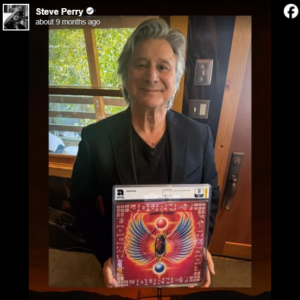
What are your favorite Journey songs — and why do they resonate with you? Share your thoughts, and then pass this story along so others can join the conversation.