Sleeping well through the entire night without waking even once is surprisingly rare, yet it’s exactly what’s needed to feel fully rested and productive the next day.
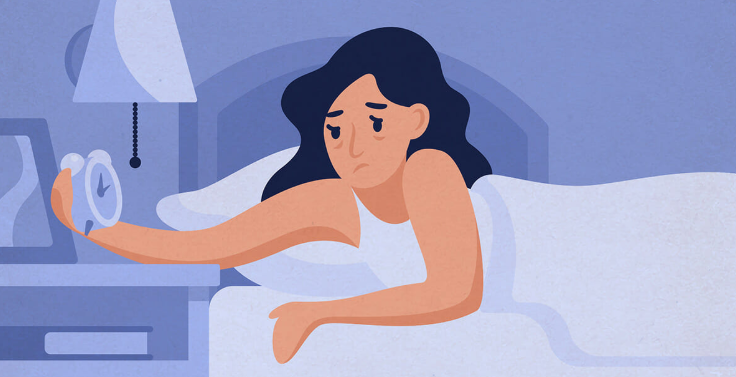
Many people assume that going to bed at the right time guarantees a good night’s sleep, only to find themselves waking — often between 3:00 a.m. and 5:00 a.m. — and struggling to fall back asleep.
The fact that so many people wake during this window isn’t a coincidence or simply bad luck. There’s actually a reason behind the pattern…
The hours between 3:00 a.m. and 5:00 a.m. are sometimes called the “hour of the wolf,” named after Swedish director Ingmar Bergman’s psychological horror film.
“The hour between night and dawn… when most people die, sleep is deepest, nightmares are most real. It is the hour when the sleepless are haunted by their worst anguish, when ghosts and demons are most powerful. The hour of the wolf is also the hour when most babies are born,” Bergman explained.
According to Professor Birgitta Steene, the term comes from Swedish folklore, where the “hour of the wolf” refers to the period between 3:00 a.m. and 5:00 a.m.
This window is believed to be linked to a higher number of both deaths and births. It also happens to be the time when the body enters its deepest rest, which is why its functions are so sensitive during these hours.
In folk traditions, the witching hour — also known as the devil’s hour — is a nighttime period associated with supernatural activity. It’s believed that witches, demons, and spirits are most active and influential during this time.
The hour of the wolf
For those who sleep soundly, the hour of the wolf marks the deepest stage of rest. For those who wake up, however, it’s often the time when anxiety feels most intense.
The body’s circadian rhythm — the 24‑hour cycle that regulates physiological processes — follows the rise and fall of the sun. As night progresses, body temperature, blood pressure, and metabolism drop.
Around 4:00 a.m., these functions reach their lowest point, as the body settles into its natural rest phase. If you struggle with anxiety, this is when feelings can intensify, which is why you may find yourself waking up.