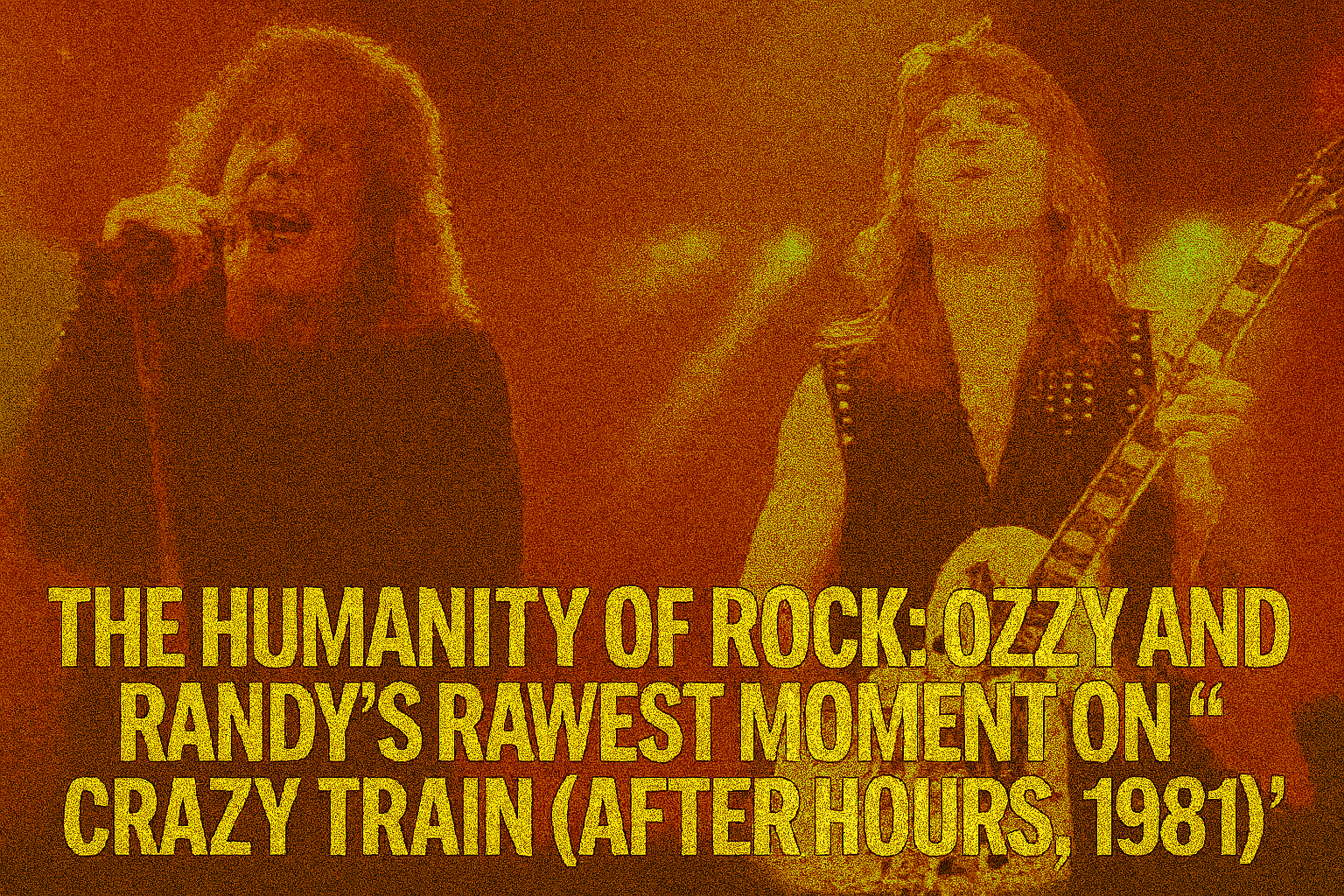
In the dim, smoky studio of Toronto’s CHUM FM in 1981, Ozzy Osbourne and Randy Rhoads delivered a performance that remains one of the most visceral, unfiltered moments in rock history. Their rendition of “Crazy Train” on the Canadian TV show After Hours wasn’t just a live take—it was a window into the soul of two artists at the height of their creative fire, and a snapshot of the raw humanity that defines rock and roll.
A Moment Suspended in Time
The After Hours performance was recorded during Ozzy’s Blizzard of Ozz tour, a time when he was reinventing himself after leaving Black Sabbath. With Randy Rhoads by his side—a classically trained guitarist with a punk edge—Ozzy found a new voice, one that fused melody with madness.
The studio setup was intimate. No pyrotechnics, no arena roar—just a small stage, a few cameras, and a band stripped down to its essence. When Ozzy shouted “All aboard!” to kick off “Crazy Train,” it wasn’t just a cue—it was a primal scream. A call to chaos, freedom, and emotional release.
Randy Rhoads: Precision Meets Passion
Randy Rhoads’ guitar work in this performance is nothing short of transcendent. His tone was sharp, his phrasing fluid, and his energy magnetic. Unlike the polished studio version, this live take had grit. You could hear the pick scrape, the amp hum, the fingers fly. It was real.
Rhoads didn’t just play the iconic riff—he attacked it. His solos were explosive yet elegant, blending classical scales with metal aggression. Watching him in this setting, you saw not just a virtuoso, but a young man pouring every ounce of himself into the music.
Ozzy’s Vulnerability and Fire
Ozzy Osbourne, often caricatured for his wild antics, showed a different side during this performance. His vocals were raw, unfiltered, and emotionally charged. He wasn’t just singing—he was pleading, howling, channeling something deep and personal.
At 32, Ozzy was navigating a new chapter. The lyrics of “Crazy Train”—about mental health, societal pressure, and personal chaos—felt autobiographical. In this stripped-down setting, every word landed harder. “I’m going off the rails on a crazy train” wasn’t just a hook—it was a confession.
The Humanity of Rock
What makes this performance legendary isn’t just the technical brilliance—it’s the humanity. The imperfections, the sweat, the eye contact between Ozzy and Randy. It’s the way Randy leans into his solo, the way Ozzy grips the mic like it’s keeping him grounded.
This wasn’t rock as spectacle—it was rock as truth. No filters, no edits, no distractions. Just two artists baring their souls through sound.
A Legacy Etched in Emotion
Randy Rhoads would tragically die less than a year later in a plane crash at age 25. That loss still reverberates through the rock world. The After Hours performance has become a sacred artifact—a glimpse of what was, and what could have been.
Ozzy has often spoken about Randy with reverence, calling him “a gift” and “a genius.” Watching this performance, you understand why. Their chemistry was electric, their bond palpable. It was more than music—it was a shared journey through madness and beauty.
Fan Reactions and Cultural Impact
Decades later, fans still revisit the After Hours footage with awe. Reaction videos flood YouTube, with viewers stunned by the rawness and intimacy. Guitarists study Randy’s phrasing, vocalists marvel at Ozzy’s delivery, and fans simply feel.
The performance has been cited in documentaries, tributes, and retrospectives. It’s a reminder that rock isn’t just about volume—it’s about vulnerability. About showing up, flaws and all, and letting the music speak.
Why It Still Matters
In an age of auto-tune and digital polish, the After Hours “Crazy Train” stands as a monument to authenticity. It reminds us that the most powerful moments in music aren’t always the loudest—they’re the realest.
Ozzy and Randy didn’t just perform—they connected. With each other, with the audience, and with the deeper truths that music can reveal. That’s the humanity of rock. And that’s why this moment, frozen in grainy footage from 1981, still burns bright.