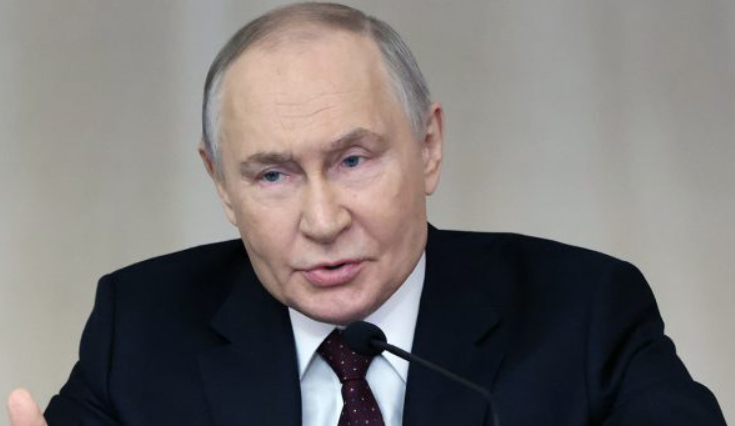
In recent weeks, global geopolitical tensions have intensified on multiple fronts, creating anxiety in capitals from Washington to Moscow, Kyiv, and London.
At the center of the concern are escalating conflicts in the Middle East, the continuing war in Ukraine, and a series of statements and actions by Russian officials that many observers interpret as signaling preparation for a potentially wider confrontation.
International relations analysts describe the current moment as one of the most volatile periods since the early 21st century.
While some commentators warn about the risk of a large-scale global conflict, others argue that such fears are often amplified by political rhetoric and media interpretation. However, fact-based reporting and diplomatic signals suggest a complex situation in which multiple geopolitical pressures are converging simultaneously.
Russia’s Nationwide Emergency Siren Test
One of the most noticeable developments occurred earlier this week when the Russian government conducted a large-scale test of its emergency public warning system, activating sirens across all 11 of the country’s time zones.
The test was carried out by the Ministry of Emergency Situations and included temporary interruptions to radio and television broadcasts to deliver instructions to the public.
In cities such as Yekaterinburg, viewers saw a broadcast message stating: “ATTENTION EVERYONE! THE PUBLIC ALERT SYSTEM IS BEING TESTED! PLEASE REMAIN CALM!”
Officials said the drills are part of routine preparedness measures. In a statement, the ministry explained that the warning system is “designed to promptly transmit signals to the public in the event of threats or emergencies of natural or man-made origin.”
Citizens were instructed that if they heard sirens, they should stay calm and immediately tune in to any public television or radio channel for further information.
Similar civil defense alert systems exist in many countries and are regularly tested as part of emergency planning, including for natural disasters, industrial accidents, or military threats.
However, the timing of Russia’s recent test—amid several global flashpoints—has fueled speculation and concern abroad, even though authorities officially describe it as routine.
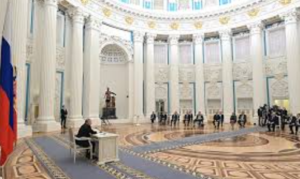
Medvedev’s Stark Warning: World War III “Undoubtedly” Possible
Just days before the warning system test, one of Russia’s most prominent political figures issued a highly provocative statement that drew international attention.
Dmitry Medvedev, a long-time ally of President Vladimir Putin, former Russian president (2008–2012), and current deputy chairman of Russia’s Security Council, warned in an interview that World War III could begin if U.S. policies do not change.
In an interview with the Russian news agency TASS, Medvedev said: “If [U.S. President Donald Trump] continues his insane course of criminally changing political regimes, it will undoubtedly begin. And any event could trigger it.”
Medvedev, who remains an influential figure in Russia’s national security structure, accused the United States and its allies of pursuing a dangerous agenda of “global dominance” and “regime change,” which he believes increases the risk of large-scale conflict. He also used derogatory language toward Western governments, referring to them as “pigs” who he claimed “do not want to give up their trough,” and blamed U.S. foreign policy for destabilizing global stability.
It is important to note that Medvedev’s remarks represent the views of a senior Russian official but do not necessarily reflect official government policy or indicate imminent military action. However, such statements—especially when released close to public safety drills—often attract widespread attention and speculation about possible future developments.
Context: Middle East Conflict and Russia’s Position
Russia’s internal preparations and external rhetoric come amid widening conflict in the Middle East, particularly involving the United States, Israel, and Iran.
While Russia is not directly involved in the current Israel-Iran conflict, it maintains strategic partnerships and diplomatic relations with both Tehran and, to some extent, other regional actors.
Recent U.S. and Israeli strikes on Iranian targets have triggered retaliatory missile and drone attacks by Iran and its allied groups, further worsening regional instability and increasing fears of broader escalation.
Russian foreign policy officials have publicly criticized Western military actions in the region while calling for de-escalation.
Russian President Vladimir Putin has condemned attacks on Iranian leadership figures as a “cynical murder” and emphasized the need for diplomatic solutions, although the Kremlin has stopped short of providing military support to Iran’s conflicts.
Experts suggest Russia is acting cautiously to avoid direct military confrontation with the United States and NATO, which the Kremlin generally seeks to prevent.
State Media Rhetoric: Mockery and Threats
While official government communications remain relatively restrained, Russian state-linked media outlets have amplified more aggressive messaging recently. Prominent television host Vladimir Solovyov, known for hardline pro-Kremlin commentary and frequent confrontational rhetoric toward the West, sparked controversy by mocking the size and capability of the British military.
According to reports, Solovyov questioned whether the United Kingdom could withstand even a conventional conflict, joking about its troop strength and suggesting that Russia could destroy it “within two months” using conventional weapons.
Solovyov, who has a history of making extreme wartime remarks on Russian television, including threats and insults directed at Western countries, emphasized that deploying British forces to Ukraine under peacekeeping proposals would be unsuccessful.
Such broadcasts follow a broader pattern in which Russian state media intensifies nationalist messaging during periods of geopolitical tension.
Although these statements do not represent official defense policy, they demonstrate how state-aligned media can help amplify tensions and influence public perception both inside and outside Russia.
Ukraine’s Response: Zelenskyy Criticizes Putin’s Rhetoric
Amid these developments, Ukrainian President Volodymyr Zelenskyy argued that Russia’s statements do not necessarily match its actions.
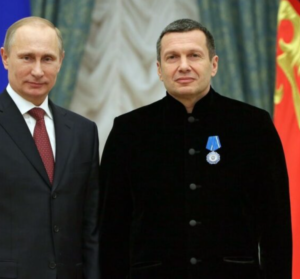
Zelenskyy described Putin’s public criticism of Western military operations, particularly regarding Iran, as “all talk” without substantial backing. In interviews with international media, he suggested that Russia’s reluctance to provide military support to Iran reflects a broader pattern in which the Kremlin makes strong declarations without translating them into material action.
From Ukraine’s perspective, the war with Russia remains the central conflict, and any distraction caused by other global theaters—such as the Middle East—could pose additional risks.
Ukraine continues to rely on Western-supplied air defense systems and weapons in its defensive operations against Russia’s invasion, and Zelenskyy has warned that divided global attention and resources could slow support for Ukraine’s defense.
Why Russia Is Likely Not to Intervene Directly in the Middle East
Despite high-profile statements and diplomatic criticism, most independent analysts believe Russia is unlikely to directly intervene in the Israel-Iran conflict for several key reasons:
-
Military and Economic Pressure From Ukraine
Russia’s military has been engaged in a large-scale war with Ukraine for more than four years, suffering heavy casualties, equipment losses, and logistical challenges. At the same time, Western sanctions continue to strain Russia’s defense industry and broader economy. -
Avoiding Direct Conflict With NATO
Direct involvement in a Middle Eastern war alongside Iran could risk confrontation with the United States and NATO—an outcome Russia seeks to avoid. Although Russian officials issue harsh rhetoric, they generally avoid actions that could escalate into full-scale war with nuclear-armed powers. -
Diplomatic Balance With Israel
Despite geopolitical disagreements, Russia maintains functional relations with Israel in areas such as Syria, where Moscow has tried to avoid military clashes with Israeli forces. Some analysts view this informal coordination as evidence that Russia prefers controlled engagement over uncontrolled escalation. -
Economic Factors
Instability in the Middle East—especially disruptions to oil production or transportation—can affect global energy markets. Higher oil prices, for example, could benefit key Russian economic sectors that depend heavily on energy exports.
Some energy experts note that increased oil prices resulting from Middle Eastern instability can boost revenues for Russian producers.
Taken together, these factors make direct Russian military intervention in the current Middle Eastern escalation unlikely in the short term, even if diplomatic rhetoric remains heated.
Global Reactions and Broader Fears
While public attention has focused on Russia’s internal warning system test and controversial political statements, major international institutions and governments continue to call for restraint and peace.
Organizations such as the United Nations have repeatedly urged de-escalation in conflict regions to prevent wider warfare.
Although concerns about a broader world war—sometimes referred to online as “World War III”—appear in public discussions, experts caution that such scenarios remain speculative and would require far more than diplomatic tension to materialize.
For example, world leaders reacted strongly to earlier U.S. strikes on Iranian nuclear sites, with some governments condemning the attacks and others calling for diplomacy, highlighting the complexity of global responses to military escalation.
What This Means Moving Forward
At present, Russia’s siren test and Medvedev’s warning statements have attracted headlines because they tap into deep fears about international stability. However, these events should be interpreted in context:
• Nationwide siren tests are standard civil defense preparedness measures rather than signs of imminent war.
• Political rhetoric, even when harsh, does not necessarily reflect official policy decisions to initiate large-scale conflict.
• Multiple global actors continue seeking diplomatic solutions despite heightened regional tensions.
The current situation reflects a combination of longstanding conflicts, rising nationalist narratives, and amplified media coverage—not a certain path toward global war.
Ongoing diplomatic efforts, intelligence cooperation among allied nations, and economic interdependence between countries continue to serve as stabilizing forces despite ongoing uncertainty.