On March 6, 1981, Marianne Bachmeier entered a courtroom in Lübeck, Germany, with purpose in every step.
Then, suddenly, she pulled a loaded pistol from her purse and opened fire on 35‑year‑old sex offender Klaus Grabowski.
Grabowski had been accused of kidnapping, abusing, and murdering Marianne’s 7‑year‑old daughter, Anna Bachmeier.
Seconds later, Grabowski took his final breath on the courtroom floor — struck by seven of Marianne’s bullets. The grieving mother was immediately arrested but showed no sign of remorse. More than 40 years later, “Revenge mom” remains a powerful and controversial figure — and her sentence still divides the nation.
The loss of a child is the ultimate tragedy, often described as the worst pain a parent can endure.
On May 5, 1980, Marianne Bachmeier’s life changed forever. In the 1980s, she was a struggling single mother running a pub in Lübeck, northern Germany. Her own youth had been marked by hardship and trauma. Her father had been a member of the Waffen‑SS, one of Nazi Germany’s most infamous organizations.

Growing up, Marianne endured multiple rapes by different men. At just 16, she became pregnant. Unable to raise the baby alone, she placed the child for adoption. At 18, she became pregnant again — and once more gave the baby up.
In 1973, Marianne gave birth to her third child, Anna. Still a single mother, she raised the little girl on her own.
According to reports, Anna was a “happy, open‑minded child,” but tragedy soon struck. In May 1980, after an argument with her mother, Anna skipped school and walked toward a friend’s house. On the way, she was kidnapped by 35‑year‑old Klaus Grabowski, a local butcher.
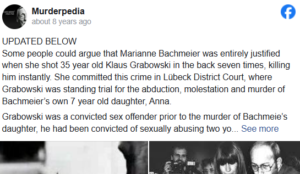
Grabowski held Anna in his apartment for hours, abused her, and eventually strangled her. He then placed her body in a box and hid it near a canal.
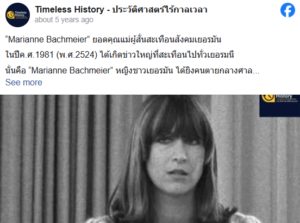
Later that evening, Grabowski returned to bury the body — but was arrested at his favorite pub after his fiancée alerted police. He was already a convicted sex offender who had previously assaulted two young girls.
During a 1976 prison stay, he had voluntarily undergone castration. Two years later, he began hormone treatment to reverse it so he could resume a relationship with his fiancée.
Grabowski confessed to killing Anna but denied sexually abusing her. During his trial, he went even further — claiming Anna had tried to seduce and extort him.
He blamed his victim for his crime, insisting he killed her only because she threatened to accuse him of inappropriate touching unless he paid her.
The court did not believe him.
But his disturbing claims pushed Marianne into a state of rage, grief, and helplessness. On March 6, 1981 — the third day of the trial — she decided to act.
Somehow, she smuggled a gun into the courtroom, bypassing security. Moments after entering, she pulled the pistol from her handbag, aimed at her daughter’s killer, and emptied the magazine. Seven of eight bullets struck Grabowski, killing him instantly.
After the shooting, Marianne dropped her Beretta M1934. Her voice echoed through the courtroom:
“He killed my daughter… I wanted to shoot him in the face, but I shot him in the back… I hope he’s dead.”
According to police officers, she also called Grabowski a “pig.”
She was arrested on the spot and initially charged with murder. During her 1982 trial, Marianne claimed she acted in a dreamlike state after imagining her daughter in the courtroom.
But experts testified that her accuracy with the gun suggested practice and planning. Doctors asked her for a handwriting sample; she wrote: “I did it for you, Anna,” decorating the note with seven hearts — widely interpreted as one for each year of Anna’s life.
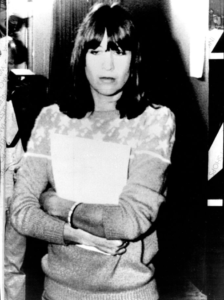
If convicted, she faced life in prison.
Her act of vigilante justice drew massive media attention worldwide. Many saw her as a hero — a mother avenging her child. She was dubbed “Revenge mom,” and public sympathy was overwhelming.
Initially, the media portrayed her as a saint. But journalists soon uncovered details about her past — including the children she had given up for adoption and her time spent at the bar she ran. These revelations complicated the public’s perception.

In 1983, Marianne was convicted of premeditated manslaughter and unlawful possession of a firearm. She received a six‑year sentence but was released after three.
Her punishment deeply divided the public. A survey by the Allensbach Institute found that 28% thought the sentence was appropriate, 27% thought it was too harsh, and 25% believed it was too lenient.
After her release, Marianne moved to Nigeria and married a German teacher. In 1990, she divorced and relocated to Sicily. Later, she was diagnosed with pancreatic cancer and returned to Lübeck.
Her act of revenge remained a topic of national discussion throughout the 1990s.
In a rare 1994 radio interview, she said:
“I think there is a very big difference if I kill a little girl because I’m afraid I then have to go to prison for my life. And then also the ‘how,’ so that I stand behind the girl and strangle her…”

In a 1995 interview with Das Erste, she admitted she had shot Grabowski deliberately — to stop him from spreading more lies about Anna.
On September 17, 1996, Marianne died in a Lübeck hospital. She had hoped to spend her final days in Sicily but never made it there.
She was buried beside her beloved daughter.
Marianne’s story — and the question of vigilante justice — remains controversial. Many believe she delivered the punishment Grabowski deserved. Others argue she should not have taken the law into her own hands.
What’s your opinion? Please share your thoughts in our Facebook comment section.