Breaking developments surrounding Hillary Rodham Clinton’s closed-door deposition before the U.S. House Committee on Oversight and Accountability have intensified public debate over transparency, credibility, and the broader effort to examine the legacy of convicted sex offender Jeffrey Epstein.
The former Secretary of State appeared under oath as part of the committee’s review of issues related to Epstein’s crimes, his social network, and the institutional failures that allowed him to operate for years before facing federal prosecution. While Clinton has not been accused of wrongdoing in connection with Epstein’s criminal conduct, her testimony has drawn political scrutiny amid renewed congressional interest in how powerful individuals intersected with Epstein’s world.
What follows is a comprehensive, fact-based overview of the context, the public reaction, and why this moment has reignited discussion about accountability, due process, and transparency in high-profile investigations.

The Context of the Oversight Review
The House Oversight Committee, chaired by James Comer, has framed its review of matters related to Epstein as part of a broader commitment to oversight and public accountability. Congressional oversight committees routinely examine whether federal agencies, institutions, or systemic processes functioned properly—especially in cases involving national attention.
Epstein, a financier with connections to political, academic, and business leaders, was arrested in 2019 on federal sex trafficking charges. He died later that year in federal custody. His associate, Ghislaine Maxwell, was convicted in 2021 of sex trafficking and related offenses for her role in recruiting and grooming underage girls for Epstein.
The committee’s review has focused in part on understanding how Epstein maintained relationships with prominent individuals and whether any institutional gaps contributed to delays in justice. Lawmakers have emphasized that such inquiries are about institutional accountability and ensuring protections for victims—not about making unsupported accusations.
Clinton’s Appearance and Public Statements
Hillary Clinton, who served as U.S. Secretary of State from 2009 to 2013 and was the Democratic nominee for president in 2016, appeared for a transcribed, closed-door deposition. Closed sessions are common in congressional investigations, particularly when testimony may involve sensitive or legally protected information.
Ahead of the session, Clinton publicly expressed concerns about the format. In interviews, she argued that open hearings provide greater transparency and allow the public to directly assess testimony. She suggested that televised proceedings reduce speculation and help prevent selective leaks.
Her position has remained consistent: she has said she does not recall having any relationship with Jeffrey Epstein, has no memory of traveling on his aircraft, and had no knowledge of his criminal behavior. Public reporting has not produced verified evidence linking her to Epstein’s crimes, and she has not been charged with any offense connected to him. No Epstein survivor has publicly accused Hillary Clinton of wrongdoing.
Republican Response and Questions About Recollection
After the deposition, some Republican committee members described Clinton’s testimony as heavily qualified. Such phrasing is common in legal settings, where witnesses are advised to answer precisely and avoid speculation. Qualifiers are often used to ensure accuracy, especially when discussing events from many years earlier.
Critics argue that repeated reliance on memory-based qualifiers can create an impression of evasiveness, particularly when the witness is a seasoned public official. Supporters counter that careful phrasing is responsible testimony, not avoidance.
Some lawmakers also expressed skepticism about Clinton’s statements regarding the timeline of any indirect association between her husband, former President Bill Clinton, and Epstein. Bill Clinton has acknowledged traveling on Epstein’s plane several times in the early 2000s but has stated he was unaware of Epstein’s criminal activity at the time. He has not been charged with any crime related to Epstein. Public records confirm those flights occurred before Epstein’s 2008 conviction. There is no verified evidence that Hillary Clinton participated in those trips.
The Transparency Debate: Public Hearing vs. Closed Deposition
A central dispute involves the format of the testimony. Clinton has argued that if Congress seeks transparency, public hearings are preferable. She has said that televised sessions allow Americans to evaluate demeanor, context, and full answers rather than relying on selective summaries.
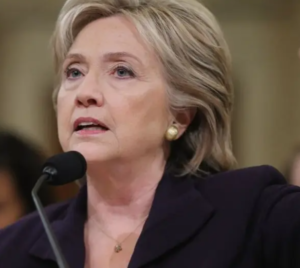
Committee leadership maintains that transcribed depositions are a standard investigative tool. Lawmakers often conduct closed-door interviews first to gather detailed information before deciding whether to hold public hearings.
Both formats have precedents. Closed sessions can reduce grandstanding and protect sensitive material, while public hearings provide visibility and accountability. This tension is not unique to this investigation and has characterized numerous congressional inquiries across administrations.
The Broader Epstein Legacy
Testimony linked to Epstein continues to generate strong reactions because of the seriousness of his crimes. Epstein was accused of trafficking and abusing underage girls for years. His death in custody prevented a full criminal trial, leaving many questions unanswered. Maxwell’s conviction provided some closure, but broader accountability remains an ongoing concern.
Investigative reporting has documented how Epstein cultivated relationships with prominent figures across politics, academia, finance, and entertainment. Being socially connected to Epstein does not imply criminal involvement, but public curiosity persists about how he gained access to influential networks.
For lawmakers, part of the inquiry centers on whether warning signs were missed or whether earlier legal resolutions failed to protect victims. Epstein’s controversial 2008 plea agreement in Florida has been widely criticized. The Department of Justice’s Office of the Inspector General later reviewed aspects of federal handling of Epstein’s case and identified serious failures in the 2019 detention process that preceded his death.
Memory, Oath, and Public Trust
A recurring theme from Clinton’s deposition is the role of sworn testimony in democratic accountability. Testifying under oath carries legal consequences for knowingly false statements. At the same time, human memory—especially regarding events from decades earlier—is imperfect.
Legal experts note that phrases such as “to the best of my recollection” are standard in depositions. Witnesses are encouraged not to guess. However, in politically charged contexts, the optics of such language can become a flashpoint. For many Americans, the distinction between cautious precision and perceived evasion is not always clear, deepening partisan divides.
No Criminal Charges or Public Accusations
It is important to separate verified facts from speculation. Hillary Clinton has not been charged with any crime related to Jeffrey Epstein. There is no public record of any criminal investigation naming her as a target. Bill Clinton’s past flights with Epstein are documented, but he has denied knowledge of Epstein’s criminal behavior and has not faced criminal charges. Maxwell remains the only high-profile associate convicted for direct participation in Epstein’s trafficking scheme.
Why the Public Continues to Watch
The Epstein case has become a symbol of concerns about elite accountability, institutional transparency, and justice for victims. For some Americans, congressional scrutiny represents an effort to ensure that influence does not shield wrongdoing. For others, repeated political investigations risk appearing partisan if they do not yield new evidence.
The demand for clarity reflects broader anxieties about trust in institutions. Many citizens want assurance that powerful individuals are subject to the same standards as everyone else.
The Path Forward
Congress has the authority to release deposition transcripts, subject to legal considerations such as privacy protections and ongoing investigations. If transcripts are published, they will allow the public to assess the full context of Clinton’s answers rather than relying on summaries from individual lawmakers.
Conclusion
Hillary Clinton’s closed-door deposition before the House Oversight Committee has reignited debates about transparency, memory, and public trust in high-profile investigations.
While critics question her reliance on memory qualifiers, there is no verified evidence linking her to criminal conduct related to Jeffrey Epstein.
The broader significance lies less in one witness and more in whether institutions can provide credible answers in cases that involve power, influence, and abuse.
For survivors of exploitation, accountability remains paramount. For lawmakers, oversight is a constitutional responsibility. For the public, clarity matters.
As transcripts and additional information emerge, Americans will have the opportunity to examine the facts directly.
In a democratic system, that commitment to evidence—rather than assumption—is what ultimately sustains trust.