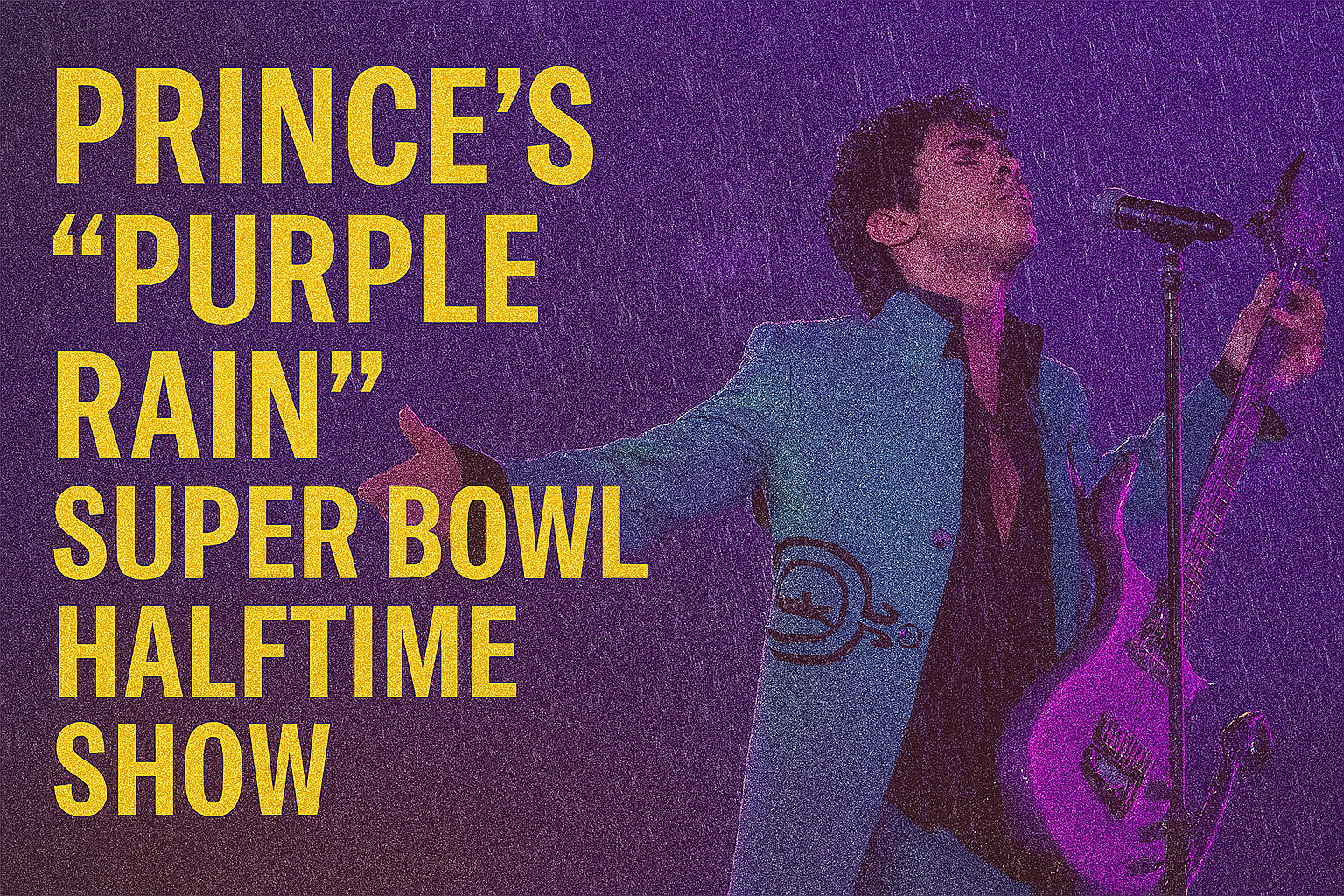
Prince’s 2007 Super Bowl XLI halftime show is widely hailed as the greatest live performance in Super Bowl history—and perhaps one of the most iconic moments in televised music. What made it unforgettable wasn’t just the music, but the timing, the weather, and the sheer force of Prince’s artistry. As rain poured down on Dolphin Stadium in Miami Gardens, Florida, Prince turned a potential disaster into a transcendent spectacle.
The Setup: A Risky Stage for a Risk-Taking Artist
Super Bowl XLI, held on February 4, 2007, featured the Indianapolis Colts vs. the Chicago Bears. But for many viewers, the real showdown happened during halftime. Prince was chosen to headline the show, backed by the Florida A&M University Marching 100 Band. The producers—Don Mischer Productions and White Cherry Entertainment—knew they were working with a legend, but they couldn’t have predicted the weather.
As the show approached, a torrential downpour soaked the stadium. Producers reportedly asked Prince if he was okay performing in the rain. His response: “Can you make it rain harder?”. That defiance set the tone for what would become a mythic moment.
The Setlist: A Medley of Power and Precision
Prince’s 12-minute set was a masterclass in musical storytelling. He opened with “Let’s Go Crazy,” immediately igniting the crowd. He then transitioned into covers of “Proud Mary” (Creedence Clearwater Revival), “All Along the Watchtower” (Bob Dylan), and “Best of You” (Foo Fighters)—a surprising choice that showcased his versatility and reverence for rock history.
But it was the finale—“Purple Rain”—that turned the performance into legend. As Prince stood silhouetted behind a flowing curtain, holding his signature symbol-shaped guitar, the rain intensified. Purple lights bathed the stadium. The crowd swayed. And Prince, drenched and defiant, delivered a version of “Purple Rain” that felt like prophecy.
The Rain: Nature’s Perfect Cue
The rain wasn’t planned, but it couldn’t have been more poetic. “Purple Rain” is a song about heartbreak, transcendence, and spiritual release. To hear it performed live, in a literal downpour, was surreal. The visuals—Prince’s silhouette, the shimmering curtain, the purple lighting—created a cinematic atmosphere that felt otherworldly.
The rain also added a layer of danger. The stage was slick. The electronics were exposed. But Prince never faltered. He leaned into the storm, using it as a dramatic tool rather than a hindrance. It was a moment of pure showmanship, where risk met reward in spectacular fashion.
The Guitar Solo: A Cry in the Storm
Prince’s guitar solo during “Purple Rain” was the emotional apex of the show. His fingers danced across the strings, sending wails into the night sky. The solo wasn’t just technical—it was spiritual. It felt like a cry, a prayer, a release. And as the rain fell harder, the solo soared higher.
The camera work added to the drama. Prince’s silhouette behind the curtain became a symbol of mystery and power. The crowd, soaked and stunned, watched in reverent silence. It was no longer just a halftime show—it was a ritual.
The Legacy: A Performance That Changed the Game
Prince’s halftime show is now considered the gold standard. It’s cited by critics, musicians, and fans as the moment when the Super Bowl halftime show became art. It wasn’t about spectacle—it was about soul. Prince didn’t rely on pyrotechnics or backup dancers. He relied on music, mood, and mastery.
The performance also redefined what a live show could be. It proved that imperfection—like rain—could enhance rather than detract. It showed that vulnerability and power can coexist. And it reminded the world that Prince was not just a performer—he was a force of nature.
Cultural Impact: Still Reverberating
Years later, the performance continues to resonate. Clips of “Purple Rain” in the storm are shared every Super Bowl season. Musicians cite it as inspiration. Fans remember where they were when they saw it. It’s become part of the cultural fabric—a moment that transcends time.
Even in Prince’s passing in 2016, the memory of that night remains vivid. It’s a reminder of his genius, his courage, and his ability to turn a football stadium into a sanctuary.