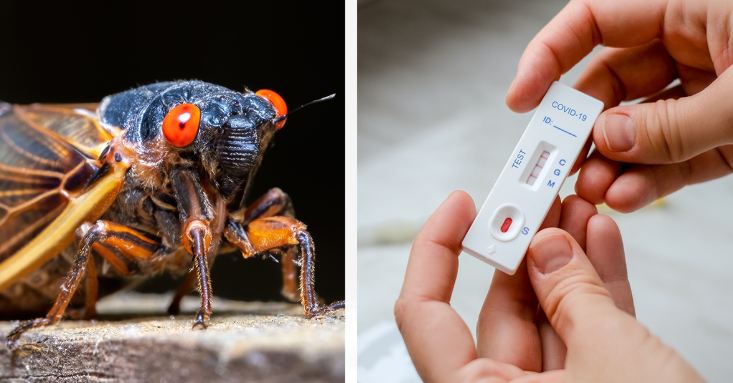
A new COVID variant is spreading, and experts are beginning to take notice. It has been given an unusual nickname: “Cicada.” There’s a reason behind it.
The strain, known as BA.3.2, is drawing closer attention because of the many changes in its spike protein, which set it apart from the variants currently circulating.
“Perhaps more concerning is the variant’s slew of genetic changes in its spike protein, which set it apart from other variants circulating,” said Andrew Pekosz, Ph.D., a virologist at the Johns Hopkins Bloomberg School of Public Health, in an interview with TODAY.
The virus that causes COVID‑19 continues to evolve as it spreads, which is normal and leads to new variants over time. Most variants today are closely related, with only small differences. But experts say BA.3.2 is different — it clearly stands out.
Cicada – a new COVID strain Scientists say it was first detected in South Africa in 2024, but it remained quiet for a long period before suddenly reappearing.
It has now been identified in more than 20 countries. According to the CDC, it is circulating in at least 25 U.S. states.
The nickname comes from the cicada insect, which can stay underground for years before emerging again. Experts say this variant behaves similarly. BA.3.2 carries a large number of mutations — around 70 to 75 changes in the spike protein. These mutations may help it spread more easily and potentially evade immunity.
There is, however, some reassuring news. Experts believe current COVID vaccines still offer protection against severe illness. So even if the variant spreads, it may not be more dangerous.
At the moment, the BA.3.2 strain still represents a small portion of total COVID cases. But in some parts of Europe, it has already made up a significant share of infections. Still, it is too early to know whether “Cicada” will become the next dominant variant.