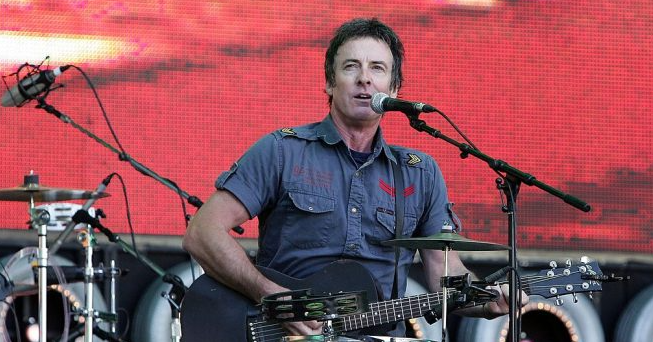
Rob Hirst, the founding drummer and rhythmic backbone of the legendary Australian rock band Midnight Oil, has died at 70 after a long battle with pancreatic cancer.
The band confirmed Hirst’s passing in a heartbreaking social media statement shared Tuesday, Jan. 20, announcing the loss of one of Australia’s most influential rock musicians.
Midnight Oil, one of Australia’s most beloved bands, has sold more than 20 million albums worldwide and rose to global fame with their 1987 breakthrough album Diesel and Dust. Their music helped define a generation of politically charged rock.
Now, a vital and irreplaceable part of the band is gone. After being diagnosed with pancreatic cancer in April 2023, drummer Rob Hirst has passed away. Midnight Oil shared the news on Instagram alongside a photo of the band, expressing their grief and gratitude for the music they created together.
“We are shattered and grieving the loss of our brother Rob,” the band wrote. “For now there are no words but there will always be songs. Love Always from Jim, Martin & Pete.”
In a separate Facebook statement, the band revealed that Hirst had been living with cancer for nearly three years.
“After fighting heroically for almost three years, Rob is now free of pain,” the statement said.
It continued: “‘A glimmer of tiny light in the wilderness.’ He died peacefully, surrounded by loved ones. The family asks that anyone wanting to honour Rob donate to Pankind, Pancreatic Cancer Australia or Support Act.”
A founding force in Australian rock Hirst co-founded Midnight Oil in Sydney in 1972, helping shape a band that would become one of Australia’s most politically outspoken and globally recognized rock acts.
The group released its self-titled debut album in 1978 and later earned 11 ARIA Awards. In 2006, Midnight Oil was inducted into the ARIA Hall of Fame, cementing its place in Australian music history.
Beyond his role behind the drum kit, Hirst was a key creative contributor, co-writing many of the band’s most iconic songs, including “Beds Are Burning,” “The Dead Heart,” “Blue Sky Mine,” “Forgotten Years,” and “King of the Mountain.”
Final years Midnight Oil went on hiatus in 2002 before reuniting in 2016 to record new music. The band released two additional albums, including their final record, Resist, in 2022.
That album was followed by a farewell tour marking the end of their decades-long run. Hirst continued making music outside the band as well, launching a solo career in 2005.
In 2020, he released a collaborative album with his daughter Jay O’Shea, whom he had only reconnected with a few years earlier. O’Shea shared the deeply personal story behind the project on Instagram.
“For those who don’t know, I was adopted as a baby and 10 years ago found my birth parents. The story of how we all came together sounds like bad fiction writing as it’s quite unbelievable,” she wrote.
“We really made this music as a way of getting to know each other better and after much laughing, drinking some good wines and eating too much cheese, these songs were born,” she added.
Started counting his days “There were no parameters, guidelines or pressures of what a reunited Father/Daughter collaboration should sound like. Each song is a snapshot. Each song has its own space and story.”
Hirst’s final project, a solo EP titled A Hundred Years or More, was released last November.
“Now that I’ve started counting back in life rather than counting forward, the days are even more precious,” Hirst said in one of his final interviews.
“I still wake in the night with lyrics and melodies. Musical insomnia. If you’re a songwriter, blessed or cursed, it’s always there. Maybe there’s a couple more songs. You never say never.”
Sadly, there would be no more songs, as the beloved musician passed away in January 2026 at age 70. Following the announcement of his death, his daughter O’Shea shared a brief but emotional tribute.
“There are no words right now to describe the feeling of losing this great friend and Father. We are all just… heartbroken. Love you so much Dad, J💙,” she wrote.

Rob Hirst leaves behind a towering musical legacy — one built on rhythm, resistance, and a belief that music could still change the world. RIP.