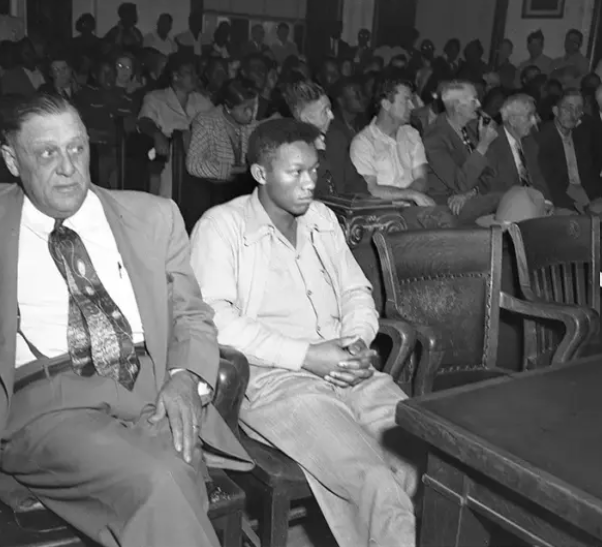
In a powerful moment of justice long overdue, Tommy Lee Walker, a young Black man executed in 1956 following a wrongful conviction for rape and murder, has been formally exonerated—more than 70 years after his death. The Dallas Commissioners Court unanimously adopted a resolution on January 21, 2026, declaring Walker innocent, acknowledging the harm caused by the miscarriage of justice, and recognizing the profound impact on his family and the community. This historic declaration not only serves as a posthumous vindication for Walker but also highlights the systemic injustices that plagued the U.S. criminal justice system in the mid‑20th century, particularly against Black Americans in the segregated South.
The Crime and Arrest: 1953
Tommy Lee Walker was only 19 years old in October 1953 when Venice Parker, a White store clerk, was brutally attacked and murdered near Dallas Love Field Airport. Parker had just finished her shift at a local toy store and was waiting for the bus when she was sexually assaulted and stabbed multiple times. A passing driver found her and rushed her to the hospital, but she was pronounced dead shortly afterward.
In the days following the murder, two witnesses reported seeing a Black man—allegedly Walker—leaving the area around the time of the attack. However, court documents from Walker’s 1956 appellate appeal later clarified that neither witness actually saw the crime occur.
Additionally, Parker herself was unable to speak due to severe throat wounds, and the officer who claimed she identified a Black man as her assailant did so under circumstances that have since been seriously questioned.
The Arrest and Forced Confession
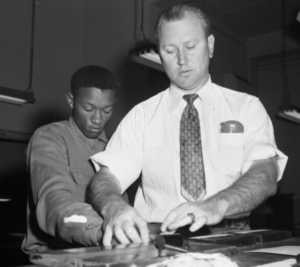
Four months after the murder, Walker was arrested by Dallas Police Homicide Bureau Chief Will Fritz. At the time, racial bias heavily influenced law enforcement and the judicial system, particularly in cases involving Black suspects and White victims.
According to the Innocence Project, Walker was also alleged—without evidence—to have been a member of the Ku Klux Klan, an accusation that would have significantly shaped public perception.
Walker maintained an alibi: he was attending the birth of his first child. More than ten eyewitnesses corroborated his presence. But during extensive police interrogation, Walker was subjected to coercive tactics. Officers allegedly threatened him with the electric chair and pressured him until he signed a written confession. Crucially, no forensic or circumstantial evidence connected him to the crime.
At trial, the prosecution relied solely on this coerced confession. Walker later recanted, explaining that he confessed under duress and intimidation. Yet despite the lack of physical evidence, he was convicted.
“I feel that I have been tricked out of my life,” Walker said, according to records preserved by the Innocence Project.
On May 12, 1956, he was executed in the electric chair at the age of 21. His final words reportedly reaffirmed his innocence.
Racial and Systemic Injustice in 1950s Dallas
Walker’s case unfolded during a period when racial prejudice permeated both society and the legal system. The 1950s were marked by segregation in the American South, where Black individuals were routinely denied fair trials, competent legal counsel, and equal protection under the law.
Wrongful convictions, coerced confessions, and discriminatory jury selections were common—especially in cases involving alleged crimes against White victims.
The lack of forensic technology, combined with racial bias and public pressure for swift convictions, created an environment where young Black men like Walker were especially vulnerable. Scholars and legal analysts have described cases like his as emblematic of systemic failings that disproportionately harmed Black communities.
Family Impact and Trauma
The repercussions of Walker’s wrongful conviction extended far beyond his own life. His family endured decades of grief and stigma, never receiving closure or justice.
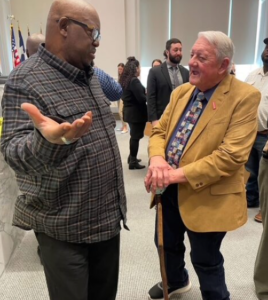
Walker’s son, Edward Smith, attended the exoneration ceremony in Dallas on January 21, 2026, marking the first public acknowledgment of his father’s innocence.
Equally historic was the meeting between Edward Smith and Venice Parker’s son, Joseph Parker—a moment symbolizing reconciliation, acknowledgment of past wrongs, and a shared desire to honor both families affected by the tragedy.
Dallas County Criminal District Attorney John Creuzot released photographs of the encounter, calling it “a moment that transcended generations of pain.”
“Parker’s son affirmed what the evidence makes clear: Tommy Lee Walker was innocent,” Creuzot’s office said.
The Legal Path to Exoneration
Walker’s exoneration came after decades of advocacy and legal scrutiny. Organizations such as the Innocence Project played a crucial role in investigating wrongful convictions and pushing for posthumous exonerations.
In Walker’s case, historical records, witness testimony, and the absence of forensic evidence were reexamined, confirming what many had long believed: his conviction was based on a coerced confession and racial prejudice rather than factual proof.
The Commissioners Court’s resolution formally acknowledged Walker’s innocence and the injustice inflicted upon him, his family, and the broader Dallas community. The statement read:
“Justice does not expire with time. Today, we acknowledge that Tommy Lee Walker was wrongfully convicted and executed, and we honor his memory by declaring him innocent.”
Broader Implications for Justice
Walker’s exoneration is more than an individual vindication; it underscores long‑standing issues within the American justice system. It highlights the dangers of coerced confessions, racial bias in law enforcement, and the lasting harm caused by wrongful convictions.
Legal experts note that posthumous exonerations, while symbolic, serve as reminders of the need for systemic reform to prevent similar injustices.
The case also illustrates the intersection of race, poverty, and legal inequities. Young Black men in mid‑20th‑century America faced disproportionately high rates of arrest, conviction, and execution.
Cases like Walker’s reveal the enduring consequences of historical discrimination while inspiring contemporary efforts to ensure fairness, accountability, and transparency.
Community Response and Healing
The exoneration ceremony drew legal officials, historians, activists, and community members. Many viewed it as a step toward reckoning with the past and fostering dialogue about racial justice and due process.
The meeting between the descendants of Walker and Parker became a symbol of restorative justice—honoring the lives affected while acknowledging historical wrongs.
Creuzot emphasized the importance of addressing injustices regardless of time: “No matter how long ago the injustice occurred, it’s important to address it. Justice does not expire with time.”
The emotional weight of the ceremony reminded attendees of the human cost of wrongful convictions and the value of acknowledgment, even decades later.
Historical Context: Dallas and 1950s America
The Walker case unfolded against the backdrop of a segregated and racially divided United States. Dallas, like many Southern cities, had deeply entrenched racial hierarchies that influenced policing, jury decisions, and public opinion.
Black individuals accused of crimes against White victims were particularly vulnerable, often receiving little to no legal protection.
Coerced confessions like Walker’s frequently determined outcomes without corroborating evidence. His case is now studied by legal historians and civil rights scholars as a stark example of how systemic racism and procedural failings intersected to create tragic outcomes.
Walker’s Legacy
Although Walker’s life was tragically cut short, his exoneration restores his dignity and confirms the truth: he was an innocent man. Beyond vindication, the case serves as a teaching moment for law enforcement, legal professionals, and the public.
It underscores the importance of evidence‑based convictions, free from bias and subject to rigorous scrutiny.
Walker’s story also highlights the courage of advocates who fight for justice even decades later. Their persistence ensures that wrongs are acknowledged, historical injustices corrected, and the principles of fairness upheld.
Looking Forward
The exoneration of Tommy Lee Walker stands as a powerful reminder that justice, though delayed, remains essential. It calls for continued vigilance in protecting civil rights, addressing systemic bias, and preventing future miscarriages of justice.
The ceremony and resolution mark a moment of healing and recognition, demonstrating that even after seven decades, truth and justice can prevail.
As Edward Smith and Joseph Parker shared this historic moment, it became a testament to the resilience of families, the importance of acknowledgment, and the enduring pursuit of justice for all.
“In a moment that transcended generations of pain, two families came together to honor the truth,” Dallas County officials said.
Tommy Lee Walker, executed at just 21, finally has his name cleared. His exoneration reminds the world that wrongful convictions leave lasting scars—but that justice, no matter how delayed, remains a guiding principle for a fair and equitable society.