Families often avoid difficult conversations, especially when they involve aging, independence, and the slow changes that creep in without warning. But sometimes, a single moment forces everyone to confront what they’ve been trying not to see. For one family, that moment came after a day filled with confusion, strange comments, and behavior that didn’t feel like “grandpa” at all.
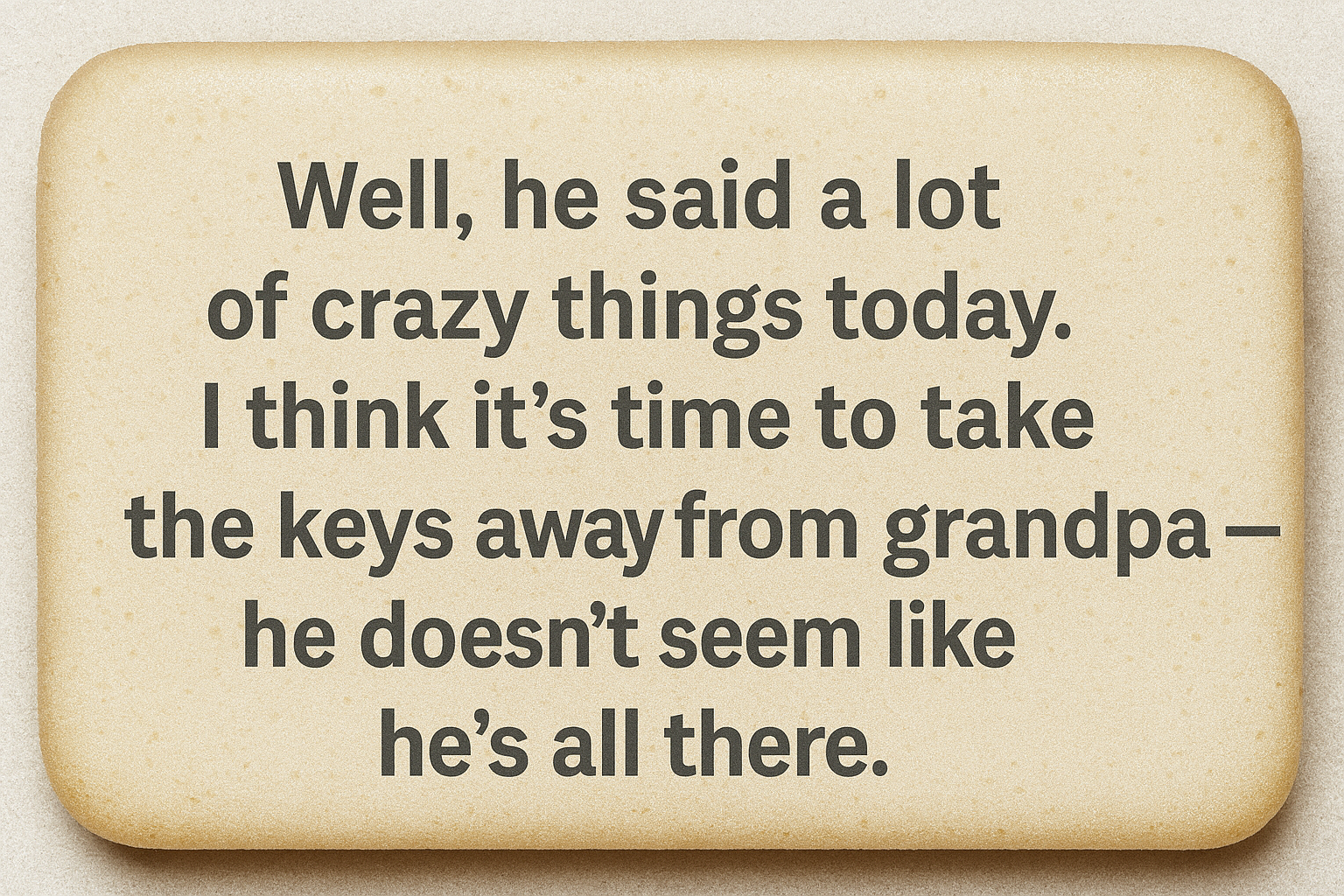
“Well, he said a lot of crazy things today. I think it’s time to take the keys away from grandpa — he doesn’t seem like he’s all there.”
It was a sentence spoken half‑jokingly, half‑fearfully, but it carried the weight of years. And it marked the beginning of a conversation no one ever wants to have.
The Day Everything Shifted
It started with small things — repeated questions, forgotten names, misplaced items. Everyone brushed it off as normal aging. After all, who doesn’t forget a few things here and there?
But today was different.
Grandpa rambled about events that never happened, insisted he had appointments that didn’t exist, and became frustrated when the family gently corrected him. He accused people of moving his belongings, claimed he needed to “drive to work” even though he’d retired decades earlier, and grew agitated when told otherwise.
By evening, the family exchanged uneasy glances. Something wasn’t right. Something had changed.
The Car Keys: A Symbol of Independence
For many older adults, driving isn’t just transportation — it’s freedom. It’s dignity. It’s proof that they’re still capable, still in control, still themselves.
Taking away the keys feels like taking away a piece of their identity.
That’s why families hesitate. They don’t want to hurt the person they love. They don’t want to trigger anger, sadness, or shame. And they don’t want to admit what the loss of driving often represents: a decline that can no longer be ignored.
But safety has to come first.
Today’s confusion wasn’t harmless. If grandpa got behind the wheel in that state, the consequences could be devastating — not just for him, but for everyone on the road.
The Signs Everyone Missed
Looking back, the family realized the clues had been there all along:
- He got lost driving familiar routes.
- He mixed up medications.
- He repeated the same stories within minutes.
- He struggled to follow conversations.
- He became irritable when confused.
- He insisted he was fine, even when he clearly wasn’t.
Each moment felt small on its own. But together, they painted a picture that was impossible to ignore.
Today’s outburst — the “crazy things” he said — wasn’t random. It was a symptom.
The Emotional Weight of Realization
No one wants to admit that someone they love is slipping away. It feels like betrayal. It feels like giving up. But acknowledging the truth isn’t abandonment — it’s protection.
The family sat together that night, replaying the day’s events. The laughter they once shared over grandpa’s quirks now felt hollow. The jokes about “old age” didn’t land anymore. The fear beneath the humor was real.
Taking the keys wasn’t about control. It was about love.
The Conversation No One Wants to Have
The next morning, they approached him gently. They explained what they had seen, how worried they were, and why driving wasn’t safe anymore. As expected, he resisted. He insisted he was fine. He accused them of overreacting.
But when they described the things he had said the day before — things he didn’t even remember — his expression changed. Confusion. Embarrassment. Fear.
For the first time, he realized something was happening inside his own mind.
A Turning Point
Losing the ability to drive was painful, but it opened the door to something important: getting help. The family scheduled medical evaluations, reached out to specialists, and began learning how to support him through the changes ahead.
They discovered that early intervention could slow cognitive decline. They learned how to communicate more clearly, how to reduce frustration, and how to create routines that made him feel safe.
Most importantly, they learned that they weren’t alone — millions of families face the same heartbreaking moment.
A New Kind of Strength
Grandpa’s world became smaller, but it also became gentler. Without the pressure of driving, he relaxed more. Without the fear of hiding his confusion, he opened up. And without the burden of pretending everything was fine, he allowed his family to step in and help.
The man who once prided himself on independence found a new kind of strength: accepting support.
The Line That Changed Everything
“Well, he said a lot of crazy things today. I think it’s time to take the keys away from grandpa — he doesn’t seem like he’s all there.”
It wasn’t said out of frustration. It wasn’t said out of judgment. It was said out of love — the kind of love that protects, even when it hurts.
And for this family, it marked the beginning of a new chapter: one filled with patience, compassion, and the courage to face the truth together.