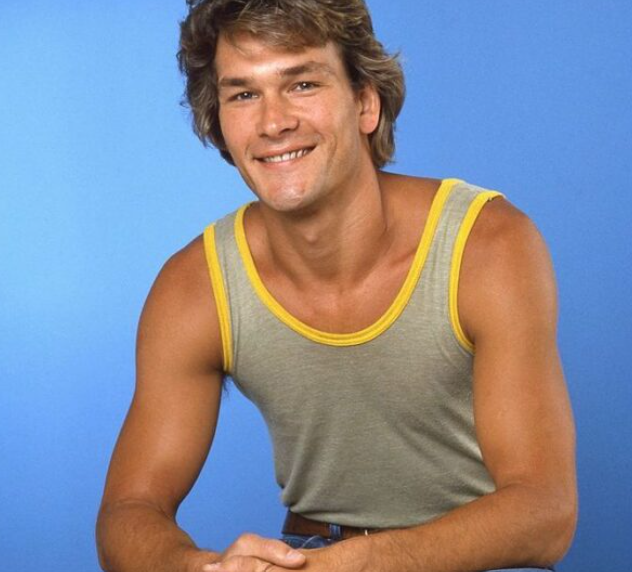
On August 18, 1952, in Houston, Texas, a boy was born who would one day capture the hearts of millions around the world.
Patrick Swayze entered the world in a modest home, the son of Jesse Wayne Swayze, a draftsman for a chemical plant, and Patsy Swayze, a choreographer and founder of the Houston Jazz Ballet Company.
From the beginning, it was clear that Patrick was not an ordinary child. He possessed an energy and intensity that set him apart — a natural curiosity and determination that would fuel his future success.
From his earliest days, Patrick’s mother, Patsy, played a profound role in shaping his life. She didn’t believe in babysitters, so Patrick spent countless hours accompanying her to dance classes and rehearsals. As a child, he absorbed her passion for performance, learning to appreciate the artistry, discipline, and expression that came with dance. But dance was not his only passion.
Patrick threw himself into a wide range of activities, from Little League baseball to football, swimming, skating, and gymnastics.
He also studied the violin, sang in the school choir, and took on lead roles in school plays. He wanted to do everything — and he pursued it all with relentless determination.
“He wanted to do everything,” Patsy later said. “He was a skater, a swimmer, involved in all the Little League sports — baseball, football — studied dancing every day, played the violin, sang in the school choir, did the leads in the school plays from junior high up. I guess you could call him hyper, but he just had to be busy all the time.”
While his talents were extraordinary, they also made him a target for bullying. Boys at school often dismissed singing and dancing as “girly,” and Patrick endured relentless teasing and, at times, physical confrontations.
He came home more than once with bruises and scratches from fights he couldn’t avoid. These painful experiences became formative, shaping his character and resilience.
As a teenager, Patrick’s parents encouraged him to stand his ground. One incident illustrates this clearly: one day, carrying his dance shoes in one hand and a violin in the other, Patrick encountered a group of boys who mocked him.
“Hey, twinkle your toes for us, pretty boy,” one of them sneered. The moment left a lasting impression, and his father stepped in to teach him how to defend himself physically, ensuring he could protect his dignity while navigating adolescence.

“If I ever see you start a fight, I’ll kick your [expletive],” his father warned. “And if I ever see you not finish a fight, I’ll kick your [expletive].”
Patsy offered her own advice: “Just take the ballet shoes out of your hip pocket and beat the snuff out of them.”
The lessons Patrick learned from his parents instilled a sense of self‑respect and courage that would carry him through both personal and professional challenges.
Despite these hardships, Patrick’s dedication to his craft never wavered. Dance wasn’t a hobby — it was a calling. By age 20, he had moved to New York City to further his training at the prestigious Harkness Ballet and Joffrey Ballet schools.
It was a period of intense discipline, where he honed his technique, strength, and artistry. Dance taught him precision, control, and confidence — qualities that would later define his performances on screen.
At the same time, Patrick excelled athletically. He was a talented football player and hoped to earn a college scholarship, but a serious knee injury derailed those plans.
In hindsight, the setback became a blessing in disguise. Freed from football, Patrick devoted himself fully to his other passions, particularly dance and gymnastics, which helped him recover physically and reinforced his mental resilience.
Patrick’s talents soon attracted attention beyond the dance world. In the early 1980s, he transitioned to acting, bringing the same intensity and discipline to his performances.
In 1983, he landed the role of Darrel “Darry” Curtis in Francis Ford Coppola’s adaptation of The Outsiders, sharing the screen with rising stars like Tom Cruise, Matt Dillon, and Emilio Estevez.
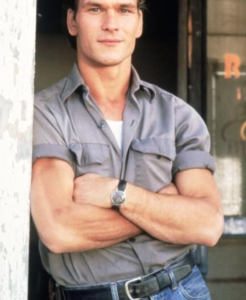
The role marked the beginning of a rising Hollywood career that would soon make Patrick a household name.
Subsequent films included Red Dawn (1984) and Youngblood (1986), where he continued to showcase his physicality, charisma, and commitment to his roles.
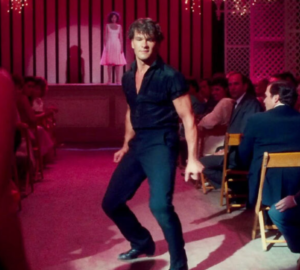
But in 1987, with the release of Dirty Dancing, Patrick Swayze truly achieved iconic status. As Johnny Castle, the charismatic dance instructor, he captivated audiences with his intensity, passion, and effortless charm.
The film’s success cemented his place in Hollywood history and introduced him to a global audience who admired not only his talent but his ability to convey both vulnerability and strength.
Behind the scenes, Patrick’s life was not without hardship. He faced profound personal losses and private struggles that remained largely hidden from the public. One of his deepest regrets was never becoming a father.
Patrick met Lisa Niemi in a dance class when he was 18 and she was 14, and they began a relationship two years later.
Their love was steadfast and enduring, spanning decades. In 1990, they were thrilled to learn they were expecting a child, only to face heartbreak when the pregnancy ended in miscarriage.
They tried again but were never able to conceive. The loss remained a source of deep sorrow for Patrick throughout his life.
The pressures of fame also brought challenges. After Dirty Dancing, Patrick struggled with the weight of public attention and expectations.
He turned to alcohol as a coping mechanism, telling People magazine in 2007, “Trying to deal with fame, I got stupid and drank too much. Trying to find what it is to be a real human being and what it is to live through fame was hard. But I feel fortunate that I’ve come out the other end.” Still, he never allowed these struggles to define him.
Tragedy struck repeatedly. In 1982, his father died of a heart attack, a loss that deeply shook him.
Later, the death of his sister Vicky — who battled mental health challenges — compounded his grief. Her passing in 1994, after years of serious struggles, devastated him.
Patrick had taken on a protective role in her life, paying medical bills and supporting her living expenses, which made her loss even more painful.

He admitted to The Daily Mail, “It was hard not to feel responsible, that I could have done something to prevent it. The longer your life goes on, the more death you face.”
Even as these sorrows weighed on him, Patrick remained committed to his work and the people he loved. His resilience showed in the way he faced illness, loss, and the demands of an extraordinary career with grace and determination.
He refused to let the public narrative define him; instead, he focused on meaningful work and nurturing his personal relationships.
Patrick Swayze’s legacy is multifaceted. He was a gifted actor, a remarkable dancer, and a compassionate human being who inspired millions through his art.
His story demonstrates the power of perseverance, the importance of self‑belief, and the impact of a supportive family. From his early days in Houston — overcoming bullying and mastering multiple disciplines — to the bright lights of Hollywood and the challenges of fame, Patrick’s life is a testament to the strength of the human spirit.
In September 2008, Patrick was diagnosed with pancreatic cancer. Despite the severity of his illness, he approached treatment and public discussion of his diagnosis with honesty and courage.
He continued to work as long as his health allowed, showing the same tenacity that had defined his life. Patrick Swayze passed away on September 14, 2009, leaving behind a legacy of artistic achievement, perseverance, and inspiration.
Beyond his performances, Patrick’s life serves as a reminder to young people everywhere: embracing your passions, staying true to yourself, and facing adversity with courage can lead to greatness.
He proved that it is possible to rise above bullying, physical setbacks, personal loss, and the pressures of fame without losing your integrity or heart.
Patrick’s story is a celebration of talent, resilience, and the enduring power of love — for family, for friends, and for the art that shapes us.
Even today, decades after his most iconic roles, Patrick Swayze remains a symbol of what can be achieved through dedication, authenticity, and an unwavering belief in one’s potential.
His journey from the streets of Houston to the pinnacle of Hollywood stardom — marked by both triumph and tragedy — reminds us that true strength is not defined by fame or recognition, but by the courage to pursue our dreams and the grace to face life’s hardships with dignity.