Fear of large-scale war rarely erupts in a single, dramatic moment. It is not an instantaneous event — like a single headline or a sudden outbreak of hostilities — that triggers global alarm.
Rather, the sense that the world is teetering on the brink accumulates gradually, like a slow drift of storm clouds across the horizon.
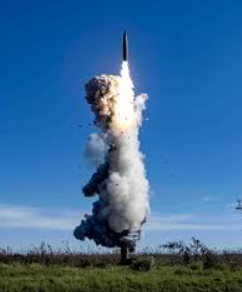
Every news story, diplomatic statement, military maneuver, or missile test contributes to the perception of rising instability. On their own, each signal may appear manageable or inconsequential; together, they create a pervasive feeling that international stability is more fragile than previously believed.
Over the past decade, multiple factors have contributed to heightened global anxiety. Major powers increasingly rely on public posturing to demonstrate strength, while domestic audiences demand assertiveness in foreign affairs.
Social media and real-time news cycles amplify statements by political leaders, making every warning, threat, or display of military capability instantly accessible to millions worldwide. As a result, ordinary citizens often face conflicting narratives: leaders assure the public that no conflict is imminent while simultaneously showcasing military power abroad.
This tension — between reassurance and signaling — creates uncertainty about which message truly defines the international climate.
Historical Patterns: How Wars Begin
History shows that wars rarely erupt solely from clear, deliberate intentions to initiate large-scale conflict.
Instead, many conflicts begin as a sequence of miscalculations, miscommunications, and escalating responses that outpace diplomacy.
Analysts studying the lead-up to both World War I and World War II note that the most destructive wars often began with localized disputes that spiraled uncontrollably due to rigid alliances, rapid mobilization plans, and misunderstandings among leaders.
In the nuclear age, the stakes are exponentially higher. Unlike conventional warfare, where conflicts may be limited to specific theaters, nuclear engagements carry the potential for catastrophic, indiscriminate destruction.
Strategic planners, aware of this reality, organize deterrence frameworks designed to prevent miscalculations from leading to unintended escalation. Yet even with these safeguards, the proximity of civilian populations to critical infrastructure — missile silos, command centers, naval bases, and airfields — introduces inherent risks.
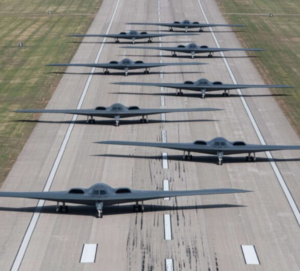
Any adversary seeking strategic advantage could theoretically target facilities near population centers, not for symbolic reasons but because those facilities are central to command and control, early warning systems, or retaliatory capabilities.
Nuclear Deterrence and Escalation Dynamics
Experts in nuclear strategy emphasize that deterrence remains the cornerstone of preventing large-scale war. Deterrence works by convincing potential aggressors that the costs of attacking far outweigh any possible gain.
This principle underpins bilateral treaties such as the New START Treaty between the United States and Russia, which limits deployed strategic nuclear warheads and delivery systems, alongside rigorous verification mechanisms to ensure compliance.
Similar frameworks — including the Non-Proliferation Treaty (NPT) and International Atomic Energy Agency (IAEA) safeguards — create transparency and accountability that reduce the risk of surprise attacks or unauthorized escalation.
Deterrence also relies heavily on communication, often through channels invisible to the public. Hotlines between heads of state, backchannel diplomacy, and real-time intelligence sharing serve as pressure valves, allowing leaders to clarify intentions before misinterpretations lead to irreversible decisions.
Strategic analysts often cite the Cuban Missile Crisis of 1962 as a prime example: a series of miscommunications could have triggered a nuclear exchange, but careful backchannel negotiations ultimately averted catastrophe.
Such historical lessons underscore that while nuclear weapons amplify the consequences of error, their existence alone does not guarantee disaster.
The Psychological Dimension of Global Anxiety
While the technical mechanisms of deterrence are crucial, the psychological dimension of modern geopolitical tension cannot be overstated.
Public anxiety is less often about the weapons themselves and more about confidence in the judgment of those entrusted with them.
In a nuclear-armed world, the difference between restraint and rash action may hinge on a leader’s ability to remain calm under pressure, interpret intelligence accurately, and prioritize long-term stability over short-term posturing.
Research in political psychology indicates that civilians are highly sensitive to the tone and consistency of leadership rhetoric. Frequent contradictions between conciliatory and aggressive messages can magnify fear and reduce confidence in diplomatic processes.
This phenomenon is particularly evident in democracies, where a free press amplifies debate, critique, and speculation, sometimes blurring the line between strategic necessity and sensationalism.
As a result, global citizens increasingly live in an environment where perceived instability feels nearly constant, even when the probability of actual large-scale conflict remains low.
The Role of Miscalculation and Rapid Escalation
Misunderstandings, technical errors, and rapid escalation cycles may pose the most realistic threats to modern security. Even highly sophisticated states with extensive intelligence networks remain vulnerable to accidental conflict. For example, false missile warnings or radar misinterpretations have triggered high-level military alerts, prompting leaders to weigh potential responses in real time.
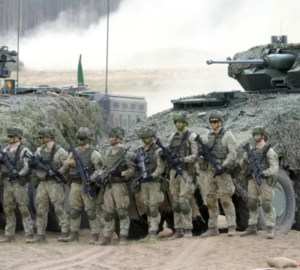
Analysts note that response times for nuclear-capable forces are often measured in minutes, leaving little room for prolonged deliberation.
In addition, regional conflicts — particularly those involving nuclear or near-nuclear powers — carry the risk of drawing in other states through alliance obligations or expectations of retaliation.
Tensions in areas such as the South China Sea, the India–Pakistan border, and the Middle East demonstrate that even local disputes can have global implications. This underscores the importance of preventive diplomacy, confidence-building measures, and constant vigilance in communication.
International Treaties and Stabilizing Mechanisms
A range of multilateral treaties and informal mechanisms has been developed over the decades to reduce the probability of escalation. Among these are:
Arms Control Agreements: Treaties such as the Strategic Arms Reduction Treaty (START) and the Intermediate-Range Nuclear Forces Treaty (INF) (prior to its dissolution) aimed to cap the number of deployable weapons and delivery systems, limiting the potential scale of conflict.
Hotlines and Direct Communication Channels: Established between key capitals, these hotlines reduce the risk of misinterpretation during moments of heightened tension.
Confidence-Building Measures: Regular exchanges of data on missile tests, troop movements, and nuclear stockpiles foster transparency and trust.
International Organizations: The United Nations, IAEA, and other multilateral institutions provide forums for mediation and conflict resolution, ensuring disputes can be addressed without immediate resort to force.
These systems operate largely behind the scenes, away from public view, which can contribute to the perception that nothing is being done. In reality, experts argue, these mechanisms have repeatedly prevented crises from escalating into direct conflict.
The Human Element: Leadership, Judgment, and Diplomacy
Ultimately, the preservation of global stability depends less on the existence of weapons than on human judgment. During the Cuban Missile Crisis, for example, U.S. President John F. Kennedy and Soviet Premier Nikita Khrushchev engaged in careful negotiation, allowing both sides to step back from the brink despite pressure from military advisers advocating immediate action.
Similarly, during the 1983 NATO exercise Able Archer, analysts later noted that Soviet forces misinterpreted NATO maneuvers as preparation for a nuclear strike, nearly prompting a preemptive response.
Both cases illustrate the delicate balance between perception, communication, and measured decision-making in averting catastrophe.
Modern Implications and Public Perception
In today’s interconnected world, public perception plays an increasingly important role. Social media, 24-hour news cycles, and instantaneous global communication mean that any action by one state becomes immediately visible and interpreted by millions.
Leaders must manage both the realities of statecraft and the optics of international messaging, balancing the need for deterrence with the necessity of calm, measured communication.
Civil society also plays a role. Public awareness, education about deterrence strategies, and critical media consumption can help temper alarmist narratives.
While fear can motivate caution, it can also lead to overestimating risk and creating unnecessary anxiety. Experts frequently emphasize that the public should understand the many layers of safety, negotiation, and oversight designed specifically to prevent conflict escalation.
Balancing Deterrence with Diplomacy
Modern global security is defined by the interplay between deterrence and diplomacy. Weapons and military capability provide deterrence, but without continuous dialogue, agreements, and transparency, those deterrents risk being misunderstood or misinterpreted.
Examples include:
U.S.–Russia Dialogue: Regular strategic discussions, intelligence sharing, and nuclear risk-reduction centers help both nations manage misunderstandings despite broader geopolitical tensions.
Middle East Deterrence: U.S. and allied strategies combine military presence with diplomatic engagement to prevent localized conflicts from escalating.
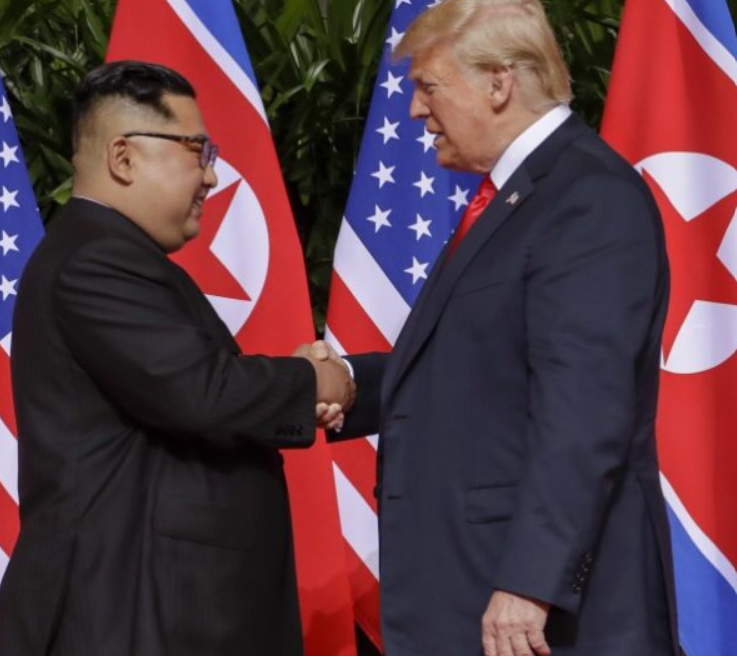
East Asia: China, North Korea, and neighboring states maintain channels for de-escalation even amid military exercises, missile tests, and territorial disputes.
These ongoing efforts demonstrate that stability does not result from the absence of risk, but from the presence of structured, deliberate, and continuous measures to manage it.
The Imperative of Restraint
Periods of tension naturally amplify uncertainty. However, history repeatedly shows that rational actors have stepped back from the brink, choosing negotiation over impulsive retaliation.
Stability is maintained not by eliminating risk, but by recognizing it and acting responsibly. Leaders must prioritize:
Patience over Impulse: Avoiding rushed military responses to ambiguous threats.
Communication over Assumption: Using all available channels to clarify intentions.
Long-Term Stability over Short-Term Signaling: Making decisions that ensure lasting security rather than temporary advantage.
The consequences of miscalculation in a nuclear age are so severe that restraint, discipline, and careful deliberation are not merely virtues — they are necessities.
Conclusion: Awareness Without Panic
Global tensions, while unsettling, serve as an important reminder: the preservation of peace is an ongoing process requiring vigilance, diplomacy, and leadership accountability.
Civilian populations, analysts, and policymakers must recognize that the existence of weapons or heated rhetoric does not guarantee inevitable conflict.
The systems of deterrence, communication, and international oversight are extensive and designed to function continuously, often unnoticed.
Understanding the dynamics of modern conflict — the combination of human judgment, strategic planning, and institutional safeguards — allows society to navigate uncertainty without succumbing to fear.
In an era of nuclear capability, the stakes are immense, but history repeatedly shows that caution, dialogue, and careful planning can prevent catastrophe.
The stability we experience is not the absence of risk, but the result of deliberate, disciplined, and ongoing effort by those entrusted with safeguarding it.