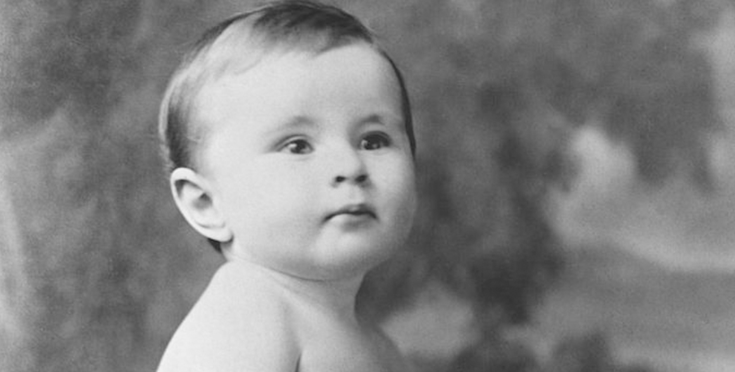
She grew up in chaos — a childhood marked by instability, pressure, and a level of scrutiny no child should ever face. Yet she rose to become one of the biggest stars Hollywood had ever produced.
Sadly, the little girl was pushed into the spotlight while being controlled, criticized, overworked, and given pills just to keep going.
Behind the sparkling costumes and magical roles was a child battling exhaustion, insecurity, and a system that valued profit far more than protection.
Born in Minnesota
Understanding this icon’s early years doesn’t just explain the brilliance that later captivated the world; it exposes the dark machinery of old Hollywood, the pressures that shaped her adulthood, and the wounds that never fully healed.
Her story became a warning for generations of child performers, and a reminder that even the brightest legends often rise from places of deep pain.
From a very young age, the girl who would one day follow the Yellow Brick Road was already performing. Born in Minnesota, she made her stage debut before she was even three. Her home life, however, was anything but magical. Her mother had reportedly wanted to end the pregnancy but couldn’t, and the family was shaken by persistent rumors about her father’s secret relationships with teenage boys and young men.
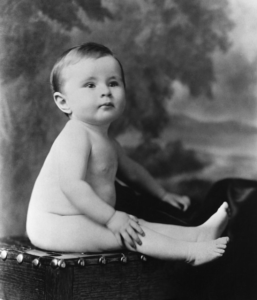
In June 1926, the family quietly moved to Lancaster, California, after whispers about her father’s personal life began to spread.
Her parents, both vaudeville entertainers, had a marriage defined by constant breakups and reconciliations — something she remembered vividly.
“It was very hard for me to understand those things and, of course, I remember clearly the fear I had of those separations,” she said.
Her mother was very jealous
As a small child, she was taken into nightclubs to perform at venues wildly inappropriate for someone her age.
Biographers later wrote that her mother regularly gave her pills to stay awake and others to help her sleep — a routine that would haunt her for the rest of her life. As she revealed in 1963, “The only time I felt wanted when I was a kid was when I was on stage, performing.”
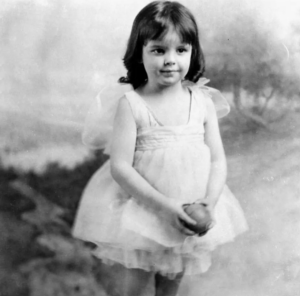
Speaking with Barbara Walters in 1967, the star described her mother as a “mean” stage mother.
“She was very jealous because she had absolutely no talent,” she said. “She would stand in the wings, and if I didn’t feel good, she’d say, ‘You get out and sing, or I’ll wrap you around the bedpost and break you off short!’ So I’d go out and sing.”
In later years, she often claimed her mother never wanted her, had planned an abortion until a medical student friend intervened, and even tried to induce a miscarriage.
“She must have rolled down nineteen thousand flights of stairs and jumped off tables,” she would say.
Her mother also took pleasure in recounting her schemes to neighborhood women.
Breakthrough
In 1935, the young performer signed with MGM. Two years later, she finally appeared on screen, performing “You Made Me Love You (I Didn’t Want to Do It)” in Broadway Melody. It was the breakthrough she desperately needed. As writer John Fricke explained:
“One movie would be wrapping up and she’d been in rehearsals for the next one. This overlapping went on from the late ’30s into the early ’40s.”
But even as her career took off, the studio fed her insecurities. Louis B. Mayer allegedly called her “my little hunchback,” and she was put on a harsh regimen of cottage cheese, chicken broth, and amphetamine‑laced diet pills to keep her weight down. Producers worried audiences wouldn’t believe such a small 13‑year‑old girl could sing the way she did. Still, she kept working. When MGM loaned her to Fox for Pigskin Parade, her performance was so strong that her home studio finally began giving her real roles.
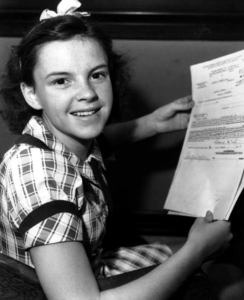
Her father died of spinal meningitis
The rising star had barely left the stage after a broadcast when tragedy struck — her father died of spinal meningitis. Heartbroken, she kept going.
Film followed film. She rehearsed for Thoroughbreds Don’t Cry before her previous project even wrapped, then moved straight into Everybody Sing. Tours, radio spots, promotions — the whirlwind never stopped. MGM soon realized she paired perfectly with a young actor named Mickey Rooney, and together they made a long string of hits.
With the exhausting schedule came something darker: the pills she relied on to stay awake, to sleep, to keep her weight down — a cycle that slowly became an addiction.
Then came 1939: the role that changed everything.
Darwin Porter and Danforth Prince later wrote:
“The Wizard of Oz marked a turning point in her career. It was the beginning of her later legend as she danced along the Yellow Brick Road in ruby slippers, which, decades later, would fetch big bucks at an auction.”
Only after that unforgettable performance did the world finally know her name.
Judy Garland.
“I’m the queen of the comeback”
The Wizard of Oz was praised by critics, yet its enormous production and marketing costs — roughly $4 million at the time, about $71 million today — made it a risky project for the studio. The film helped make Garland one of the most bankable actresses in the country.
She continued with films such as Meet Me in St. Louis (1944) and Easter Parade (1946).
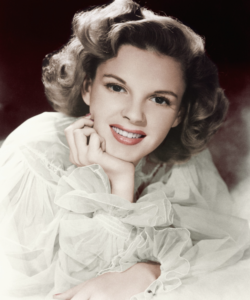
In 1954, the world saw Judy Garland take on what would become her final truly legendary role: Esther Blodgett (Vicki Lester) in A Star Is Born. Though she played the bright young talent on screen, her real life resembled that of Vicki’s troubled love interest, Norman Maine — a former A‑list star struggling to hold onto his career. At just 32, Garland had already spent most of her life performing, her career rising and crashing alongside her fragile physical and emotional health — a pattern that continued until her death 15 years later.
“I’m the queen of the comeback,” she said in a 1968 interview. “I’m getting tired of coming back. I really am. I can’t even go to… the powder room without making a comeback.”
On June 22, 1969, Garland’s new husband, Mickey Deans, broke down the locked bathroom door in their London apartment and found her dead at just 47. An autopsy confirmed she had died from a self‑administered accidental overdose of barbiturates, a common sleep aid at the time.
Coroner Gavin Thurston told the press:
“This is quite clearly an accidental circumstance to a person who was accustomed to taking barbiturates over a very long time. She took more barbiturates than she could tolerate.”
Though heartbreaking, her death was not entirely unexpected. Those close to her — and even the public — knew of her long‑standing struggles with addiction.
Garland battled depression and alcoholism for years and had reportedly attempted suicide multiple times. Her third husband, Sid Luft, claimed she tried to take her own life at least 20 times.
Ultimately, her life unfolded more like a tragedy than the hopeful, carefree young woman she portrayed on screen. Despite her incredible success, Garland struggled with low self‑esteem. She was constantly dieting, a habit many believe stemmed from executives repeatedly calling her an “ugly duckling.”
At one point, Stevie Phillips, her agent for four years, described her as “a demented, demanding, supremely talented drug‑addict.”
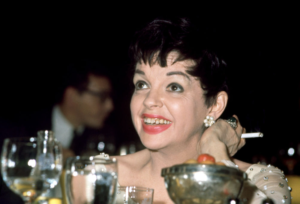
Yet biographer Royce emphasized that Garland showed “astonishing strength and courage,” even in her darkest moments. English actor Dirk Bogarde once called her “the funniest woman I have ever met.”
Despite her battles, Garland rejected the idea that she was a tragic figure. Her younger daughter Lorna echoed that sentiment:
“We all have tragedies in our lives, but that does not make us tragic. She was funny and she was warm and she was wonderfully gifted. She had great highs and great moments in her career. She also had great moments in her personal life. Yes, we lost her at 47 years old. That was tragic. But she was not a tragic figure.”
I’ve always loved The Wizard of Oz and Judy Garland as Dorothy — her voice was extraordinary. She endured so much, and my heart goes out to her. May she rest in the sweetest peace, far beyond the rainbow 🌈