Arnold Schwarzenegger has never been one to shy away from big questions. Known worldwide as a bodybuilding legend, Hollywood superstar, and former governor of California, he has spent decades reflecting on strength, discipline, success, and purpose.
In a recent, deeply personal conversation with his longtime friend and fellow actor Danny DeVito for Interview Magazine, Schwarzenegger turned his attention to one of humanity’s most profound and uncomfortable topics: what happens after we die.
Rather than offering comforting reassurances or traditional spiritual explanations, Schwarzenegger spoke with striking honesty and realism. His perspective challenged widely held beliefs about the afterlife and revealed a deeply human fear—not of death itself, but of losing the richness and beauty of life.
A Frank View on the Afterlife
During the interview, Schwarzenegger made it clear that he is not convinced by the idea of heaven or a traditional afterlife. He described such concepts as comforting beliefs rather than proven realities.
Reflecting on a past conversation with radio host Howard Stern, Schwarzenegger recalled being asked what happens when we die. His answer was blunt: from his point of view, nothing physical remains beyond the grave. The body returns to the earth, and anyone claiming certainty about what comes next is speaking without evidence.

Still, he acknowledged the limits of his own understanding. He didn’t claim expertise on the soul or spirituality—only that the physical presence we know and recognize will not exist in the same way after death.
Danny DeVito’s Grounded Response
DeVito echoed this realism with a simple observation: “We deteriorate.”
The comment wasn’t meant to be harsh, but honest. Aging and death are unavoidable biological processes, and pretending otherwise doesn’t change the outcome.
Schwarzenegger agreed, adding that the idea of reuniting with loved ones in heaven may be comforting, but it doesn’t align with what he believes is the reality of human existence.
The Sadness of Letting Go
Despite his rational outlook, Schwarzenegger didn’t present himself as emotionally detached. He admitted that the idea of dying troubles him—not because of fear of punishment or the unknown, but because of what will be lost.
He spoke passionately about how much he loves life: sitting with friends, sharing conversations, laughing, working out, cycling along the beach, traveling, and experiencing new cultures. These simple pleasures give life meaning.
The thought that all of this will one day end is what he finds truly heartbreaking. Life, in all its beauty and excitement, is something he does not want to leave behind.
Celebrating Life While It Lasts
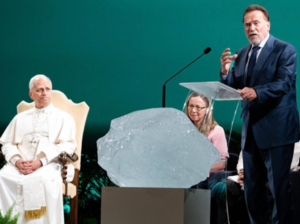
DeVito responded with a powerful affirmation: “Life! It’s the best!”
That simple statement captured the heart of their conversation. Instead of focusing on what may or may not come after death, both men emphasized the importance of embracing life in the present moment.
For Schwarzenegger, this philosophy has guided him from his early days as a young bodybuilder in Austria to his rise as a Hollywood icon and political leader.
A Catholic Upbringing and Evolving Faith
Schwarzenegger’s views may surprise some, given his religious background. Raised in the Catholic Church, he attended services, Catholic school, and studied religious teachings throughout his youth.
In a 2021 YouTube video, he spoke about how this upbringing shaped his moral foundation. While his beliefs have evolved, he still values many of the principles he learned—especially the idea of service.
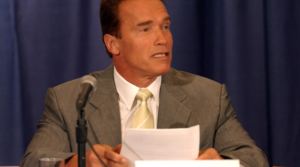
One phrase that stayed with him is “a servant’s heart,” which he interprets as dedicating oneself to something larger than personal ambition.
Service Above Self
Schwarzenegger has long emphasized that true fulfillment comes not from power or fame, but from service. Drawing from his faith-based upbringing, he applied this principle to his political career and public life.
In the same 2021 message, he expressed concern about modern politics, arguing that society needs leaders who genuinely serve the public rather than pursue personal gain.
He believes leaders should uphold higher ideals—the values that inspire respect and strengthen communities.
Reconciling Faith and Reality
Schwarzenegger’s perspective represents a balance between faith, realism, and lived experience. While he doesn’t embrace traditional beliefs about heaven, he hasn’t abandoned the moral lessons of his upbringing.

Instead, he reframes them into a philosophy centered on action: focusing on how we live now, how we treat others, and how fully we experience life.
His approach doesn’t dismiss spirituality—it simply acknowledges uncertainty while emphasizing responsibility, gratitude, and presence.
A Message That Resonates
Schwarzenegger’s candid reflections resonate because they are honest. In a world where discussions about death are often avoided, his willingness to confront the topic directly feels refreshing.
His message isn’t one of despair, but of appreciation. Life’s impermanence, he suggests, is what makes it precious.
Rather than relying on promises of an afterlife, he encourages people to cherish their loved ones today, pursue their passions, and make the most of every moment.
Living Fully Without Certainty
Ultimately, Schwarzenegger’s outlook can be summed up simply: even without certainty about what comes after death, life itself is extraordinary.
He doesn’t claim to have all the answers, but within that uncertainty, he finds motivation—to live boldly, love deeply, and serve generously.
Conclusion
Arnold Schwarzenegger’s conversation with Danny DeVito offers more than a discussion about death—it reveals how one of the world’s most recognizable figures understands life.
His rejection of comforting illusions about the afterlife is balanced by a profound appreciation for existence, connection, and purpose.
Rooted in a Catholic upbringing yet shaped by decades of experience, Schwarzenegger’s worldview emphasizes service, responsibility, and joy in the present moment. Whether one agrees with him or not, his honesty invites reflection.
In the end, his message is clear: life is short, unpredictable, and incredibly valuable. Meaning isn’t something to wait for in the next world—it’s something to create here, now, while we can.