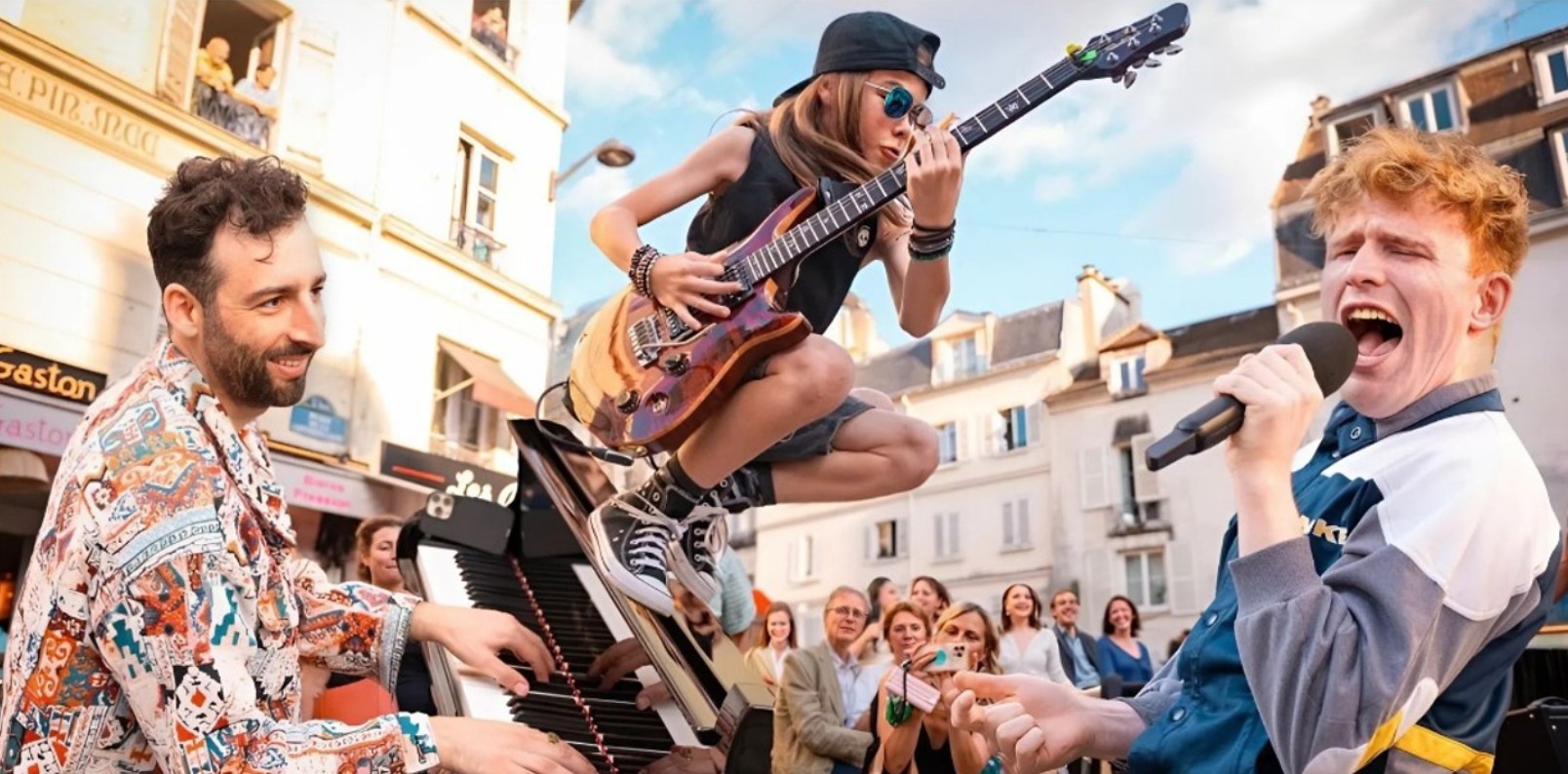
On September 9, 2025, the streets of Paris were transformed into a rock-opera stage when more than 30 musicians and singers erupted into a flashmob performance of Queen’s “Bohemian Rhapsody.” Pianist Julien Cohen, who orchestrated the spectacle, filmed and uploaded it the same day, and the video soared in popularity, climbing from thousands to nearly half a million views overnight. What made the moment breathtaking was not only the music itself, but how it unfolded seamlessly within the rhythm of daily life. One minute, it was an ordinary square; the next, it was the epicenter of musical history.
The performance began softly with three female singers leaning from a café window, their voices intertwining on the iconic opening lines. Moments later, Cohen appeared in the square below, seated at his piano, striking chords that sent the crowd into gasps of recognition. The suddenness—the voices above, the pianist below—was a masterstroke of planning that instantly captivated the unsuspecting audience and drew them into something unforgettable.
As the harmonies swelled, more performers emerged from balconies and doorways, their entrances timed perfectly to match the operatic layering of the song. The effect was staggering. The usually quiet square now resonated like a grand theater, echoes bouncing off stone walls and cobbled streets. Passersby stopped in their tracks, tourists raised phones, and locals leaned forward from café chairs, unable to look away. The city’s hum blended seamlessly into the music, as though Paris itself conspired in the performance.
Then came the theatrical flourish that elevated the flashmob further. A carriage rolled into the square, and its flamboyant rider, Mickey Callisto, stood tall to deliver his lines with dramatic flair. Bold, extravagant, and unapologetically theatrical, his performance embodied everything “Bohemian Rhapsody” represents. Channeling Freddie Mercury’s spirit so vividly, he drew laughter, cheers, and applause all at once.
Just as the crowd thought they had seen it all, a drummer appeared with a portable kit, pounding rhythms that thundered through the plaza. At the same time, the star of the day, 11-year-old guitarist “Guitar Olly,” stepped forward. His confident solo stunned the crowd, his small frame a striking contrast to the power of Brian May’s riffs flowing effortlessly from his guitar. People were visibly moved, clapping mid-performance, many shaking their heads in disbelief.
The operatic middle section turned the square into an open-air theater. Singers leaned dramatically from windows, others gestured passionately toward the crowd, and every corner of the square came alive with voices. The famously complex layers were executed flawlessly and playfully, drawing smiles and laughter as performers exaggerated their roles. The audience responded in kind, their applause and cheers punctuating the beats and pauses like a living metronome.
As the song shifted into its heavier rock section, the atmosphere erupted. Guitar Olly shredded his solo with astonishing skill while the drummer’s pounding fueled the crowd’s energy. Mickey Callisto waved his arms theatrically from the carriage, his voice soaring above the instruments. Onlookers clapped in rhythm, shouted the lyrics, and joined the performers in turning the square into something larger than life.
By then, the line between audience and performer had vanished. Café tables were abandoned, strangers linked arms and sang together, and hundreds of voices echoed the famous chorus. The cobbled streets reverberated with chants, laughter, and even tears as people realized they were witnessing something extraordinary. The joy was palpable, infectious, and impossible to fake.
As the crescendo faded into the delicate final section, the atmosphere softened. Voices harmonized gently, and Cohen’s piano guided the crowd toward a hushed, reverent close. For a few seconds, silence hung in the air—an awed, collective breath—as everyone absorbed what had just unfolded. Then, the square erupted in thunderous applause, the sound rolling like a wave through the streets.
The performers smiled, waved, and quietly dispersed, leaving behind stunned faces and buzzing conversations. Some lingered, replaying the magic in their minds, while others rushed to upload videos, ensuring the performance would spread far beyond Paris.
Online, the flashmob became an overnight sensation. Comments poured in, hailing it as the greatest flashmob ever staged, a true celebration of Freddie Mercury’s genius. Viewers described goosebumps, tears, and disbelief at its flawless execution. For many, the sight of a young boy channeling Brian May’s solo with such conviction became a symbol of how music transcends generations. Julien Cohen’s role as architect of the event cannot be overstated. Known for his spontaneous public performances, he had surpassed himself with this ambitious staging. The coordination of singers, instrumentalists, and theatrical elements was nothing short of brilliant. It elevated the flashmob from a fun surprise into living performance art—worthy of any concert hall, yet staged freely in the heart of the city.
For those in Paris that day, it was a once-in-a-lifetime experience. People expecting only a quiet walk or coffee run stumbled into history. Tourists who had planned to tick off landmarks went home with a story they could never have imagined. It embodied the very essence of why flashmobs exist: to transform the ordinary into the extraordinary, to remind us of art’s power to surprise, delight, and unite.
Above all, the flashmob was a vibrant reminder of Freddie Mercury’s enduring genius. Fifty years after “Bohemian Rhapsody” was first released, it still has the power to stop people in their tracks, to turn strangers into choristers, and to electrify a city. On that September day in 2025, in the streets of Paris, the spirit of Queen lived again—not on a stage, but in the hearts of everyone who witnessed it.