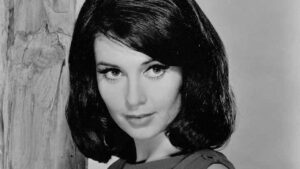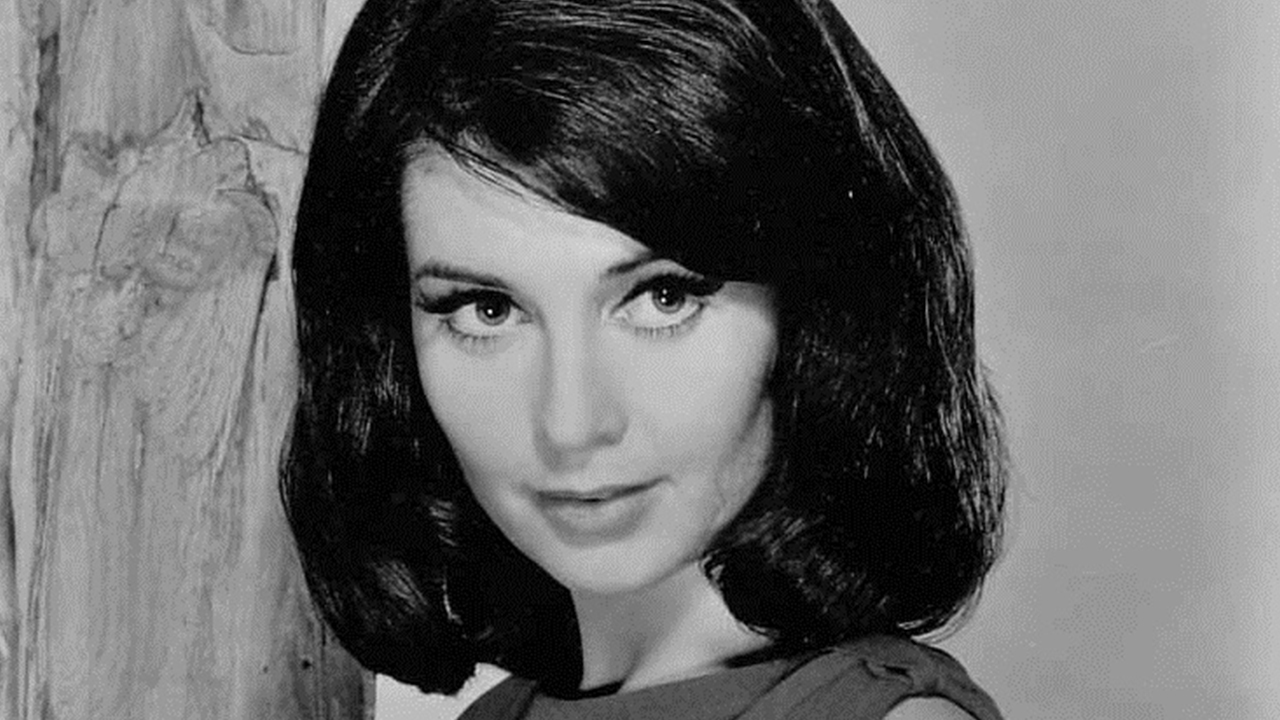
Anjanette Comer, the Texas-born actress who starred opposite Marlon Brando in The Appaloosa and turned down the roles that made stars of Jane Fonda and Faye Dunaway, has died at 86. She passed away on May 28 at UCLA Santa Monica Medical Center, though news of her death only became public this month.
According to a death certificate obtained by The Hollywood Reporter, Comer had been battling leukemia and also had heart problems.
Her name may not ring the same bells as some of her contemporaries. But for a few years in the mid-1960s, Hollywood saw her as one of its most promising new faces. Her story is one of the more intriguing “what ifs” of the era.
From Dawson, Texas, to the Pasadena Playhouse
Comer was born on August 7, 1939, in Dawson, a small community in Texas. She trained at the Pasadena Playhouse, the California acting school that fed a long line of performers into film and television.
What set her apart was patience. For her first two years in Hollywood, she didn’t chase paid work or even visit a film studio. She studied and practiced instead, waiting until she felt ready.
Television came first. In the early 1960s she turned up in family favorites My Three Sons and The Donna Reed Show. In 1963 alone she appeared in Gunsmoke, Ben Casey and Arrest and Trial, and that last role brought her an Emmy nomination for supporting actress.
Anjanette Comer and the Brando years
Her film debut came in the 1964 comedy Quick, Before It Melts. A year later she landed the part that defined her: Aimee Thanatogenous, the earnest young mortician in The Loved One, Tony Richardson’s pitch-black satire of the American funeral business, adapted from Evelyn Waugh’s novel.
In 1966 she shared the screen with Marlon Brando and John Saxon in the Western The Appaloosa, playing a Mexican woman caught up in the film’s drama. Guns for San Sebastian and Lepke followed. Her looks were often compared to those of a young Elizabeth Taylor.
Then came the choices that would shape the rest of her career.
The roles she walked away from
Comer had the chance to star opposite Robert Redford in Barefoot in the Park, the screen version of Neil Simon’s Broadway hit. She was also offered a role alongside Warren Beatty in Bonnie and Clyde. Both films opened in 1967. She said no to both.
Jane Fonda took the Redford picture. Faye Dunaway played Bonnie Parker and earned an Oscar nomination for it. Both films were hits, and both actresses became fixtures of American cinema for decades.
Comer explained her reasons in a 1981 interview with UPI. She had been in a serious relationship with an actor who didn’t want her making movies, and she admitted she had been “young and naive” at the time. She went further, telling the interviewer she had hated her career.
There was another costly episode. Comer had been cast opposite Michael Caine in Funeral in Berlin, the 1966 sequel to The Ipcress File and the second outing for Caine’s spy Harry Palmer. She left Germany during production, and Eva Renzi replaced her.
She was frank about the fallout. The walkout, she said, left her with a reputation for being “crazy.” Her own explanation was that fame had come too fast. A couple of TV appearances, then instant movie stardom, with no time to learn how to handle it emotionally.
A long career after the spotlight
Her career never disappeared. She kept working in film and television for decades, with credits including Rabbit, Run, The Firechasers, Fire Sale and Steven Soderbergh’s The Underneath. Classic TV fans will recognize her from guest spots on Bonanza, Mannix, Columbo, Hotel and The Practice.
Cult film fans know her from The Baby, the bizarre 1973 horror movie in which she played a social worker. Co-star Marianna Hill later recalled how seriously Comer approached the job, saying in a 2016 interview that Comer would talk about creating an “inner life” for her character.
Away from the screen, the relationship that had steered those early decisions came to an end. In 1976 she married Robert Klane, the writer and director behind Where’s Poppa?, Fire Sale and Weekend at Bernie’s. They divorced in 1983.
She never stopped believing in a second act. In that same UPI interview, the then 42-year-old said she was absolutely certain she would return to the high point of her career, because she had done it before.
Comer died in Santa Monica on May 28. It took four months for word of her passing to reach the public.