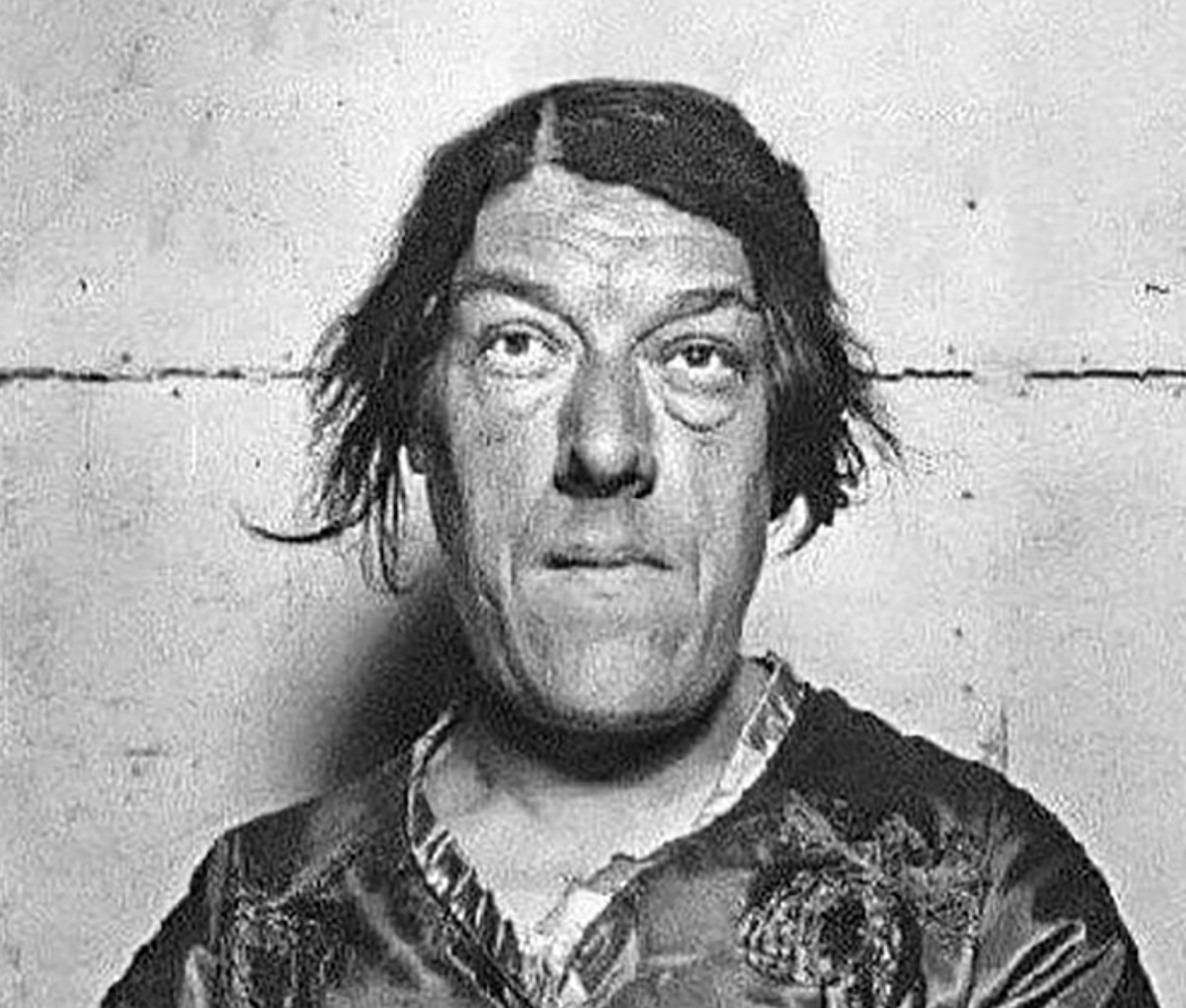
Mary Ann Bevan, a former nurse from Plaistow in East London, spent the last years of her life on a Coney Island sideshow stage under the label “the ugliest woman in the world”. She accepted the title for one reason: she had four children to feed.
Her face had been reshaped by acromegaly, a hormone disorder that no doctor could name for her when it began. She died in December 1933, aged 59. Almost a century later, her story still finds readers on both sides of the Atlantic.
She was born Mary Ann Webster on 20 December 1874. She trained as a nurse, and photographs from her twenties show a handsome young woman with fine, even features.
In 1902 she married Thomas Bevan, and the couple had four children. Then in 1914 Thomas died suddenly. Mary Ann was left to raise the family alone, and by then her own body had been changing for years.
What acromegaly did to Mary Ann Bevan
Acromegaly develops when the pituitary gland, a pea-sized gland at the base of the brain, releases too much growth hormone in adulthood. An adult’s long bones have stopped growing, so the person does not get taller. Instead the hands, feet, jaw, brow and nose slowly enlarge.
Mary Ann noticed the first changes at around 32. Over the following years her jaw grew heavy and her cheekbones, nose and forehead became more prominent. The changes hit her hard, both emotionally and in her pocket.
She lost her nursing work. With no husband and no wage, the family faced real poverty.
Today the condition is usually traced to a benign tumour on the pituitary gland, and doctors can often control it with surgery, medication or radiotherapy. In Edwardian London, there was no diagnosis to give her and no treatment to try.
The advert that changed everything
Her way out came from an unexpected place. A newspaper advertisement invited applications for the “ugliest woman”, promising good pay and a long engagement to the winner. Applicants were asked to send in a recent photograph.
Mary Ann hated the idea, but she could see no other way to keep her children fed. She sent her picture.
The reply came from Claude Bartram, an agent working for the circus, who later described their first meeting. According to the Daily Star, he said she was “not repulsive at all”. He remembered a shy woman with a powerful jaw and strong features, healthy and unmarked, who did not want to be put on show and dreaded being parted from her children.
His offer was hard to turn down. She would earn £10 a week for a year, with travel paid for, and keep every penny from the sale of postcards bearing her picture. Bartram told her the money would cover her children’s schooling.
She agreed.
Life on the Coney Island stage
Her photographs spread quickly through the press, and the cruel nickname travelled with them. Before long she was working at the Dreamland Circus sideshow on Coney Island in New York, one of the best-known attractions of its kind.
This was the heyday of the so-called freak show, when paying crowds queued to stare at people with disabilities and rare medical conditions. Few people at the time saw anything wrong with it.
One who did was Harvey Cushing, the American surgeon whose work on the pituitary gland made him one of the founders of modern neurosurgery. Cushing recognised what had happened to her. In a 1927 letter to Time magazine, he pointed out that she had once been a strong, good-looking young woman and was now the victim of a disease. Her story, he wrote, was “far from mirth-provoking”.
The postcards and wages added up. Mary Ann reportedly earned a small fortune, enough to send her children back to England to be educated at boarding schools.
A final journey home
Mary Ann Bevan worked the sideshow for the rest of her life. She died of natural causes on 26 December 1933, aged 59.
Her last wish was to be buried in England, and her children made sure it happened. She lies in Ladywell and Brockley Cemetery in South London, across the Thames from the East London streets where she grew up.
Her image has never quite been left in peace. In the 2000s, Hallmark used her photograph on a birthday card sold in Britain. A Dutch hormone specialist, Wouter de Herder, spotted it on a visit to the UK and objected that it mocked a woman who had suffered from a painful illness. Hallmark agreed the card was inappropriate and withdrew it.