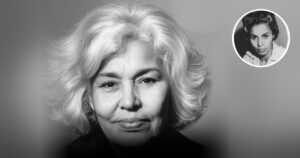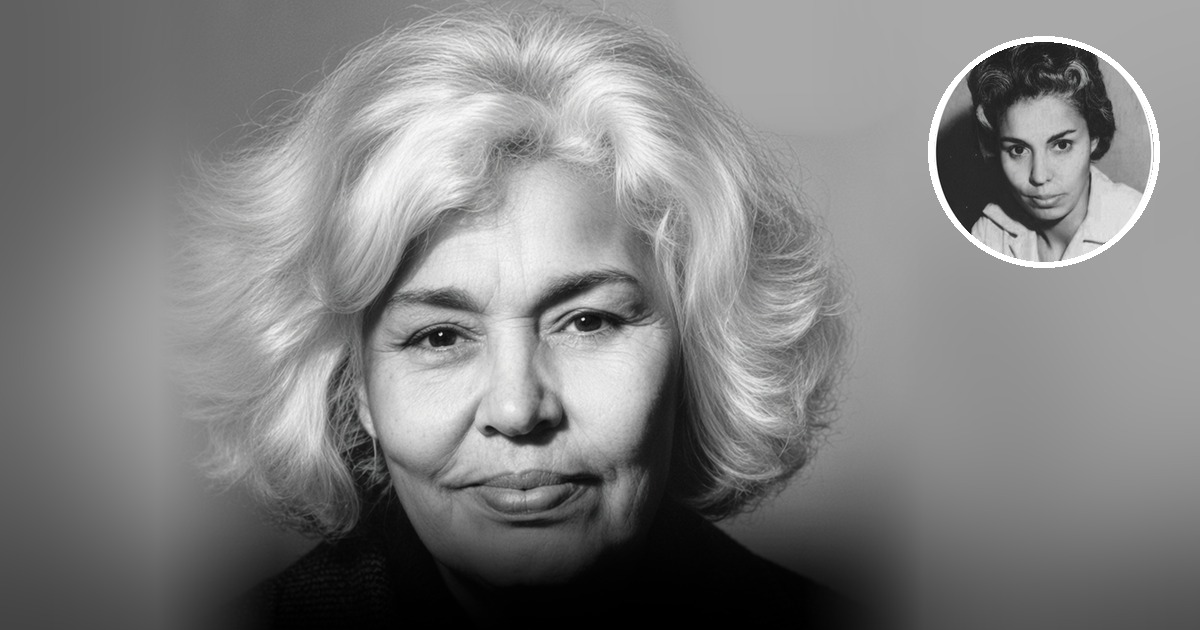
At ten years old, she wrecked her own arranged engagement by chewing on raw eggplant until her teeth went black. Her family had picked out a husband for her, but she’d made up her mind that nobody else would decide her future.
She slipped into the kitchen, blackened every tooth, and flashed the biggest grin she could at the would-be groom and his relatives.
The guests were so appalled they walked out on the spot, the engagement was called off, and little Nawal El Saadawi had won the first of many battles for her freedom.
She came into the world in 1931 in Kafr Tahla, a tiny village in Egypt, the second of nine kids. As she grew up, her grandmother liked to remind her that one boy was worth fifteen girls at the very least.
When she was six, the women in her own family held her down on the bathroom floor and put her through female genital mutilation. She never forgot the pain, and she never forgot the sense of being betrayed by the people meant to protect her.
Even as a young girl, she could see that the world around her was built to keep women in line through fear, and she quietly swore she’d fight it.
Her father thought girls deserved the same schooling as boys, so he let Nawal read every book she could get her hands on. She wrote her first novel at thirteen, and in 1955 she qualified as a doctor at Cairo University.
Working as a doctor out in the countryside, she watched women die from harmful traditions, from violence at home, and from health problems rooted in how unequally they were treated.
It became clear to her that medicine on its own could never cure them, because the real disease was a system that put men in control of women’s lives.
In 1972, she brought out her ground-breaking book Women and Sex. In its pages she went straight after female genital mutilation and the way society policed women’s bodies.
The reaction came fast.
The government sacked her from her senior job as Director of Public Health, closed her magazine, and banned her books. She refused to back down, and she didn’t show a flicker of fear. Losing her job didn’t silence her for a second.
While she was working as a psychiatrist in a prison, she met a woman awaiting execution for killing her pimp. That meeting led to her famous novel Woman at Point Zero, which became one of the cornerstones of Arab feminist writing.
In September 1981, President Anwar Sadat had her arrested on trumped-up political charges. At 49, Nawal was locked up in Qanatir women’s prison.
The guards wouldn’t let her have a pen or paper, thinking that if they took away a writer’s tools, they’d shut her up. But another inmate sneaked an eyebrow pencil into her cell, and Nawal collected old bits of toilet paper.
Sitting on the cold concrete floor, she wrote what became her well-known prison memoirs. They could take her pens, but they couldn’t touch her mind.
In those same three months behind bars, she and the women locked up with her laid the groundwork for the Arab Women’s Solidarity Association.
When Sadat was assassinated that October, she was freed, and she spent the next forty years speaking out against dictators, violence against women, and religious extremism.
Right up until she died in 2021, Nawal El Saadawi was a force no one could stop, showing that you can’t lock the truth in a cell.
She showed that real change doesn’t begin in government buildings or polite meeting rooms.
It begins when a ten-year-old girl won’t be treated like property, when a woman scribbles banned truths on toilet paper, and when we stop bowing to the customs that hold us down.
Nawal turned a bit of raw eggplant into freedom, and a worn-down eyebrow pencil into hope for millions of women all over the world. She’s left behind a world where girls can look at what she did, hold their heads high, and know they deserve to dream as big as they like.
From a dusty village floor to the darkest corner of a prison, Nawal never gave up on justice. Every day of her life showed that the truth is stronger than any prison bars.
Her fighting spirit carries on today in every woman brave enough to stand up, speak her mind, and take the place in the world that’s rightfully hers.