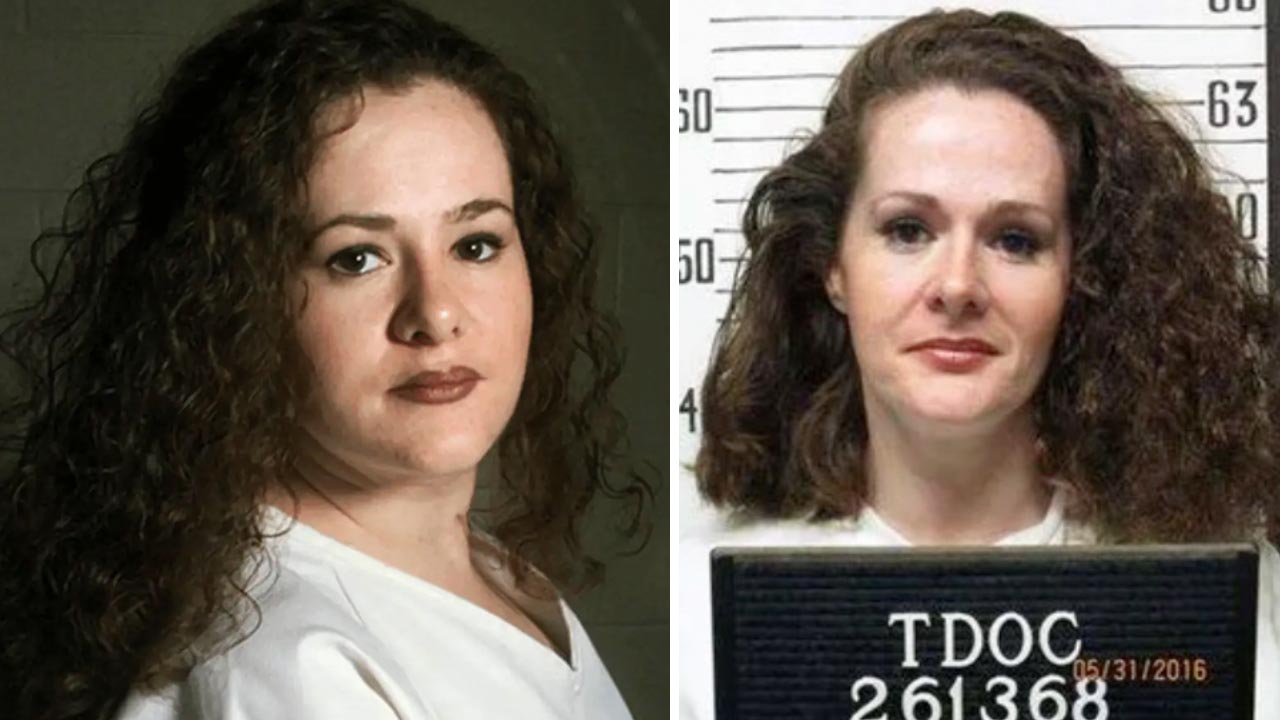
As Tennessee prepared to put Christa Pike to death this week, a YouTube simulation of lethal injection spread widely online. But the video, posted by an account called Dr. Wealz, shows a different procedure from the one Tennessee planned to use on the 50-year-old. Her execution was halted by a federal appeals court about an hour before it was due to begin on Wednesday.
What the simulation shows
The animation takes viewers inside the body during the final stage of an execution. It shows the drug disrupting the heart’s normal electrical and chemical balance, which sends it into an irregular rhythm and then cardiac arrest. The narrator says the heart stops within about a minute of a potassium chloride injection.
That is the last step of the three-drug method many U.S. states have used: first a sedative to make the prisoner unconscious, then a paralytic drug, then potassium chloride to stop the heart.
Christa Pike and Tennessee’s lethal injection protocol
Tennessee planned to give Pike a single drug, pentobarbital. She would have been strapped to a gurney, and a prison physician would have stayed in or near the room to monitor her vital signs and declare the time of death.
The state’s current method grew out of a scandal. Gov. Bill Lee halted executions in 2022 after an investigation found prison officials had not followed their own lethal injection rules. Executions resumed in 2025 under a new protocol.
Pike and her lawyers have challenged that protocol for months. She has thrombocytosis, a condition that causes unusually high platelet counts, and her legal team argued that going ahead with lethal injection could amount to cruel and unusual punishment. An anesthesiologist, Dr. Joel Zivot, warned in her case that the blood disorder was likely to cause serious complications in her lungs during the procedure.
Pike has also described her own fears. She has said the only place staff can draw her blood is from her hands, “with a very tiny needle,” and that the state’s protocol does not allow an IV to be placed there.
Her lawyers also argued that being held down and strapped to a gurney would cause “severe mental suffering” for a woman with post-traumatic stress disorder from being molested and raped from the time she was a toddler. The state responded that a judge had already found it speculative that she would suffer greater mental harm because of how the protocol is carried out.
A case three decades in the making
Pike was 18 when she and two other students at a Knoxville job-training program killed 19-year-old classmate Colleen Slemmer in January 1995. She was convicted of first-degree murder in 1996. At the time, the judge sentenced her to die in the electric chair, which was then Tennessee’s only method of execution; lethal injection later became the state’s primary method.
If her sentence is carried out, she will be the first woman executed in Tennessee since 1820 and only the fourth in the state’s history. She would also be the first person Tennessee has executed in the modern death penalty era for a crime committed as a teenager.
Where the case stands now
On Tuesday, the U.S. Supreme Court turned down Pike’s request to stop her execution, without explanation. Hours later, Gov. Lee confirmed he would not grant clemency.
Then on Wednesday morning, the 6th Circuit Court of Appeals granted a stay by a 2-1 vote while it considers her latest filing. Tennessee immediately asked the Supreme Court to lift that stay. The justices had not ruled by midday Wednesday, and the appeals court’s order did not set a new execution date. If Pike was not executed by the end of the day, the Tennessee Supreme Court would have to set a new date.