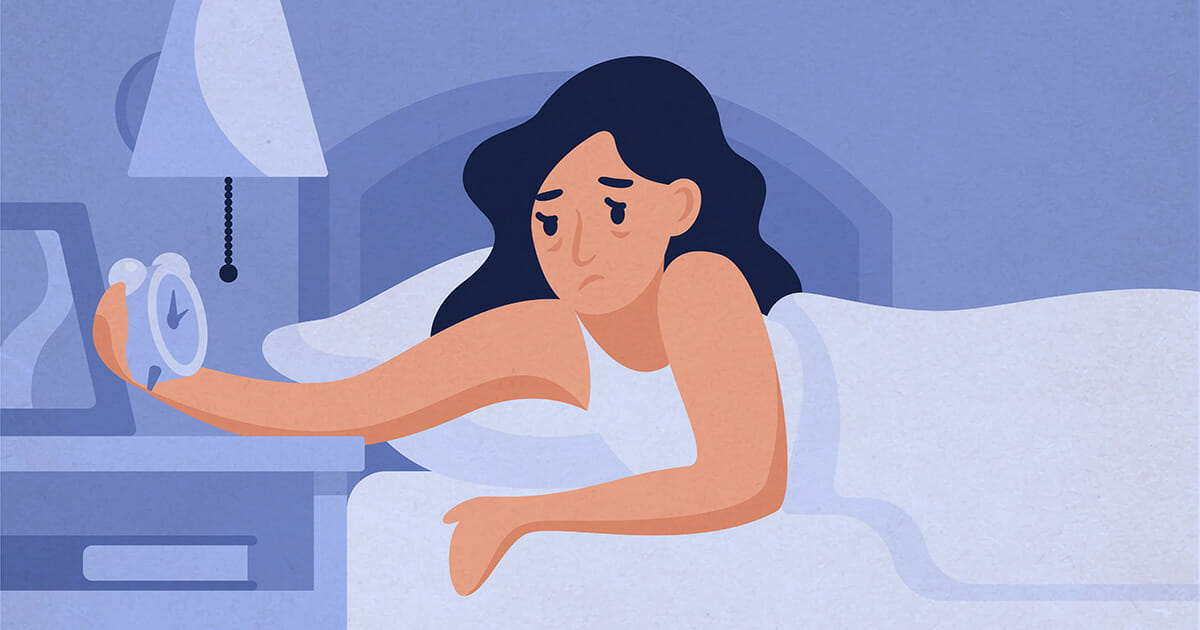
Waking up at 3am, wide awake with hours to go before the alarm, is one of the most common sleep complaints there is. The window between 3am and 5am even has a name in Swedish folklore: the hour of the wolf.
The pattern is especially familiar to people over 40. Most of what happens in your body during those hours is well understood, and very little of it involves ghosts.
Where “the hour of the wolf” comes from
The phrase reached a wider audience through Ingmar Bergman. In 1968 the Swedish director released Hour of the Wolf (Vargtimmen), a psychological horror film starring Max von Sydow and Liv Ullmann. Bergman described the hours before dawn as the time “when most people die, sleep is deepest, nightmares are most real.”
Bergman scholar Professor Birgitta Steene traced the title back to Swedish folk belief, in which the hour of the wolf covered roughly 3am to 5am. Tradition tied those hours to both deaths and births.
English-speaking cultures have their own version. The witching hour, sometimes called the devil’s hour, is the stretch of night when folklore says witches, demons and spirits are at their most powerful.
What waking up at 3am says about your body clock
The real explanation is less spooky. Your circadian rhythm, the roughly 24-hour internal clock that follows daylight and darkness, lowers your body temperature, blood pressure and metabolism overnight. Body temperature typically hits its lowest point around 4am.
Then the clock starts preparing you for morning. Levels of cortisol, the hormone that helps you wake up and get moving, begin rising in the early hours, well before most alarms go off.
This is also where folklore and science part ways. We move through light sleep, deep sleep and REM (dreaming) sleep in cycles of roughly 90 minutes, and most deep sleep happens in the first half of the night. By 3am, sleep tends to be lighter and heavier on REM. That means it takes less to wake you, whether that’s a noise, a full bladder or a warm bedroom.
Why worries feel louder before dawn
Stress and anxiety are among the most common reasons people wake in this window and then can’t get back to sleep. A mind already busy with worry is more likely to surface from light sleep. Lying in the dark with no distractions, small problems can quickly feel much bigger.
Other usual suspects include alcohol, which can help you drift off but tends to disturb sleep later in the night as it wears off. Late-afternoon caffeine and needing the bathroom play a part too. So does age. Sleep generally becomes lighter and more broken as we get older, which makes early waking more common from middle age onward.
What to do when it happens
Sleep specialists generally advise against lying in bed watching the clock. If you’ve been awake for about 20 minutes, get up, go to another room and do something quiet in dim light until you feel sleepy again. Picking up your phone tends to wake the brain further.
If you’re waking at the same time most nights for several weeks and feeling it during the day, talk to a doctor. Persistent early waking can be linked to insomnia, sleep apnea, depression and other conditions that respond well to treatment.