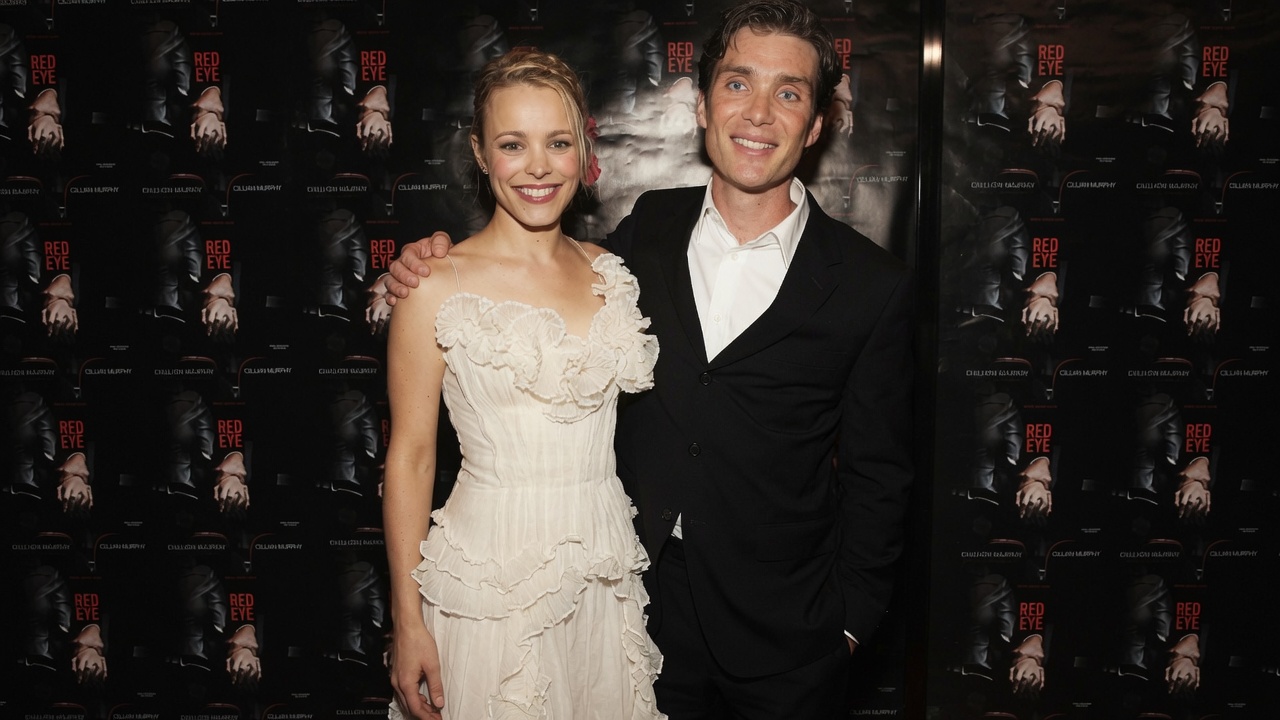
Cillian Murphy has built a career on carefully selecting complex, psychologically rich characters, which is why discussions about his role in the 2005 thriller Red Eye continue to intrigue film fans more than two decades later. The film, directed by acclaimed filmmaker Wes Craven, was a commercial success and earned praise for its tense atmosphere, eventually grossing nearly $95 million worldwide. Yet the project is often viewed as a unique entry in Murphy’s filmography because it differs significantly from the roles that would later define his career.
In the thriller, Murphy portrayed Jackson Rippner, a charismatic yet ruthless operative who terrorizes a hotel manager played by Rachel McAdams during a nighttime flight. The confined setting and escalating tension helped turn the movie into one of the standout suspense films of its era. Critics praised both lead performances, particularly Murphy’s ability to shift effortlessly between charm and menace.
However, conversations surrounding the film have often focused on Murphy’s relationship with the role itself. Unlike many of the morally complex characters he would later become known for portraying, Jackson Rippner was written primarily as a straightforward antagonist. For an actor drawn to emotional nuance and internal conflict, the character represented a different kind of challenge.
According to the narrative around the production, Murphy was never especially interested in becoming a conventional Hollywood villain. While audiences responded strongly to his chilling performance, he reportedly viewed the role as an experiment rather than a blueprint for his future career. Instead of pursuing similar projects after the film’s success, he gravitated toward more layered characters that allowed him to explore deeper psychological territory.
That decision proved pivotal. In the years following Red Eye, Murphy built a reputation for selecting unconventional roles in independent dramas, historical stories, and character‑driven productions. His collaborations with filmmakers such as Christopher Nolan eventually elevated him into one of the most respected actors of his generation. Performances in films like Batman Begins, Inception, Dunkirk, and later Peaky Blinders showcased the type of emotionally complex material he appeared to prefer.
For McAdams, the experience remains memorable because of the intensity Murphy brought to the screen. Even though the character was undeniably sinister, his performance ensured that Rippner became more than a generic thriller villain. The chemistry between the two leads remains one of the film’s most frequently praised elements.
Today, Red Eye occupies an interesting place in Murphy’s career. It demonstrated his ability to command the screen in a mainstream Hollywood thriller while simultaneously convincing him that typecasting as a villain was not the path he wanted to follow. The film may have been a financial success, but its lasting significance lies in how it helped shape the choices that eventually transformed Murphy into one of contemporary cinema’s most celebrated actors.