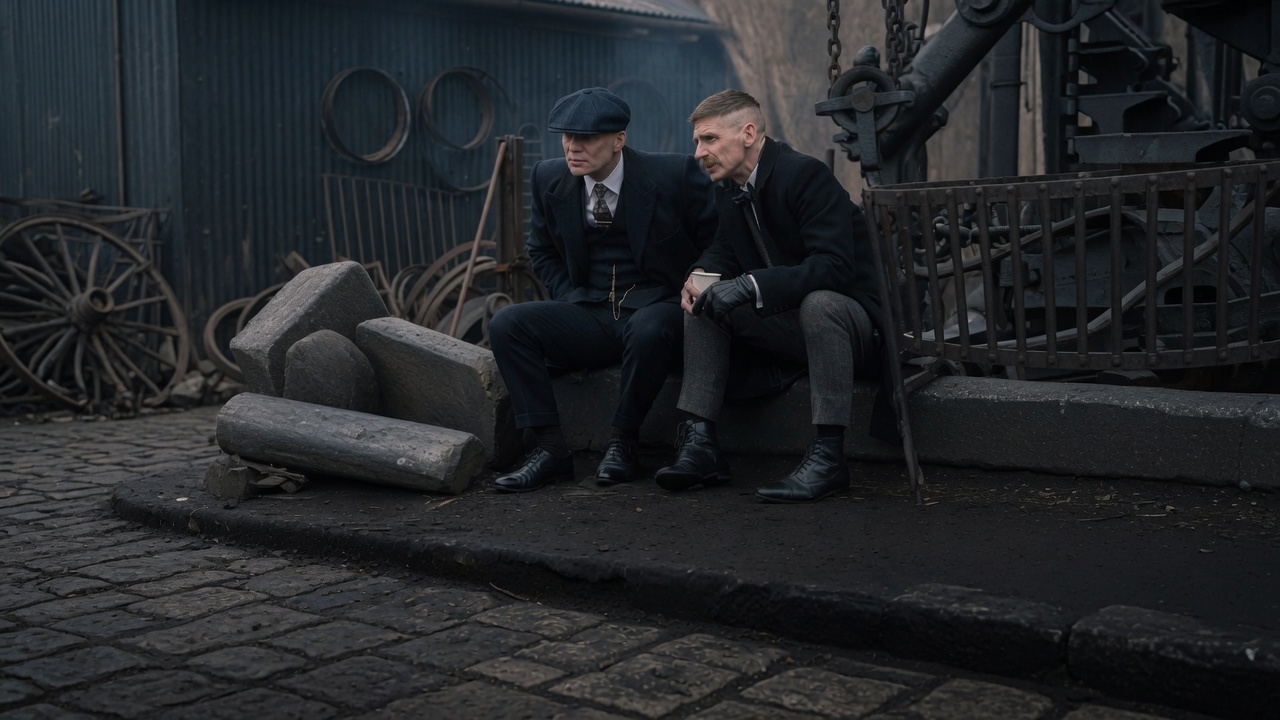
For years, Cillian Murphy has been labeled distant or unfriendly by some fans disappointed when he declines photographs in public. But according to his longtime Peaky Blinders co‑star Paul Anderson, those criticisms completely misunderstand the actor’s relationship with fame and the intense anxiety that often accompanies public attention.
Anderson recently defended Murphy’s strict no‑photo policy, explaining that the Oscar‑winning actor is far more approachable than many people realize. The issue, he says, isn’t meeting fans — it’s the expectation that every encounter must be documented and shared online.
During the filming of Peaky Blinders, Anderson frequently witnessed Murphy’s discomfort with large crowds. Walking through busy streets in Liverpool, the actor would often keep his head down and pull his cap low in an effort to avoid attracting attention. While audiences know him as the commanding Tommy Shelby, those closest to him describe a naturally private individual who has never been comfortable with celebrity culture.
According to Anderson, Murphy is often willing to spend significant time talking with admirers about films, acting, literature, and creative work. Genuine conversations don’t bother him. What changes the dynamic is the moment a smartphone appears.
“He will happily stand and talk to a fan for 15 minutes about cinema,” Anderson explained. “But the second they pull out a phone, everything changes.”
Murphy’s reluctance stems from a deeper discomfort with what he sees as the transactional nature of modern fame. In an era dominated by social media, many celebrity encounters are judged not by the quality of the interaction but by whether a photograph was obtained as proof. For Murphy, that expectation can turn a human conversation into a public transaction.
As a husband and father, he has also worked tirelessly to shield his family from unwanted attention. Throughout his decades‑long career, he has consistently avoided turning his private life into public entertainment, rarely discussing family matters in interviews and maintaining clear boundaries between his work and personal world.
Anderson recalls one particularly revealing moment involving a persistent photographer. Frustrated by repeated attempts to invade his privacy, Murphy reportedly delivered a blunt response that perfectly captured his philosophy: “I give you my art, not my private life.”
The statement reflects a principle that has guided much of his career. Murphy has always preferred to let his performances speak for themselves. Whether portraying Tommy Shelby, J. Robert Oppenheimer, or countless other complex characters, he has focused on the work rather than building a celebrity persona.
For Anderson, this commitment to privacy should not be mistaken for arrogance. Instead, he sees it as a conscious effort to preserve authenticity in a culture increasingly driven by constant exposure. Murphy does not reject fans; he rejects the idea that every personal interaction must become digital content.
In a world where many public figures share every aspect of their lives online, Cillian Murphy’s approach remains unusual. Yet it is precisely that determination to protect his boundaries that has allowed him to maintain a career defined by artistry rather than celebrity. For him, the audience is invited to know his characters — not necessarily the man behind them.