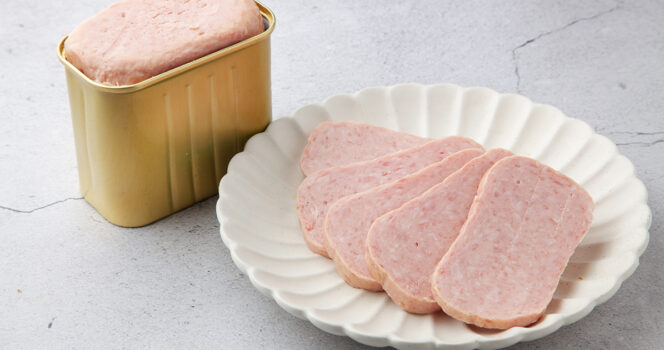
Of all the foods you were likely to find at the back of the pantry in your grandma or grandpa’s house, SPAM might be the most iconic.
A staple in households for many decades, the canned meat has divided opinion over the years, and not just because of its (in my opinion) unappealing appearance. No, there’s a fair amount of mystery surrounding SPAM, which one could argue has done more for its PR than any clever marketing scheme ever could.
So what actually is SPAM? Where did it originate? What secrets are packed into that small can along with the meat? Well, we’ve done a bit of digging and gathered some useful information for you… so read on for more.
What is SPAM?
SPAM was introduced to the world by Hormel Foods Corporation – an American multinational food processing company – back in 1937, and rose to worldwide popularity due to its use before and during World War II, when rations were enforced and regular food supplies were harder to come by.
Interestingly, what SPAM actually stands for remains a point of heated debate. Further adding to the mystery we mentioned earlier, there are differing opinions on the acronym.
For example, some sources claim that SPAM stands for Specially Processed American Meat, while others say it stands for Shoulder of Pork and Ham. Other phrases such as “Salt Preserves Any Meat” have been mentioned online, while “Spiced Ham” has also been suggested as a possible explanation.
The official line is… well, there isn’t one, which makes the whole thing even more mysterious, and therefore more interesting.
That said, the origin of the famous letters has been debated for decades. Time reported that one Ken Daigneau, the brother of a Hormel executive, came up with the word SPAM as a portmanteau (a word combining the meanings of two others) for spiced ham during a naming contest, winning a $100 prize (a significant amount in the late 1930s).
Company founder Jay Hormel told New Yorker writer Brendan Gill back in 1945: “I knew then and there that the name was perfect.”
As it turns out, the ingredients of SPAM are not nearly as difficult to understand. The New York Post claims they include a simple mix of pork, water, salt, potato starch, sugar, and sodium nitrate.
The Hormel Foods website explains that: “Toward the end of the Great Depression, SPAM helped fill a huge need for inexpensive meat products. And its popularity only grew.”
Its importance was then cemented during the Second World War, and it remains a popular food staple today.
How is SPAM made?
I doubt I am the only one who has wondered what SPAM is actually made of. I’ve heard my share of horror stories over the years, and though none have ever convinced me to stop eating it, I’ve had moments where I’ve wondered if there was some hidden ingredient I should know about.
It turns out the production method for SPAM is just as simple as its ingredient list. Hormel Foods says that ground pork and ham are mixed with the other ingredients for 20 minutes. They are then placed into cans, which are vacuum-sealed. The cans are then cooked and cooled for three hours, after which they are ready to receive their iconic labels.
Do you eat SPAM? Did you know how it was produced, what it’s made from, and what it stands for? Let us know!