
Marina Abramović is no stranger to pushing the boundaries of performance art, or her own body. But even by her standards, one piece stands out as particularly grueling.
In a recent interview, the Serbian artist revisited her controversial 2005 performance at the Guggenheim Museum in New York (a reinterpretation of Vito Acconci’s infamous 1972 work Seedbed), describing the experience as “terrible,” “complicated,” and physically exhausting.
Acconci’s original piece involved him performing a private act beneath a ramp in a gallery while responding to visitors walking above. Abramović’s version flipped the concept, exploring themes of gender, energy, and creation from a female perspective.
“Having intense physical experiences in public, being stimulated by the footsteps of visitors above me, it’s really not easy, I tell you!” Abramović told New York Art in 2005. “I’ve never concentrated so hard in my life.”
Though the audience could only hear her voice and never see her, the performance demanded extreme endurance. Over the course of one session, she reached nine climaxes — a feat she now recalls as draining.
“I was so exhausted,” she said. “The next day I had to do a different performance, and I could barely function.” In a more recent appearance on Bella Freud’s Fashion Neurosis podcast, Abramović reflected further on the emotional and physical toll.
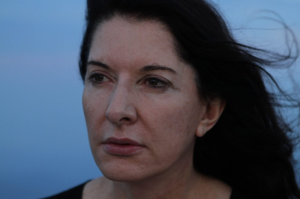
“The piece required hours of intense focus under the stage,” she said. “After a certain point, it was really difficult. I was completely drained, but I take my work seriously, so I pushed through.” For Abramović, the performance was not about provocation but transformation. She described the experience as a moment of raw vitality and connection to nature.
“You feel life, you feel nature, the birds, the rocks, the trees – everything becomes luminous,” she explained.
Her goal was to explore what female energy could produce, contrasting Acconci’s original metaphor of seeding with her own interpretation of creation, presence, and vulnerability.
As always, Abramović is unapologetic in her approach. “I don’t fake it,” she said. “I never fake anything.”
What are your thoughts?