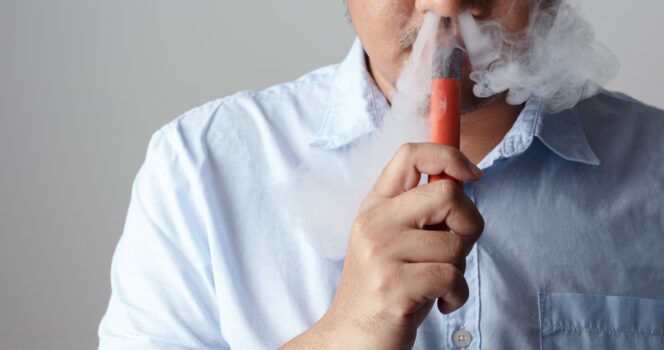
A viral simulation is giving smokers and vapers an unsettling look at what may be happening inside their lungs over time—and according to viewers online, it’s enough to make some people rethink the habit entirely.
Keep reading to learn more.
An animation created by YouTuber X-Ray Buddy breaks down the physical effects smoking and vaping can have on the respiratory system in the days, weeks, months, and years after inhalation.
While most people already know both habits come with health risks, the visual explanation has reignited debate online because it shows those effects step by step inside the body itself.
Whether it’s traditional cigarettes or flavored disposable vapes, both products remain extremely common despite years of public health warnings.
According to statistics released by Action on Smoking and Health, around 13 percent of British adults still smoke cigarettes, while an estimated 10 percent use vapes. Common side effects such as coughing, throat irritation, shortness of breath, and chest tightness are already familiar to many smokers and vapers.
Cigarette users, in particular, have spent years seeing graphic warning labels printed directly on packaging in an attempt to discourage smoking. But the simulation aims to show what those warnings actually look like internally.
According to the animation, smoking cigarettes immediately increases heart rate while also drying out the airways.
Tar then begins coating the lungs, quickly covering tiny protective hairs known as cilia, along with delicate air sacs responsible for oxygen exchange.
The simulation explains that this damage can begin affecting the respiratory system within days or weeks of smoking a first cigarette.
Vaping affects the lungs differently, but not without its own risks.
Instead of smoke, users inhale an aerosol made up of nicotine, chemicals, and ultrafine particles.
The simulation shows this causing throat irritation, inflammation in lung tissue, and feelings of chest tightness after inhalation. As time goes on, the long-term effects become more noticeable.
According to the simulation, smoking can create an “oxygen debt” in the lungs due to carbon monoxide inhalation, reducing the body’s ability to efficiently transport oxygen. Meanwhile, vaping is shown keeping the lining of the lungs inflamed, potentially leading to mucus buildup over time.
As weeks turn into months and years, both habits continue putting stress on the respiratory system.
In the case of cigarette smoking, the long-term risks become far more severe, with increased chances of developing lung disease, cardiovascular disease, and several forms of cancer.
The video also reignited the ongoing debate over whether vaping is actually safer than smoking or simply harmful in a different way.
According to current scientific research, vaping is generally considered less harmful than traditional cigarettes for people who already smoke.
The NHS cited a 2022 study that found vaping poses only a fraction of the risks associated with smoking in the short and medium term.
The study also concluded that people who switch completely from smoking to vaping reduce their exposure to toxins linked to cancer, heart disease, lung disease, and stroke.
At the same time, health experts continue to stress that “less harmful” does not mean harmless. Most e-cigarettes still contain nicotine, which remains highly addictive.
Some vaping products may also expose users to chemicals linked to irritation and long-term health risks, including formaldehyde, though regulated vapes sold in the UK are not permitted to contain it.
The simulation’s growing popularity online reflects how public conversations around vaping continue to evolve—especially among younger users who may see vaping as a cleaner or safer alternative to smoking.
But for many viewers, the biggest takeaway was simple: regardless of which habit people choose, the lungs still end up paying the price.
What do you think of the vaping vs smoking debate? Let us know in the comments section on Facebook.