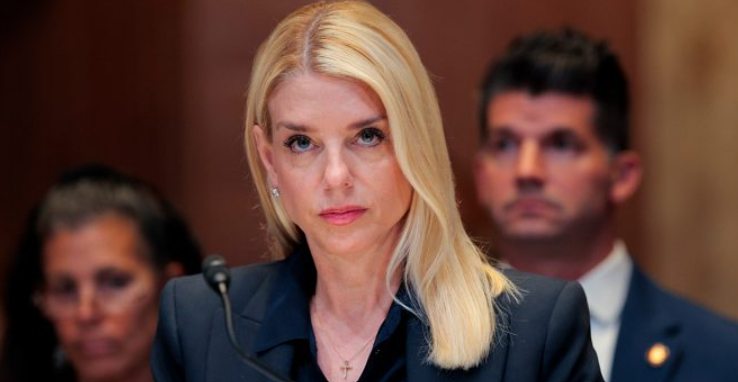
US Attorney General Pam Bondi has moved into a secure military base after receiving death threats, according to reports. Per the NY Times, Bondi, 60, is now staying at a secure base in Washington, D.C., after a series of threats, with federal law‑enforcement agencies warning of increased potential security risks. Given the current political climate, it’s hardly surprising that concerns have grown over the safety of several senior officials in the current US administration.
Reports claim Bondi isn’t the only one who has relocated to a guarded military residence in the capital. The NYT states that the latest threats stem from transnational drug cartels whose operations have been targeted by the US Justice Department as it takes a hardline stance against trafficking networks importing drugs from Latin America.
President Donald Trump has expressed his intent to combat “narcoterrorists,” while the high‑profile operation to capture Venezuelan leader Nicolás Maduro — and subsequently accuse him of working with criminal organizations, including the Cartel of the Suns and other trafficking networks — has escalated tensions.
In her role as US Attorney General, Bondi is at the forefront of the prosecution against Maduro and his wife, Cilia Flores. She has also been heavily involved in the investigation into Jeffrey Epstein, making her a potential target.
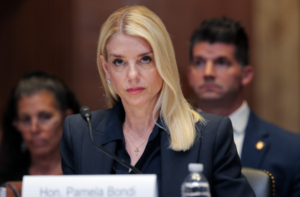
According to reports, a heightened risk to Bondi’s safety was identified during a law‑enforcement assessment, prompting her decision to move to a more secure location. Other high‑ranking officials in the Trump administration — including Secretary of State Marco Rubio, former homeland security secretary Kristi Noem, and Defense Secretary Pete Hegseth — have also reportedly chosen to relocate to secure military bases.
The location of Bondi’s residence has not been disclosed for safety reasons, with analysts noting that the number of civilian officials currently using military properties for protection is unusual.
President Donald Trump himself faced a threat earlier this week following the joint US‑Israel attack on Iran. Trump authorized the strikes nearly two weeks ago, resulting in the death of Supreme Leader Ayatollah Ali Khamenei.
After Iran declared that the Strait of Hormuz — a critical route for oil exports from Iraq, Kuwait, Saudi Arabia, and others — was “closed,” Trump warned of severe consequences if it was not fully reopened.
“If Iran does anything that stops the flow of oil within the Strait of Hormuz, they will be hit by the United States of America TWENTY TIMES HARDER than they have been hit thus far,” the president wrote on March 9. “Additionally, we will take out easily destroyable targets that will make it virtually impossible for Iran to ever be built back, as a Nation, again — Death, Fire, and Fury will reign upon them — But I hope, and pray, that it does not happen!”
As reported by the Daily Mirror Ali Ardashir Larijani, secretary of the Supreme National Security Council, responded that Iran “is not afraid of your empty threats. Even those greater than you could not eliminate the Iranian nation. Be careful not to be eliminated!”