The Black Scorpion (1957): A Classic 1950s Creature Feature That Still Packs a Venomous Punch
In the golden era of giant monster movies, when Hollywood was churning out tales of radioactive beasts and awakened horrors, The Black Scorpion (1957) stands out as a gritty, atmospheric gem set against the rugged backdrop of rural Mexico. Directed by Edward Ludwig, this sci-fi horror adventure combines elements of disaster, exploration, and pulse-pounding creature action. While it may not enjoy the same household fame as Godzilla or Them!, it delivers solid entertainment for fans of classic B-movies with its clever premise, strong performances, and memorable stop-motion effects.
Moment#1

The story opens in the aftermath of a devastating volcanic eruption in a remote part of Mexico. The landscape is scarred, villages are shaken, and mysterious deaths begin occurring near the crater. Enter two dedicated geologists: the American Dr. Hank Scott, played by the reliable Richard Denning, and his Mexican colleague Dr. Arturo Ramos, portrayed by Carlos Rivas. As they investigate strange seismic activity and the unexplained fatalities, their search leads them to the ranch of the strong-willed and beautiful Teresa Alvarez, brought to life by Mara Corday.
Moment#2

Teresa’s property sits right at the heart of the chaos. What starts as a scientific inquiry into natural disasters quickly spirals into something far more terrifying. The recent eruptions have cracked open a massive underground cavern system, releasing creatures long thought extinct—enormous prehistoric scorpions that have survived in isolation for millions of years.
Moment#3

As volcanic activity continues to rumble, these giant arthropods are driven to the surface. They begin their deadly rampage, attacking isolated ranches, small villages, and anyone unlucky enough to cross their path. The film excels at building tension through these early attacks, showing the fear spreading through tight-knit communities and the helplessness of ordinary people facing an unstoppable force from below.
Moment#4

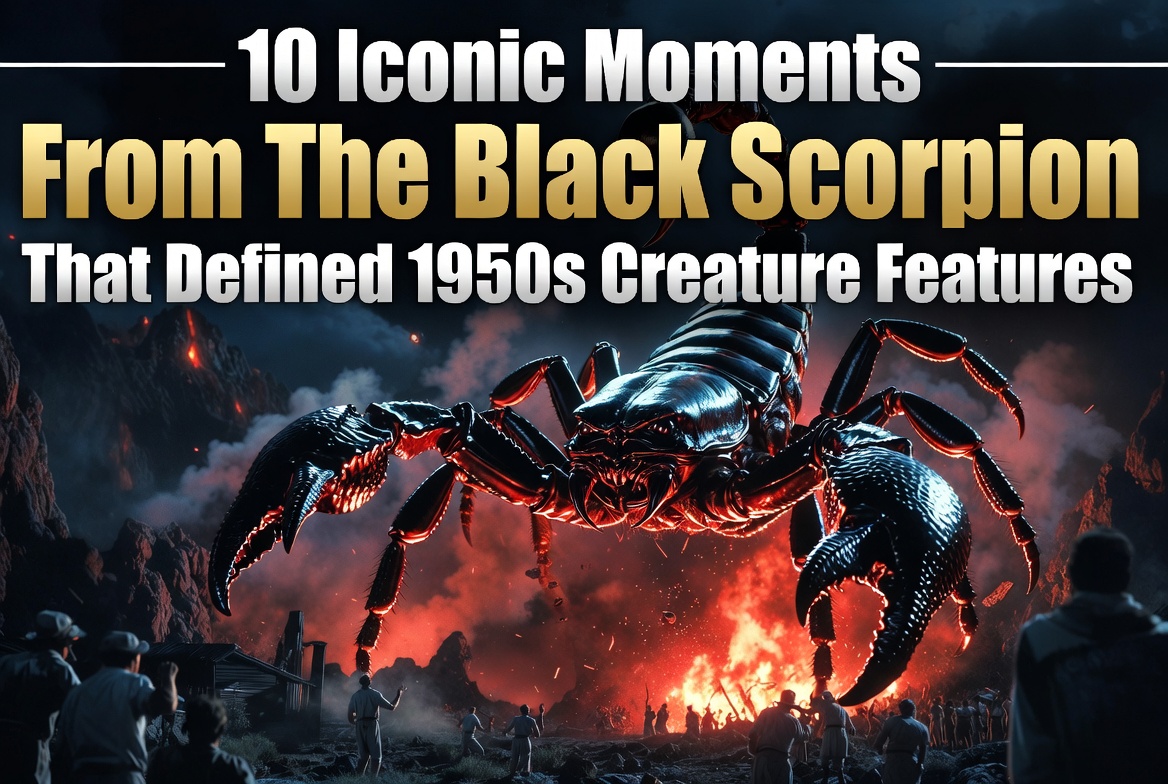
Determined to understand and contain the threat, the scientists organize a dangerous descent into the newly exposed caverns. What they discover underground is a complete, nightmarish ecosystem: not just one or two giant scorpions, but an entire colony of deadly creatures. At the top of this food chain lurks the massive alpha scorpion—a true monster of the film, resistant to bullets and conventional weapons, with a menacing presence that dominates the screen.
Moment#5

The stakes rise dramatically when the creatures start moving toward Mexico City. With a major population center now in danger, the military joins forces with the scientists in a race against time. Their only hope lies in discovering and exploiting the scorpions’ one key vulnerability before the beasts reach the capital. This final act delivers exciting action sequences, narrow escapes, and classic 1950s heroism as the team uses brains, bravery, and a bit of ingenuity to save the day.
Moment#6

Richard Denning brings his usual steady charm and authority to the role of Dr. Hank Scott. Known for appearances in other genre favorites like Creature from the Black Lagoon, Denning makes for a believable hero—intelligent but never arrogant, courageous without being reckless. Carlos Rivas adds cultural authenticity and warmth as Dr. Ramos, creating a genuine partnership that feels grounded rather than stereotypical.
Moment#7

Mara Corday, a former model and actress who appeared in several Universal horror and sci-fi films, gives Teresa Alvarez real strength and depth. She isn’t just a damsel in distress; her character is a capable ranch owner fighting to protect her land and people. The romantic tension between Hank and Teresa adds an emotional layer without slowing down the monster action.
Moment#8

What makes The Black Scorpion particularly effective is its blend of real-world disaster with fantastical horror. The volcanic setting feels authentic, and the film captures the isolation and vulnerability of rural communities in the face of nature’s fury. The giant scorpions, brought to life through Willis O’Brien’s stop-motion animation techniques (the same master behind King Kong), remain impressive even today. Their movements are deliberate and menacing, especially the way the massive alpha scorpion uses its powerful pincers and deadly stinger.
Moment#9

The underground sequences create a genuine sense of claustrophobia and wonder. Viewers get a glimpse into this hidden prehistoric world, complete with other dangerous arthropods that make the environment feel truly alive and hostile. These scenes balance scientific curiosity with pure monster-movie thrills, a hallmark of good 1950s creature features.
Released during the height of the Cold War and atomic-age anxieties, The Black Scorpion taps into broader fears of the unknown lurking beneath our feet. It reflects society’s fascination with science—both its potential to solve problems and its limits when facing forces of nature. The film also shows respect for Mexican culture and landscapes, which was somewhat progressive for American productions of that time.
Though made on a modest budget, the movie makes excellent use of location shooting and practical effects. The contrast between the sun-baked surface world and the dark, shadowy caverns heightens the drama. Sound design, particularly the scorpions’ eerie noises, adds to the unsettling atmosphere. While some dialogue and pacing feel dated by modern standards, the overall energy and commitment from the cast keep it engaging.
Upon its original release, The Black Scorpion earned decent reviews for its effects and entertainment value. Over the decades, it has earned a dedicated cult following among fans of classic monster movies. It serves as a perfect example of the era’s “big bug” subgenre, sitting comfortably alongside films like Tarantula and The Deadly Mantis.
Watching it today offers a wonderful dose of nostalgia. The practical effects have a tangible quality that CGI often struggles to match. There’s something satisfying about seeing miniature work and clever photography create the illusion of massive creatures wreaking havoc. The human story—scientists, locals, and authorities working together—carries a hopeful message about cooperation in the face of crisis.
The Black Scorpion also reminds us of the enduring appeal of these kinds of stories. They allow us to confront our fears of nature’s power, the unknown, and sudden catastrophe in a safe, entertaining way. The film’s legacy lives on through home video releases, late-night TV screenings, and its influence on later creature features.
For anyone interested in classic sci-fi horror, The Black Scorpion is well worth a watch. It may not be the most famous monster movie of the 1950s, but its combination of volcanic disaster, giant arachnids, strong characters, and exciting underground exploration makes it a memorable ride. In an age of slick blockbusters, there’s real pleasure in returning to these earnest, imaginative films that prioritized wonder, danger, and human resilience.
Whether you’re discovering it for the first time or revisiting an old favorite, The Black Scorpion delivers exactly what fans look for in a 1950s creature feature: chills, thrills, and a giant monster you won’t soon forget.