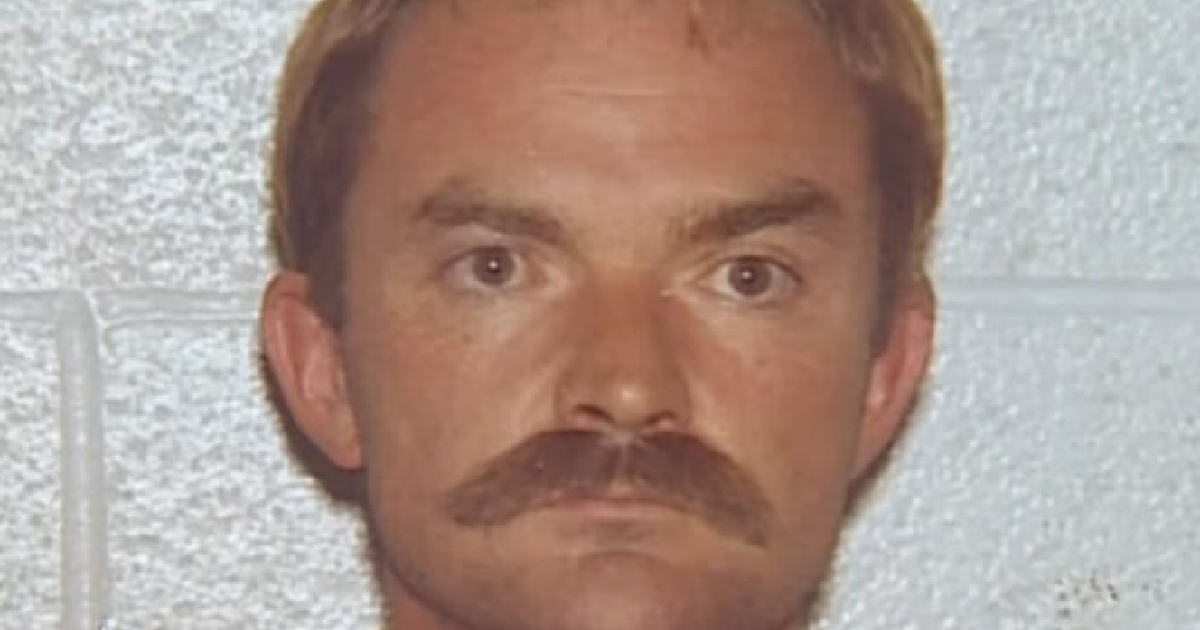
It’s chilling to remember that even the world’s most notorious killers—dictators, mass murderers, serial predators—were once innocent children.
The boy we’re about to focus on would grow up to become one of California’s most feared killers, believed to have taken the lives of 51 young boys.
From 1971 to 1983, he struck fear into an entire state, and even decades later, the memories of his horrifying crimes remain deeply etched in the minds of those who lived through the terror and those forever connected to the case.
Born on March 19, 1945, in Long Beach, California, this boy was the only son in a modest, working-class family that had moved west from Wyoming in search of stability and sunshine.
From the outside, everything appeared ordinary—a family chasing the American dream in the new suburbs of postwar Southern California.
But inside that small, pale-blue house, a strange quietness always lingered.
Growing up, the boy was an intelligent, observant child. He was polite, reserved, almost painfully meticulous. He loved puzzles, math, and order. His teachers described him as bright and obedient. His mother, Opal, doted on him; his father, Harold, worked long hours at a factory and expected discipline.
Neighbors would later recall how neat his room was, and how his toys were always arranged with precision. Even as a boy, he sought control—a trait that would grow darker with time.
A model student
When the family moved to the growing suburb of Westminster in Orange County, the boy adapted quickly to the conservative climate of 1950s America. In high school, classmates remembered him as “smart, clean-cut, and quiet.”
He excelled academically and was described as strongly conservative, a supporter of the military, tradition, and order.
He joined student government, participated in debate, and seemed destined for a stable, respectable future. After graduating in 1963, he enrolled at Claremont Men’s College, majoring in economics. He became active in campus politics, supporting Barry Goldwater and the Vietnam War.
But by his junior year, something began to change.
He grew a beard. His views softened. He began attending anti-war rallies and quietly started confronting an identity he had long suppressed.
By 1969, he came out as gay—a revelation that shocked his family and led to his discharge from the Air Force Reserve, where he had been training. Officially, it was listed as “medical reasons.” Unofficially, it was due to his sexuality.
The drift begins
After leaving the service, he remained in Southern California, working various jobs—bartender, programmer, waiter.
He was well-spoken, neatly dressed, and polite. To most, he appeared mild and intelligent, with an IQ of 129 and a calm personality.
But beneath that composed surface, something was shifting.
He began using drugs, mainly amphetamines and barbiturates, and drinking heavily. Friends noticed irregular behavior—periods of isolation, sudden anger, and unexplained absences.
The nightlife of Long Beach and nearby areas was growing, and he was drawn into it. Gay bars became places where secrecy and freedom overlapped. He worked at one called The Stables, serving drinks and blending in easily.
But he was also observing. Waiting. Testing boundaries.
The first victim
In March 1970, a 13-year-old runaway named Joseph Fancher entered a Long Beach bar, disoriented and frightened. Police later learned he had been drugged and assaulted by an older man who offered him shelter.
Police eventually identified a suspect and searched his apartment, where they found the boy’s shoes along with sedatives and prescription drugs. However, because the search had no warrant, the evidence was dismissed, and the suspect was released.
No one knew it then, but the Fancher case would mark the beginning of a long chain of crimes spanning more than a decade.
Bodies by the highway
Over the following years, a disturbing pattern emerged across Southern California. Young men—often teenagers or Marines—began disappearing.
Their bodies were later found along highways, remote fields, and ravines.
The killings were methodical. Victims were drugged, restrained, and killed with precision. Many showed signs of torture. Investigators across multiple counties realized they were dealing with a single perpetrator who moved through the freeway system like a shadow.
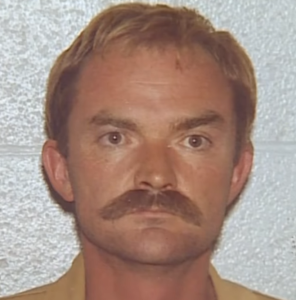
By 1975, police had connected several cases but still had no suspect.
Unbeknownst to them, the killer was living in Long Beach, working as a computer programmer, and spending weekends searching for victims.
Between 1971 and 1983, he is believed to have kidnapped, tortured, and murdered at least sixteen young men and boys while remaining undetected.
A twist of fate
Then, in May 1983, everything changed.
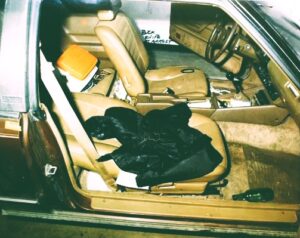
At around 1:00 a.m., California Highway Patrol officers stopped a Toyota Celica on the 405 Freeway near Mission Viejo. The driver appeared intoxicated, with a beer bottle nearby.
When officers looked inside, they froze.
A young Marine named Terry Gambrel was slumped in the passenger seat, a belt around his neck.
The driver was identified as Randy Kraft—soon to be known as “The Scorecard Killer.”
Inside the car were drugs, alcohol, and a notebook.
At his home, investigators discovered disturbing evidence: photographs, personal belongings of victims, and materials linking him to murders across multiple states. Most chilling of all was a handwritten list of more than sixty cryptic entries.
A “scorecard” of death
Each line appeared meaningless at first—words like “Stable,” “Marine Drum,” “Iowa,” “Parking Lot.” But detectives soon realized the truth: it was a coded record of victims.
One entry referenced the bar where he once worked. Another matched a known crime scene. The list stretched across more than a decade.
It was, investigators believed, a personal tally of murder.
He documented everything, as though each victim was just a number.
All victims were young white men, mostly in their late teens or early twenties, often found with drugs or alcohol in their systems.
His method was consistent: he would pick them up, offer drug-laced drinks, then assault and kill them once they were unconscious. Many were found unclothed, showing signs of prolonged violence.
Photographs added another disturbing layer—victims posed in eerie arrangements, some appearing asleep, others clearly deceased.
To those who knew him casually, he seemed ordinary—polite, intelligent, even friendly. But that image masked something far darker.
Trial and aftermath
In 1989, after one of the longest and most expensive trials in Orange County history, Randy Kraft was convicted of 16 murders, along with multiple counts of torture and sexual assault.
He maintained his innocence, stating:
“I have not murdered anyone. I believe any reasonable review of the record will show that.”
He showed no emotion when sentenced to death and was sent to San Quentin’s death row.
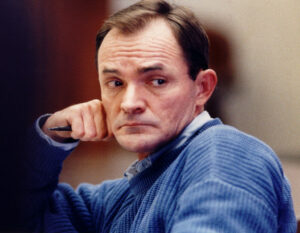
Some victims’ families reacted with relief, others with grief and anger. One father shouted as he was led away, “Burn in hell, Kraft.”
The case devastated Kraft’s own family, who were forced into hiding from the media.
Years later
Even after decades in prison, Kraft has never confessed.
Investigators believe there may be many more unidentified victims.
In 2012, a retired detective met him in prison, hoping for answers—but received none.
Described as unremarkable in appearance, Kraft blended into any crowd, a fact that still unsettles investigators today.
Death sentence upheld
His conviction and death sentence were upheld by the California Supreme Court in 2000. As of 2025, he remains on death row, still denying involvement in the crimes.
To investigators, he represents something unsettling: a man who looked entirely ordinary, yet is believed to have committed extraordinary evil