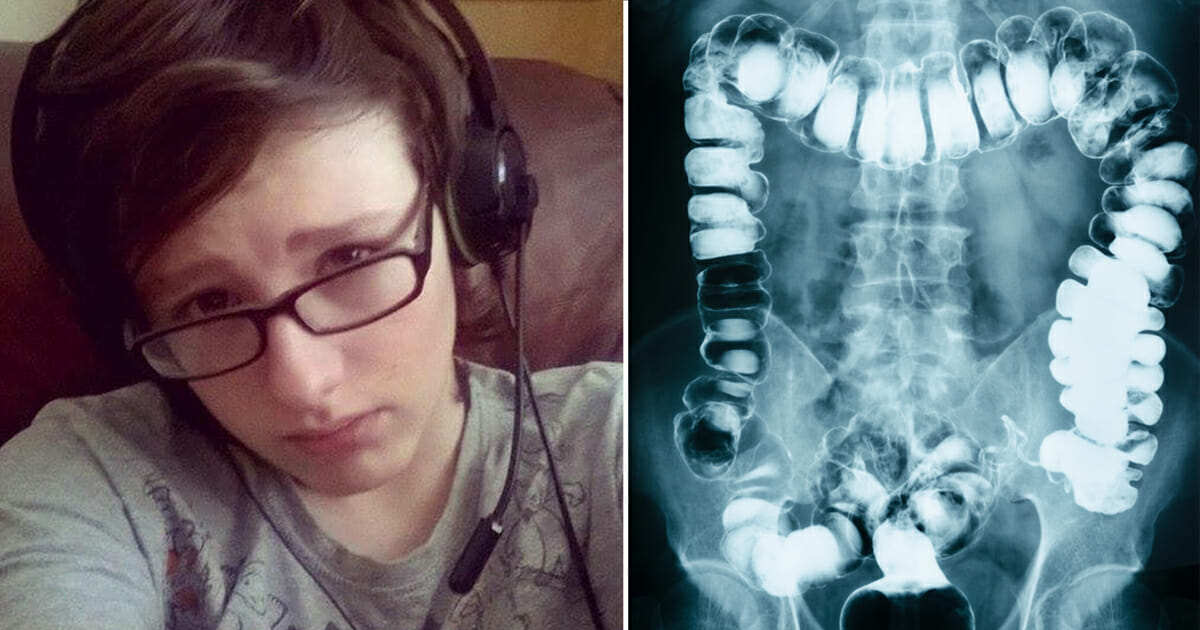
Back in 2019, teenager Jack Dunn was rushed to the hospital with stomach pains so severe he could no longer walk. Doctors carried out various tests on the 17-year-old to determine the cause.
The doctors diagnosed the boy from Porth, Wales with severe constipation. He was given laxative medication and sent home, without realizing Jack was actually suffering from something far more serious.
Just 24 hours after being discharged, Jack was found dead in his bed by his father.
According to his parents, doctors had scanned his stomach to rule out appendicitis.
“We took him to A&E and completely trusted the doctors in telling us what was wrong with him. He could barely walk he was in so much pain. He was given a bladder scan but it didn’t really show anything up. The doctor said he was baffled and believed Jack was suffering from nothing more than a bad bout of constipation,” Jack’s father told British newspaper The Sun.
Unfortunately, doctors at the hospital were unable to identify Jack’s underlying condition in time. It later emerged that Jack had ketoacidosis caused by the breakdown of fatty acids and the production of ketones, typically associated with uncontrolled type 1 diabetes.
“When Jack was finding it difficult to breathe the doctor thought it was probably anxiety because Jack was anxious about being in the hospital,” Jack’s dad Kieron said. “But him struggling to breathe was because his organs were closing down because of the ketoacidosis.”
He added, “Finding my son dead in his bed was the worst moment of my life. I believe Jack would be alive today if a few more simple tests had been carried out.” Jack’s family says his death could likely have been prevented if doctors had performed a glucose test.
If ketoacidosis is detected early, the condition can be treated with proper medication and insulin.
Other symptoms include fatigue, confusion, unusual thirst, faster breathing, and increased urination.
Please share this story with your friends and family to raise awareness about ketoacidosis and help prevent the same thing happening to others.