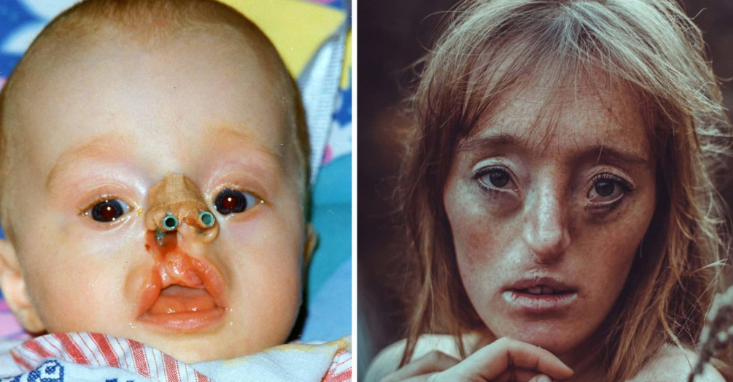
No person should ever be treated differently just because they look different. Sadly, this happens far too often among both children and adults, and it is never acceptable. Just ask Ilka Brühl, who was born with ectodermal dysplasia, a rare genetic disorder that affected her facial structure.
The German girl was called cruel names in school and eventually wished she could make herself invisible. At the same time, she was an excellent student and ultimately realized she could help others by sharing her own story.
Today, Ilka is a model and published author. Through social media and a podcast she runs, she aims to encourage people to see their own beauty and accept one another as they are.
This is her incredible story — and what she looks like today.
Now, I want you, the person reading this, to take a moment to think about your life at 16. Personally, I have plenty of memories from that time — both good and bad. But overall, it was a period of major change. More hormones, overwhelming emotions, and sometimes mental challenges I had to work through.
Ilka Brühl — born with ectodermal dysplasia
Overall, I hope it was a positive time in your life, as it was in mine.
Now imagine that at 16, you were called “Freak,” “Alien,” or “Pig Nose.” Imagine no one wanted to play with you at school, and when other children saw you, they pointed and laughed.
Most of us have never experienced that level of cruelty. For German girl Ilka Brühl, however, it was an everyday reality. Ilka was born with a cleft nose and lips — ectodermal dysplasia, a rare genetic disorder that affects facial structure.
She lived with the deformity for years before undergoing surgery to correct it.
Afterward, she realized her appearance wasn’t defined by her condition at all. Ilka came to understand that beauty couldn’t be created through surgery — and she learned to accept her face as it was.
Today, Ilka is a role model for millions of people worldwide. Through her work, she hopes to help others.
Ilka Brühl — early life
Right up until the day she was born in January 1992, Ilka Brühl’s parents believed their daughter was completely healthy. And she was — but doctors noticed she had trouble breathing. The airways in her nose were blocked.
She needed emergency surgery, and surgeons operated on her cleft palate. By then, it was clear something was “different” about little Ilka.
School can be a harsh place for many children. Unfortunately, Ilka learned that better than most. Children at her school didn’t understand that she was just like everyone else, even if her face looked a bit unusual.
According to reports, kids at school asked questions about her appearance and laughed at her.
“At first I thought: How else am I supposed to look? That’s how I am! But then I consciously looked in the mirror and realized my nose is different. Then you start questioning yourself,” she told German newspaper Kurier.
Even though she was a beautiful little girl, the bullies were relentless. They called her names like “Freak,” “Alien,” and “Pig Nose,” and never wanted to play with her.
“As a child, I often had eye infections because my tear duct wasn’t developed, and headaches because my paranasal sinuses were very susceptible to moisture,” Ilka said.
“But I was always able to live with the symptoms.”
Didn’t want photos of herself at home
She added: “My parents always made me feel like I was fine the way I was. As a child, I could confidently counter stupid comments or looks. Still, the question came up during puberty: ‘If I’m supposed to be so normal — why don’t you see people like me anywhere?’”
Ilka even intentionally made silly faces in photos so her parents wouldn’t hang them up at home.
“That was my avoidance strategy,” she said. “If I look so silly in photos that my mom won’t hang them up, then I don’t have to see them either.”
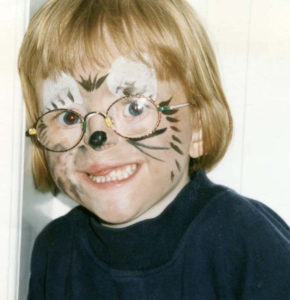
As a teenager, she developed even more self-doubt — not only because of school, but also because of commercials on television. Companies constantly pushed narrow ideas of beauty, she recalled, and Ilka felt she wasn’t represented anywhere. She became ashamed of showing her face, saying it felt even more embarrassing than being naked.
Despite the cruelty she faced, she refused to let anyone break her spirit. Ilka was a straight‑A student and earned the best grades in her year.
“It was like a kind of double life,” she said.
Everything changed before a photoshoot
Because of her low self-esteem, Ilka struggled to make friends. She underwent ten operations, and though she had trouble accepting herself, things eventually began to change. She realized she wasn’t worth less than anyone else and grew into a confident woman who wanted to inspire others.
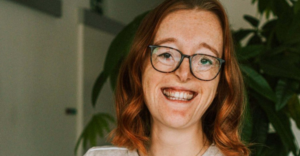
Everything changed in 2014 on her way to her first photoshoot.
“On the way to [the photographer], I was on the verge of turning around several times because I was so terrified she would laugh at me when she saw me in real life,” she wrote, as reported by Insider.
“Being in front of the camera showed me: Every defect and every mistake is part of you, and that’s okay too. You just have to make the most of it,” she added.
At 20, Ilka underwent nose correction surgery. It was mostly for medical reasons, but she believed it would finally give her the courage to love herself.
After the surgery, though, something unexpected happened.
“If you accept yourself, then you can shine from within”
“As soon as the wounds healed, I noticed the next blemish. At that moment I realized: Beauty cannot be created on the operating table,” Ilka told BILD.
“For me, [beauty] is all about presence. If you accept yourself, then you can shine from within — and that’s more beautiful than the most perfect person who doesn’t like themselves.”
Instead of more surgeries, Ilka realized she needed to change how she saw herself. It wasn’t about others viewing her as “normal,” but about learning to accept herself.
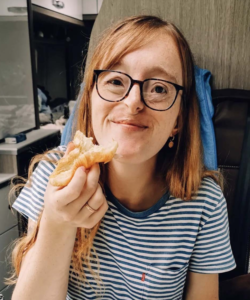
“I approached people more openly and learned to like myself. And I noticed: Others weren’t withdrawing from me — I was withdrawing from them!”
Ilka knew she looked “different,” but she didn’t see that as negative. She wanted to embrace her differences. She realized she could help others accept themselves and wanted to share her experiences.
She launched a podcast focused on dealing with self-doubt and offering tips on self-love. She also published her book Differently Beautiful – How I Learned to Love Myself. In 2018, she and friends started Project Grenzenlos (“Project Limitless”), a campaign highlighting the beauty of people with deformities and other differences. It aligned perfectly with Ilka’s view of beauty.
Ilka Brühl today — pictures
On Instagram, she wrote: “I think EVERYBODY is beautiful in his own way. I often read comments like ‘You are not pretty just because you’re different,’ [and] that’s totally right! I am pretty because EVERYBODY is pretty. Never mind if you are a classic beauty, tall, small, stout, thin, black, white.”
Ilka shares her story and insights into her life through her blog and Instagram. Recently, she’s worked on a children’s book and has shared childhood photos of herself.
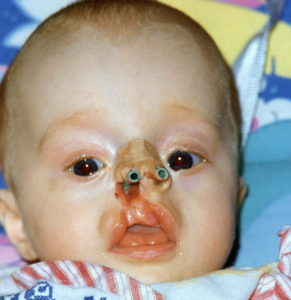
“I decided to show a baby photo of me. Because you see my ‘defect’ better there. I get many messages asking why I look the way I do,” she wrote.
“At first, I hesitated because some of you think that’s too much. But that’s wrong — it should be as normal as any other baby picture.”
She added in a Facebook post: “Everyone who knows me can confirm how important this is to me and that I want to help others — those with defects, and parents of babies who fear their child won’t be accepted.”
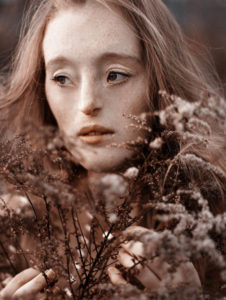
After Project Grenzenlos aired in 2018, Ilka began booking more modeling jobs — and she looks fantastic. Today, she is a major role model for many. Her journey is deeply inspirational, and through social media, people around the world follow her daily life. She now has over 33,000 Instagram followers.
Married her beloved Philip
Not only has Ilka become a role model for others, but she has also fully accepted her own appearance — and found the love of her life.
A few years ago, she married her now‑husband, Philip.
“The wedding itself was indescribably beautiful for me. When I woke up the next day, I couldn’t believe how great everything went,” Ilka wrote.
“Sunny weather, everyone in a good mood, and my husband (still want to say boyfriend) looked amazing. I was so emotional and shed so many tears. Loving someone so much is a great privilege, and I am infinitely grateful for it. I’m so excited for everything to come. I can’t believe how lucky I am to call such a great person my husband.”
No person is perfect. But even if someone looks “different” or has a disability, we should always treat one another with respect.
Ilka Brühl is an inspiration, and her story deserves recognition — especially because it can help others. Please share this article with friends and family on Facebook to honor Ilka Brühl.