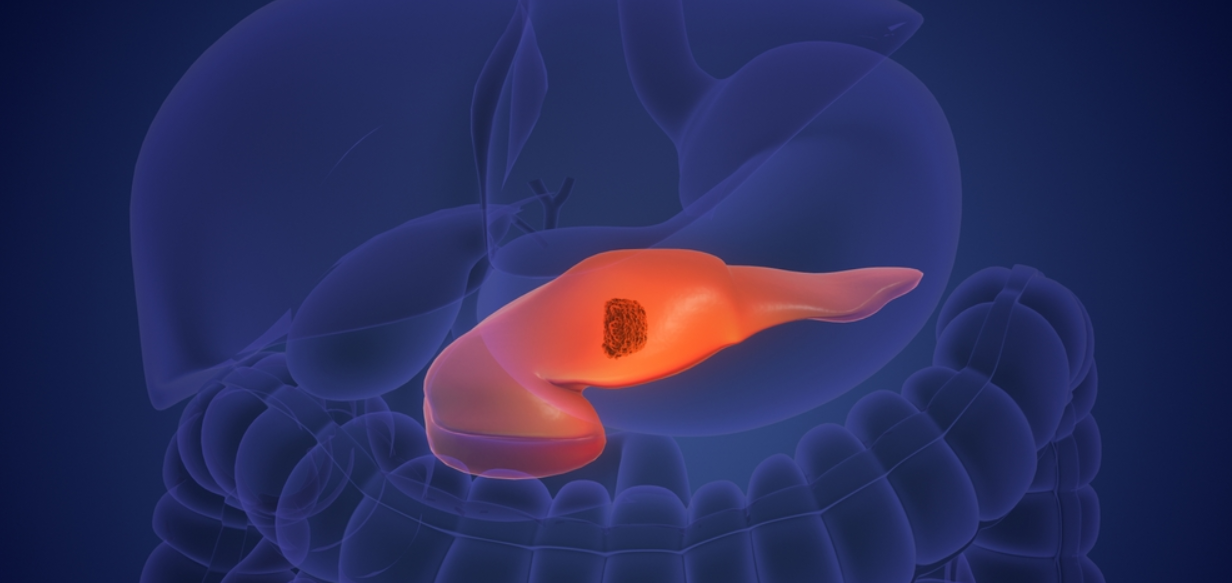
Pancreatic cancer is widely regarded as the deadliest cancer on the planet. It is aggressive, fast‑moving, and notoriously difficult to detect in its early stages. By the time most patients receive a diagnosis, the disease has already advanced, leaving doctors with limited treatment options and patients with devastating odds. For decades, researchers have searched for a way to stop this cancer in its tracks — and repeatedly hit a wall.
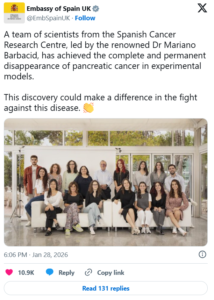
But a Spanish scientist named Mariano Barbacid may have just changed the future of pancreatic cancer research. After six years of relentless work, his team has produced a breakthrough that many experts once believed was impossible.
The “Undruggable” Gene
For more than 40 years, scientists have known that a mutation in a gene called KRAS is responsible for driving the growth of pancreatic tumors. This mutation appears in roughly 90% of pancreatic cancer cases, making it one of the most important — and most frustrating — targets in oncology.
Doctors and researchers have long referred to KRAS as “undruggable.” Despite countless attempts, no medication could effectively shut down the mutated gene or stop the cancer cells it fuels. KRAS seemed to be a biological fortress, impenetrable and unstoppable.
But Barbacid, a pioneering cancer researcher at Spain’s National Cancer Research Centre (CNIO), refused to accept that answer.
Six Years, One Breakthrough
Barbacid and his team spent six years engineering mice with the exact same lethal form of pancreatic cancer found in humans. These mice developed tumors that behaved just like human tumors — aggressive, resistant, and deadly.
Then came the bold experiment.
Instead of trying to attack KRAS directly, the researchers targeted a key enzyme called c‑RAF, which acts as a crucial link in the chain of signals that KRAS uses to grow and spread. If KRAS is the engine, c‑RAF is one of the essential gears.
The team genetically eliminated c‑RAF in the mice.
What happened next stunned the scientific community.
The Cancer Didn’t Slow Down — It Stopped
Once c‑RAF was removed, the pancreatic tumors didn’t just shrink. They didn’t just weaken. They completely regressed.
In every mouse treated with this method, the tumors disappeared. The cancer was gone.
For the first time in history, researchers witnessed a total remission of advanced pancreatic cancer in a living mammal — something previously thought to be impossible.
This wasn’t a temporary improvement or a partial response. It was a complete shutdown of one of the most lethal cancers known to medicine.
Why This Matters
Pancreatic cancer has one of the lowest survival rates of any major cancer. Most patients live less than a year after diagnosis, and only about 10% survive five years. Treatment options are limited, and the disease often resists chemotherapy and radiation.
Barbacid’s discovery doesn’t just offer hope — it rewrites what scientists believed about the disease.
For decades, the medical world assumed that KRAS‑driven cancers were unbeatable. Now, for the first time, there is proof that disrupting the KRAS pathway can eliminate tumors entirely.
This breakthrough also validates a new strategy: instead of attacking KRAS directly, researchers can target the molecules it depends on. c‑RAF is one of those molecules, and its removal appears to collapse the cancer’s entire support system.
A Reality Check — and a Reason for Hope
Barbacid is careful to emphasize that this discovery, while historic, is still in the early stages. The method used in the study involved genetic engineering — something that cannot simply be replicated in humans with a pill or injection.
“We are still years away from a treatment for people,” he cautions.
Human biology is far more complex than mouse biology, and translating genetic manipulation into safe, effective therapies is a long and challenging process. Drug developers will need to find ways to block c‑RAF chemically, safely, and precisely — without harming healthy cells.
But the significance of the discovery cannot be overstated.
For the first time, scientists have evidence that advanced pancreatic cancer can be completely reversed.
For the first time, the idea that this disease is “incurable” has been seriously challenged.
A Turning Point in Cancer Research
Barbacid’s work represents a major shift in how researchers approach pancreatic cancer. Instead of accepting KRAS as an unbeatable enemy, scientists now have a blueprint for how to dismantle its power.
The breakthrough also opens the door to new combination therapies, new drug targets, and new hope for patients who currently face devastating odds.
Pancreatic cancer may still be one of the deadliest diseases in the world — but thanks to this discovery, it may not remain that way forever.
The Beginning of a New Era
Mariano Barbacid’s achievement is more than a scientific milestone. It is a reminder that even the most stubborn medical mysteries can be solved with persistence, creativity, and courage.

The road to a human treatment may be long, but the path is now visible.
For millions of patients and families affected by pancreatic cancer, that alone is a breakthrough worth celebrating.